Trump backs Sharia law ban in US, cites 'one legal system' principle
Synopsis
President Trump told conservative host Glenn Beck he would 'absolutely' back a ban on Sharia law in the US, claiming it is already practised in unspecified 'pockets' of the country — without evidence. The remarks raise immediate constitutional questions, since no US court recognises Sharia as binding law, making the political signal louder than the legal substance.
Key Takeaways
President Donald Trump said on 27 August he would support legislation prohibiting Sharia law in the United States .
Trump claimed, without evidence or named locations, that Sharia law is already being followed in 'pockets' of the country.
He cited London and Paris as examples of cities where Islamic law had created a 'second way of life.' Trump did not specify whether he would pursue federal legislation, an executive order, or back an existing congressional bill.
In the same interview, Trump blamed Democrats for high prices and claimed his administration had brought down fuel, grocery, egg, and beef costs.
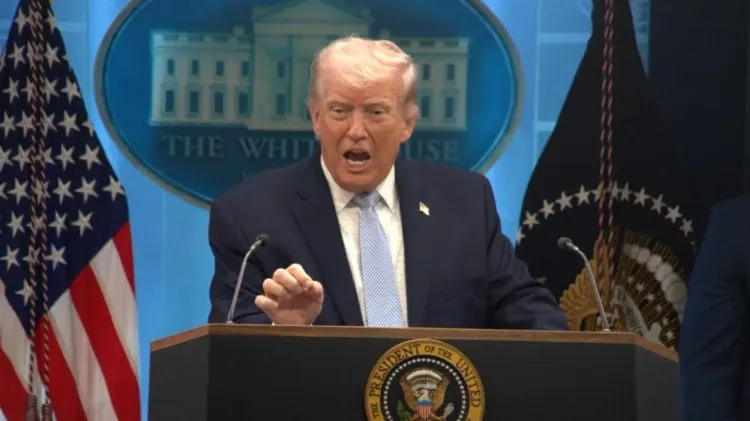
US President Donald Trump has said he would support legislation banning Sharia law in the United States, asserting that the country must operate under a single legal framework. Trump made the remarks during an interview with conservative broadcaster Glenn Beck on 27 August, responding to a question about a proposed 'no Sharia law act for America.'
What Trump Said
'On Sharia law, I would absolutely say that it's not this country; it's no Sharia law,' Trump told Beck. He framed his position as rooted in common sense rather than political ideology, saying, 'We're more based on common sense than we are on ideology.'
Trump also claimed, without identifying specific locations or providing supporting evidence, that Sharia law was already being practised in 'pockets' of the United States. 'And you do have pockets of it, as you know. I would say no,' he said.
European Capitals Cited as a Warning
The President pointed to London and Paris as cautionary examples, arguing that Islamic religious law had effectively created a parallel way of life in parts of those cities. 'You go to London, you go to Paris, it's almost like a second way of life. It's ridiculous,' he said.
Trump did not elaborate on whether he intended to pursue new federal legislation, issue an executive order, or back an existing congressional proposal. He also did not outline how such a prohibition would be legally structured or enforced.
On Enforcement and the Legal System
Trump said authorities would act wherever Sharia law was found to be applied. 'And where we see it, we take it out, and you have to take it out,' he said. 'You have one system. We have a great system. Sometimes it's very frustrating, but it's the best there is, that I can see.'
Notably, the US Constitution already establishes the supremacy of federal and state law, and no US court has formally adopted Sharia law as a binding legal standard. Critics argue that existing constitutional safeguards make a separate federal prohibition legally redundant, while civil liberties groups have previously warned that such legislation could target Muslim communities broadly.
Trump on Inflation and Affordability
During the same interview, Beck also asked Trump how Republicans could address concerns among young Americans about the cost of living. Trump pivoted to blame Democrats for high prices, saying his administration had inherited severe inflation.
'I inherited high prices, I'll put it a different way, and we've really gotten them down,' Trump said. He cited declines in fuel, grocery, and egg prices, and added that beef prices were 'starting to come down.' The White House has not released independent data to substantiate the specific price claims made during the interview.
Context and Background
Beck's question linked Sharia law to what he described as a 'Red Green Alliance' between Islamist movements and democratic socialists — a framing used in some conservative political circles. Trump's remarks come amid a broader pattern of his administration taking assertive stances on immigration, religion, and cultural identity, particularly ahead of ongoing legislative debates in Washington. This is not the first time Trump has raised the issue of Sharia law; similar statements have appeared in his political messaging since his first term.
Point of View
Making a separate 'no Sharia law act' largely symbolic. The real audience is the conservative base, not the judiciary. What is more telling is what Trump left unsaid: no mechanism, no legislation, no executive order — just a signal. In a country where civil liberties litigation moves fast, any poorly drafted federal prohibition would face immediate First and Fourteenth Amendment challenges. The affordability pivot in the same interview reveals the dual track: culture-war framing paired with economic claims, a combination that has defined Trump's political communication since 2015.
NationPress
11 Oct 2026
Frequently Asked Questions
What did Trump say about Sharia law in the US?
President Trump said on 27 August that he would 'absolutely' support legislation prohibiting Sharia law in the United States, arguing the country must have only one legal system. He claimed, without providing evidence or naming specific locations, that Sharia law was already being practised in 'pockets' of the country.
Does Sharia law currently operate in any US court?
No US court has adopted Sharia law as a binding legal standard. The US Constitution's Supremacy Clause ensures federal and state law takes precedence over any religious legal code. Legal experts and civil liberties groups note that existing constitutional safeguards already prevent any parallel religious legal system from functioning.
What legislative action did Trump propose?
Trump did not specify a concrete legislative path. He did not clarify whether he would seek new federal legislation, issue an executive order, or support an existing congressional proposal, nor did he outline how such a prohibition would be structured or enforced.
What did Trump say about the cost of living in the same interview?
Trump blamed Democrats for high inflation, saying his administration had inherited severe price pressures and had since brought down the cost of fuel, groceries, eggs, and beef. He did not provide independent data to support these specific claims.
What was the context of the Glenn Beck interview?
The interview was conducted by conservative broadcaster Glenn Beck, who framed his Sharia law question around what he called a 'Red Green Alliance' between Islamist movements and democratic socialists. Beck also asked Trump how Republicans could respond to young Americans worried about the cost of living.