Trump keeps Iran military escalation open, claims US controls Hormuz
Synopsis
Trump's White House remarks on 11 August did more than threaten — they reframed the entire negotiation. By flipping Iran's reparations demand back on Tehran and asserting a 'steel wall' blockade on the world's most critical energy chokepoint, Trump signalled that Washington is dictating terms, not negotiating them. With military escalation left explicitly on the table and no timeline given, the next move from Tehran — or Washington — could reshape global energy markets overnight.
Key Takeaways
President Trump on 11 August refused to rule out a major military escalation against Iran , saying 'You'll find out.' Trump rejected Iran 's demand for financial compensation, counter-demanding reparations for alleged Iranian actions over 50 years .
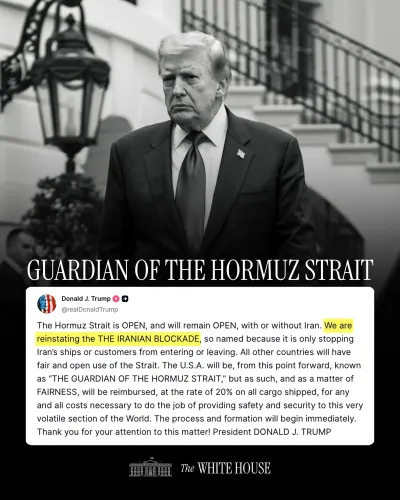
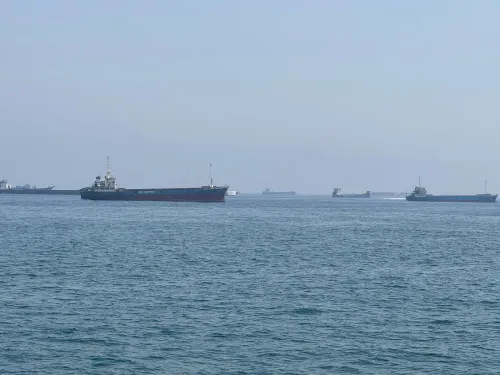
The US Navy is reportedly enforcing a blockade in the Strait of Hormuz , barring vessels from proceeding to Iran while permitting others to transit.
Trump claimed American forces have mine-swept the entire strait and assert 100 per cent control of the waterway.
Trump alleged Iran faces inflation above 300 per cent and is unable to pay its soldiers — claims not independently confirmed.
Trump briefly noted his response to Netanyahu 's rejection of a Hamas deal was posted on Truth Social , describing US-Israel ties as 'very good.'
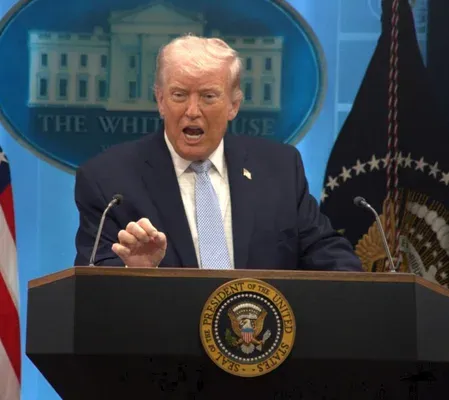
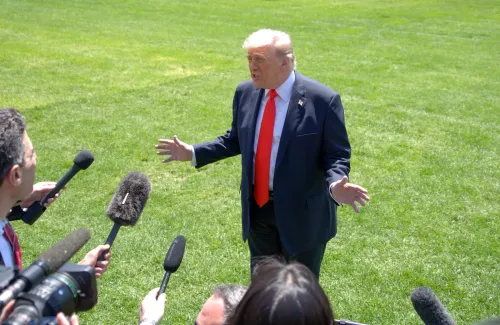
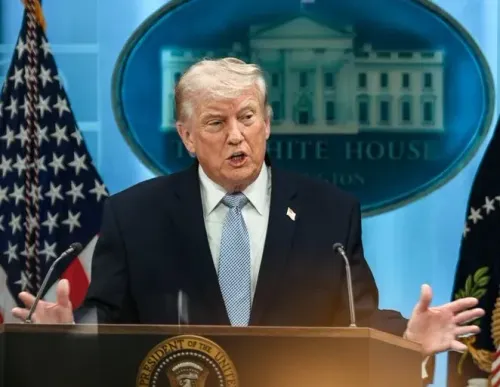
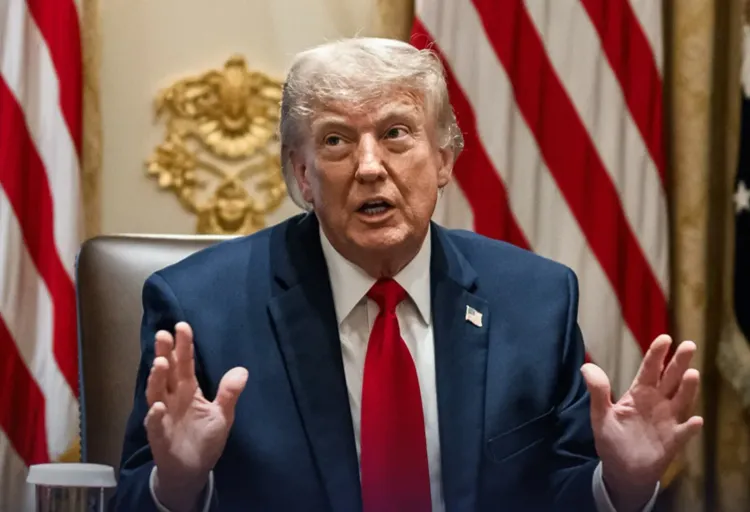
US President Donald Trump on 11 August kept open the possibility of a major military escalation against Iran, flatly rejected Tehran's demand for financial compensation, and asserted that the US Navy held complete control of the Strait of Hormuz. Speaking to reporters at the White House, Trump declined to detail the status of ongoing nuclear talks but issued a pointed warning: 'You'll find out.'
Military Escalation on the Table
When asked whether a massive military escalation remained a live option, Trump confirmed the capability without ruling it out. 'Well we have that — certainly that ability if we want to do that, yeah. You'll find out,' he said. The president offered no specifics on what military steps were under active consideration, leaving deliberate ambiguity around Washington's next move.
Trump Flips Iran's Reparations Demand
Trump said Iran had sought monetary compensation for damage it attributed to the United States. He turned the demand around, arguing that Tehran should instead pay reparations for actions it allegedly carried out over the past five decades. 'They asked for, uh, reparations, you might say, or they asked for money for the damage that we've done,' Trump said. 'I said, that's a good idea. Well, we're going to ask for money for the damage they've done over a 50 year period,' he added. Trump specifically referenced people he alleged were killed or wounded by Iran, and the families of protesters he claimed were killed during unrest inside the country. 'If there's damages to be paid, I think Iran should pay those damages,' he said.
US Claims Full Control of Strait of Hormuz
Trump asserted that the US Navy had established an 'infallible' blockade in the Strait of Hormuz, describing it as 'a steel wall.' He said vessels were being permitted to transit the strait but were barred from proceeding to Iran. 'So it's actually open now. We do not let them go into Iran. They're not admitted into the strait to go to Iran. But it's open for others,' he said. Trump also claimed American forces had conducted mine-sweeping operations across the entire waterway. 'We've mine swept the entire strait,' he said. 'We control the strait 100 percent.' The Strait of Hormuz connects the Persian Gulf with the Gulf of Oman and is a critical chokepoint for global energy shipments — any sustained disruption can ripple through international oil prices and shipping costs.
Trump's Claims on Iran's Financial State
Trump claimed Iran was financially exhausted, struggling to pay its soldiers, and experiencing inflation exceeding 300 per cent. These claims were not independently confirmed in available reports. 'They're broke, they have no money,' he said. 'Iran is broke, totally broke.' He accused Tehran of destabilising the Middle East for five decades and causing hundreds of thousands of deaths and injuries. 'They've been the bully of the Middle East,' Trump said. 'And now they're paying a price.'
Israel and Netanyahu Briefly Addressed
Trump briefly addressed his relationship with Israeli Prime Minister Benjamin Netanyahu, saying he had posted his response to Netanyahu's rejection of a proposed Hamas agreement on Truth Social. 'The relationship is very good,' he said, without elaborating on the specifics of the disagreement. With nuclear talks still ongoing and military options explicitly left open, the trajectory of US-Iran tensions will be closely watched in the coming days.
Point of View
If operationally accurate, represents an extraordinary assertion of unilateral maritime authority over a waterway that moves roughly 20 per cent of global oil supply. Mainstream coverage has largely treated this as bluster; the harder question is what happens if Iran tests the blockade's limits. The reparations counter-demand is diplomatically novel but practically unenforceable — its real function is to make any Iranian concession look like capitulation at home, which may actually harden Tehran's negotiating position rather than soften it.
NationPress
11 Aug 2026
Frequently Asked Questions
What did Trump say about military escalation against Iran?
Trump confirmed the US has the capability for a major military escalation against Iran but declined to say whether it would be used, telling reporters 'You'll find out' twice. He offered no details on what military steps were under active consideration.
What is the US Navy's role in the Strait of Hormuz?
Trump claimed the US Navy has established a blockade in the Strait of Hormuz that he described as 'a steel wall,' barring vessels from entering to reach Iran while permitting others to transit. He also said American forces have mine-swept the entire strait and that the US controls it '100 percent.'
Why did Trump reject Iran's demand for compensation?
Trump rejected Tehran's request for reparations for damage it attributed to the United States, and counter-proposed that Iran should instead pay damages for actions it allegedly carried out over the past 50 years. He specifically cited families of protesters he claimed were killed during unrest inside Iran.
Why does the Strait of Hormuz matter globally?
The Strait of Hormuz connects the Persian Gulf with the Gulf of Oman and is one of the world's most critical energy chokepoints. Any sustained military disruption there can affect global oil supplies and drive up shipping costs worldwide.
What did Trump say about Iran's economic situation?
Trump claimed Iran is financially exhausted, unable to pay its soldiers, and experiencing inflation exceeding 300 per cent, describing the country as 'totally broke.' These claims were not independently confirmed in available reports.