Trump admin signals flexibility on Iran missiles in deal talks

Synopsis
The Trump administration has quietly moved the goalposts on Iran: full missile dismantlement is out, regional parity is in. With VP Vance heading into talks and an MoU already in place, Washington appears to be trading its maximalist position for a deal — raising hard questions about what 'obliteration' of Iran's missile industry actually means when the negotiating table is set.
Key Takeaways
The Trump administration indicated on 21 June that Iran may retain a limited missile capability under a future agreement.
Energy Secretary Chris Wright said Iran's missile-making capacity had been degraded by 90 per cent .
President Trump suggested Iran could hold missiles 'in relative proportion' to neighbours such as Saudi Arabia and Qatar .
The position marks a departure from Trump's earlier vow to 'raze their missile industry to the ground.' VP JD Vance was preparing to open talks with Iranian officials, building on an existing MoU reached after Gulf military confrontations.
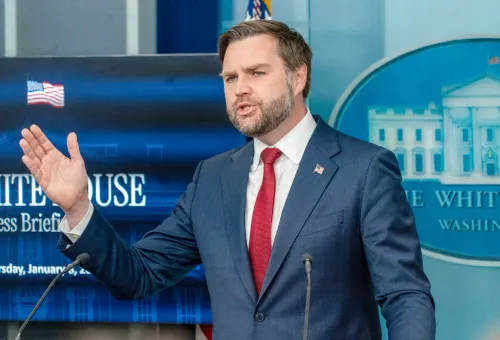
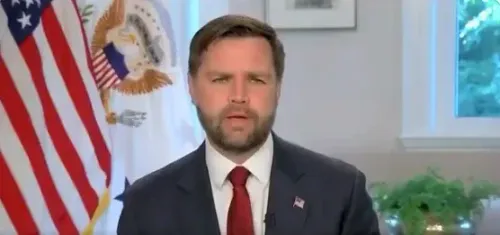
The Trump administration on Sunday, 21 June indicated that Iran may be permitted to retain a limited missile capability under a future nuclear and security agreement, marking a significant departure from its earlier hard-line position that Tehran must completely dismantle its ballistic missile programme. The shift emerged as US Vice President JD Vance prepared to open direct talks with Iranian officials, with both sides looking to build on a Memorandum of Understanding (MoU) reached following months of military confrontation in the Gulf.
What the Administration Said
Energy Secretary Chris Wright, speaking during an interview on ABC's 'This Week', suggested that the total elimination of Iran's missile arsenal was no longer the administration's stated objective. Asked about President Donald Trump's recent remarks that Iran could hold missiles proportionate to those of neighbouring countries, Wright said: 'Need it go to zero? No, it probably doesn't need to go to zero, is what the president's saying.'
Wright further argued that significant military progress had already been achieved. 'We've probably degraded their ability to make missiles by 90 per cent. That is a massive — I think you could call that an obliteration of their missile-making industry,' he said. He also noted that Iran had spent decades building military capabilities that far outpaced those of its regional neighbours, adding: 'In the meantime, they have been just massively more armed than all their neighbours. That has been degraded massively.'
Trump's Shifting Position
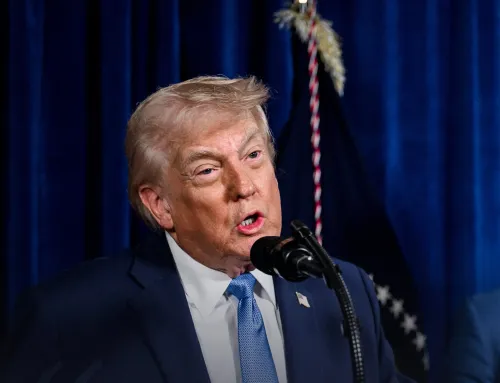
The policy evolution is notable given Trump's earlier, far more categorical language. The President had previously declared that the United States would 'destroy their missiles and raze their missile industry to the ground. It will be totally, again, obliterated.' More recently, however, Trump appeared to soften that position considerably.
'If Saudi Arabia and Qatar, and they all have some, I would say in relative proportion, I think, it's okay,' Trump said when asked whether Iran could retain ballistic missiles under a future settlement. The framing suggests a regional parity benchmark — rather than zero — may now anchor US negotiating demands.
Context and Background
The remarks come amid a broader diplomatic effort to formalise an arrangement with Tehran following a period of heightened military tensions in the Gulf. The MoU referenced by both sides has not been made fully public, and its specific terms regarding Iran's missile holdings remain unclear. Notably, Iran's missile programme has long been a sticking point in any negotiations, distinct from — though linked to — the nuclear file.
This is not the first time a US administration has grappled with how to treat Iran's conventional military capabilities alongside nuclear commitments. The 2015 Joint Comprehensive Plan of Action (JCPOA) did not directly address Iran's ballistic missiles, a gap that critics argued undermined the deal's long-term value.
What Comes Next
Vice President Vance's planned talks with Iranian officials are expected to test how far the two sides can translate the MoU framework into binding commitments. The question of what 'proportionate' missile capability means in practice — and who verifies it — is likely to dominate the next phase of negotiations. Regional powers including Israel, Saudi Arabia, and the UAE will be watching closely, given that Iran's missile reach directly affects their security calculus.
Point of View
Even if the administration frames it as a battlefield achievement. The 90 per cent degradation claim is unverified by independent sources, and the benchmark of parity with Saudi Arabia or Qatar is vague enough to mean almost anything at the negotiating table. What is clear is that the maximalist position — which was always difficult to operationalise — has quietly been shelved. The harder question is whether Iran will accept any externally defined ceiling on its missile holdings, given that Tehran views that programme as its primary conventional deterrent. A deal built on ambiguous proportionality, without a verification mechanism, risks repeating the central weakness of the 2015 JCPOA.
NationPress
20 Sept 2026
Frequently Asked Questions
What is the Trump administration's new position on Iran's missiles?
The administration now indicates that Iran need not reduce its missile holdings to zero, but rather to a level proportionate to neighbouring countries such as Saudi Arabia and Qatar. This marks a shift from earlier demands for the complete dismantlement of Iran's missile programme.
What did Energy Secretary Chris Wright say about Iran's missile capability?
Wright said the US had 'probably degraded' Iran's missile-making capacity by 90 per cent, describing it as an effective obliteration of the industry. He made the remarks during an interview on ABC's 'This Week' on 21 June.
What is the MoU between the US and Iran?
Both sides have referenced a Memorandum of Understanding reached after months of military confrontation in the Gulf. Its full terms have not been made public, and it is serving as the basis for ongoing negotiations that VP JD Vance was preparing to enter.
How does this compare to Trump's earlier statements on Iran's missiles?
Trump had previously said the US would 'destroy their missiles and raze their missile industry to the ground.' His more recent remarks suggest a limited, proportionate missile capability for Iran would be acceptable — a notable softening of that position.
Which countries are watching the US-Iran talks most closely?
Israel, Saudi Arabia, and the UAE are among the regional powers with the most direct stake in the outcome, given that Iran's ballistic missile reach directly affects their security. The question of verification and proportionality thresholds is expected to be central to the next phase of talks.