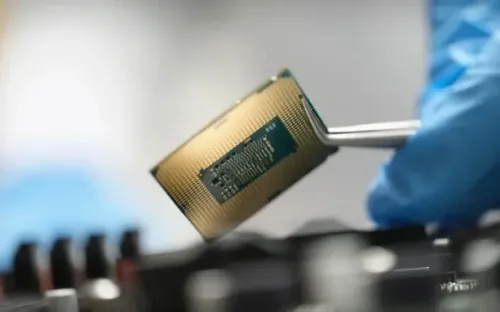
Trump announces $1.5bn Pentagon chip investment in North Carolina

Synopsis
At a campaign rally in Greenville, Trump unveiled a $1.5 billion Pentagon bet on domestic chip production and a Sibelco quartz facility in North Carolina — tying semiconductor reshoring directly to national security and his tariff strategy, days before the November 3 congressional elections that will decide whether he retains the legislative muscle to see it through.
Key Takeaways
US President Donald Trump announced a $1.5 billion Pentagon investment in semiconductor production in North Carolina on 21 October 2026 .
Commerce Secretary Howard Lutnick revealed that Sibelco would build a quartz manufacturing facility in the state, investing hundreds of millions of dollars.
Pharmaceutical firms including Johnson & Johnson , Biogen , Merck , Genentech , and AbbVie are committing more than $10 billion to manufacturing in North Carolina .
JetZero 's $4.7 billion aircraft manufacturing project is projected to create more than 15,000 jobs .
Trump claimed total investment commitments of $22.2 trillion — a figure not independently verified.
The 3 November midterm elections will determine congressional control for the remainder of Trump's second term.
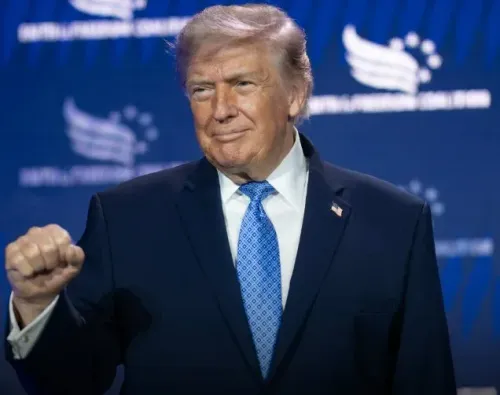
US President Donald Trump on 21 October 2026 announced a $1.5 billion Pentagon investment in semiconductor production and a new industrial minerals manufacturing facility in North Carolina, framing both moves as cornerstones of a broader national security and supply-chain decoupling strategy. The announcements were made at a Republican campaign rally in Greenville, North Carolina.
Key Announcements
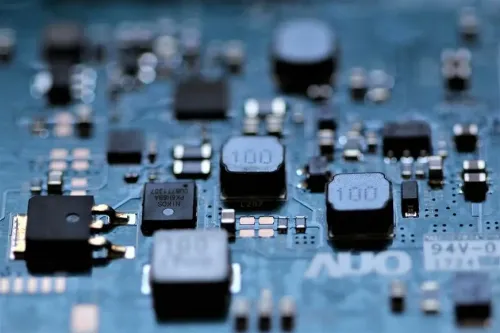
Trump declared that the Department of Defense — which he referred to as the 'Department of War' — would direct $1.5 billion toward cutting-edge chip production within the state. Separately, Commerce Secretary Howard Lutnick revealed that Sibelco, an industrial minerals company, would establish a quartz manufacturing facility in North Carolina, with an investment described as running into hundreds of millions of dollars. Lutnick identified quartz as an essential input for semiconductor manufacturing and said the project aligned with the administration's objective of repatriating critical supply chains.
Semiconductor and Manufacturing Targets
Trump argued that decades of industrial policy had allowed much of the global semiconductor industry to migrate overseas, particularly to Taiwan. He said major chip manufacturers were now committing hundreds of billions of dollars to facilities in Arizona and potentially Texas, and projected that the United States would control 'close to 50 per cent of the chip business in a very short order.' The claim was presented as evidence of the administration's reshoring momentum, though it was not independently verified.
Pharmaceutical investments also featured prominently. Trump cited commitments totalling more than $10 billion from Johnson & Johnson, Biogen, Merck, Genentech, and AbbVie for manufacturing operations in North Carolina. He additionally pointed to JetZero's $4.7 billion aircraft manufacturing project, which he said would generate more than 15,000 jobs.
Tariff Policy and Investment Claims
Trump attributed the surge in domestic manufacturing commitments to his administration's tariff regime, arguing that import duties were compelling foreign companies to produce inside the United States rather than export to it. He claimed his administration had secured $22.2 trillion in total investment commitments — a figure that was not independently established in available information at the time of the rally.
Political and Geopolitical Context
The rally in Greenville served a dual purpose: policy showcase and electoral mobilisation. Trump used the occasion to campaign for Republican Senate candidate Michael Whatley against former Democratic Governor Roy Cooper, criticising Cooper's record on crime, immigration, and taxation. He warned that Democratic control of Congress after the 3 November congressional elections could jeopardise his economic and security agenda, and pledged further action on border security, healthcare, and tax relief if Republicans retained their majorities.
Addressing the Middle East, Trump said ongoing conflict involving Iran had affected global energy prices but predicted a sharp decline in oil costs once the fighting ended. He defended the military campaign as necessary to prevent Iran from acquiring nuclear weapons and said the conflict would conclude quickly.
The 3 November midterm elections will determine congressional control for the final two years of Trump's second term — shaping his ability to advance legislation on trade, defence spending, and domestic economic policy.
Point of View
But the headline $22.2 trillion investment figure demands scrutiny: it has not been independently verified and conflates pledges with actual capital deployment. More structurally, the heavy concentration of announcements in North Carolina — a competitive Senate battleground — raises a legitimate question about whether project timing reflects strategic economic planning or pre-election choreography. The semiconductor push is directionally sound, given genuine supply-chain vulnerabilities exposed after 2020, but the 50% chip-market forecast is aspirational at best; Taiwan's TSMC alone accounts for over half of global advanced-node capacity, a position not reversible within any near-term horizon Trump implied.
NationPress
21 Oct 2026
Frequently Asked Questions
What is the $1.5 billion Pentagon semiconductor investment announced by Trump?
It is a Defense Department commitment to fund cutting-edge chip production in North Carolina, announced by President Trump at a campaign rally in Greenville on 21 October 2026. The investment is part of a broader administration push to reduce US dependence on foreign semiconductor supply chains, particularly from Taiwan.
What is the Sibelco quartz facility and why does it matter?
Sibelco is an industrial minerals company that will establish a quartz manufacturing facility in North Carolina, with an investment of hundreds of millions of dollars. Quartz is a key raw material in semiconductor production, making the facility a supporting link in the domestic chip supply chain the administration is trying to build.
Which pharmaceutical companies are investing in North Carolina?
Johnson & Johnson, Biogen, Merck, Genentech, and AbbVie are collectively committing more than $10 billion to manufacturing operations in North Carolina, according to Trump's rally remarks.
What is the political significance of these announcements?
The announcements were made at a Republican campaign rally days before the 3 November congressional elections, where control of the House and Senate is at stake. Trump framed Democratic gains as a threat to his manufacturing and security agenda, and used the event to campaign for Senate candidate Michael Whatley.
How credible is Trump's claim of $22.2 trillion in investment commitments?
The $22.2 trillion figure cited by Trump at the Greenville rally was not independently verified in available information at the time. Analysts and fact-checkers typically distinguish between formal capital commitments and broader pledges or letters of intent, and the basis for this specific number has not been publicly detailed by the administration.