US backs Poland's G20 seat, Trump wants Warsaw invited back in 2026
Synopsis
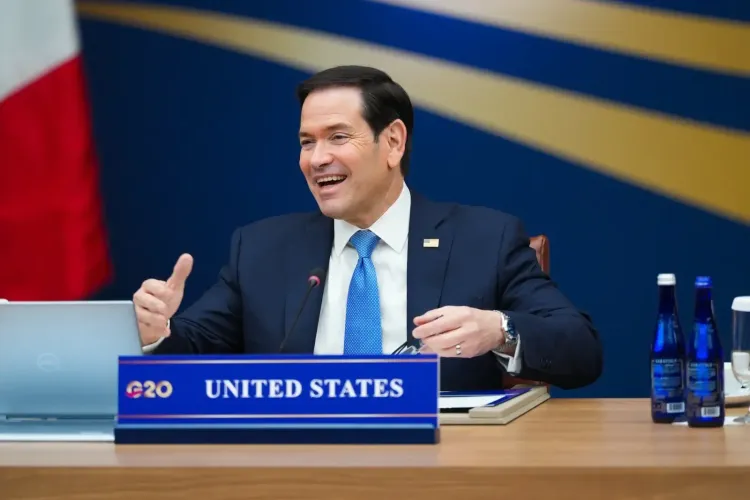
At the G20 foreign ministers' meeting in Atlanta, US Secretary of State Marco Rubio publicly backed Poland's bid for a permanent G20 seat, citing Trump's personal conviction — a politically charged signal that stops short of any formal membership change but puts Washington's weight behind Warsaw's ambitions ahead of the December leaders' summit in Florida.
Key Takeaways
US Secretary of State Marco Rubio declared on 31 October that President Trump believes Poland deserves a seat at the G20 table.
Rubio expressed hope Poland and other 'strong nations on the rise' would be invited back to the forum next year.
The endorsement carries political weight but does not constitute a formal change to G20 membership — Poland attended Atlanta as a guest of the US presidency, not as a permanent member.
The G20 foreign ministers' meeting in Atlanta covered energy, technology, supply chains, and freedom of navigation, though no universally accepted solutions emerged.
A G20 leaders' summit chaired by Trump is scheduled for December in Florida , seen as the culmination of the US presidency's G20 agenda.
The G20 was founded in 1999 and comprises 19 countries , the European Union , and the African Union .
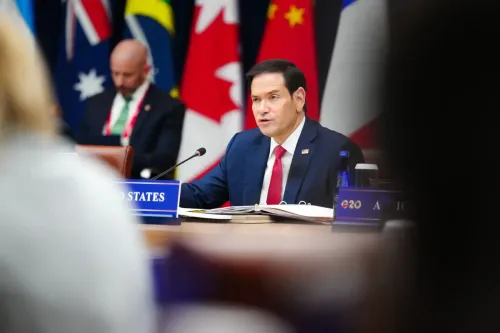
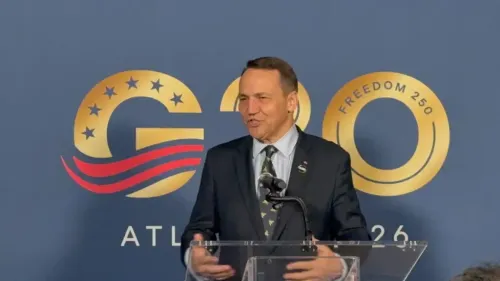
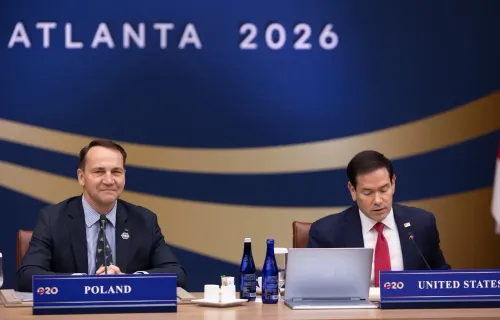
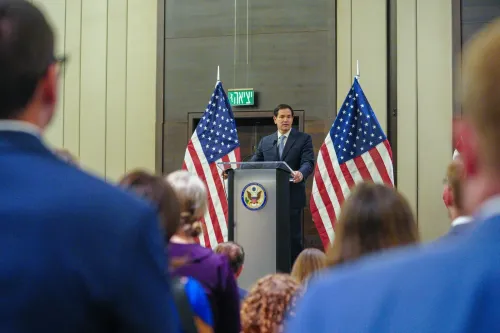
US Secretary of State Marco Rubio on 31 October declared that President Donald Trump firmly believes Poland deserves a permanent place at the G20 table, expressing hope that Warsaw would be invited back to the forum next year. Rubio made the remarks at the close of the G20 foreign ministers' meeting in Atlanta, singling out the Polish delegation from among the invited guest nations.
What Rubio Said
Speaking at the conclusion of the Atlanta gathering, Rubio offered an unambiguous endorsement of Poland's growing stature. 'President Trump believes very strongly that Poland deserves a seat at this table of global leaders and we very much hope to see them and other strong nations on the rise invited back next year,' he said.
He also praised Poland's trajectory in both economic and security affairs, framing Warsaw's progress as a direct benefit to Washington. 'They are stronger, they are more robust as a nation, and America as an ally and a partner of Poland is therefore stronger as well,' Rubio added.
What the Endorsement Does — and Does Not — Mean
Rubio's remarks stopped short of announcing any formal change to the G20's composition. He did not describe a mechanism for granting Poland permanent membership, nor did he indicate that a collective decision had been reached among member states. Under the forum's existing structure, host presidencies may invite guest countries to attend meetings, but guest participation does not confer full membership.
Notably, Rubio extended the same hope to other unnamed 'strong nations on the rise,' without specifying criteria or a list of candidates. This leaves the scope of any future expansion deliberately open-ended.
G20 Atlanta Agenda: Energy, Supply Chains, and Maritime Access
Beyond the Poland question, Rubio outlined the substantive discussions at the foreign ministers' meeting, which covered energy, technology, supply chains, and freedom of navigation. He described these as interlinked challenges requiring multilateral cooperation even where countries disagreed on causes or remedies.
Rubio acknowledged that consensus remained elusive on several fronts. While participants recognised shared threats to food security, critical minerals, and maritime access, universally accepted solutions had not emerged. He argued, however, that identifying common problems was itself a meaningful step toward progress, noting that some nations present were already cooperating on supply chains and minerals.
Road to the December Leaders' Summit
Rubio framed the Atlanta meeting as part of preparations for the G20 leaders' summit scheduled for December in Florida, which will be chaired by Trump. He said the US presidency of the G20 had deliberately sought to refocus the forum on its core economic mandate, pursuing practical outcomes for Americans while addressing broader global challenges.
When pressed on immediate economic deliverables, Rubio urged patience, noting that the discussions concerned structural issues — energy availability, technology input costs, and access to critical materials — whose impact would unfold over decades rather than months.
G20 Background
The G20 was established in 1999 and began convening leaders' summits in 2008. It currently comprises 19 countries, the European Union, and the African Union. Poland is not a permanent member; its presence in Atlanta was as an invited guest of the US presidency — a distinction Rubio's remarks did not formally alter, despite the political weight his endorsement carries.
Point of View
And no other member has publicly backed Poland's elevation. The unnamed 'other strong nations on the rise' remark is equally telling — it hints at a broader US agenda to reconfigure multilateral forums in favour of security-aligned partners, a trend that could deepen tensions with existing members who view the G20 as an economic, not a strategic, body.
NationPress
1 Nov 2026
Frequently Asked Questions
What did the US say about Poland's G20 membership?
US Secretary of State Marco Rubio said on 31 October that President Trump 'believes very strongly' that Poland deserves a seat at the G20 table, and expressed hope that Poland would be invited back next year. The statement was made at the conclusion of the G20 foreign ministers' meeting in Atlanta.
Is Poland now a permanent G20 member?
No. Poland attended the Atlanta meeting as an invited guest of the US presidency, which holds the current G20 chair. Guest participation does not confer permanent membership, and Rubio did not announce any formal process for changing the forum's composition.
What was discussed at the G20 foreign ministers' meeting in Atlanta?
The Atlanta meeting covered energy, technology, supply chains, and freedom of navigation. Participants acknowledged shared threats to food security, critical minerals, and maritime access, though Rubio noted that universally accepted solutions had not been reached.
When is the next G20 leaders' summit and where will it be held?
The G20 leaders' summit is scheduled for December and will be held in Florida, chaired by President Trump. Rubio described it as the culmination of the work carried out during the US G20 presidency.
How is the G20 structured and who are its members?
The G20 was established in 1999 and began holding leaders' summits in 2008. It comprises 19 countries, the European Union, and the African Union. Host nations may invite guest countries to attend meetings, but such invitations do not grant permanent membership.