US SMARTER Act seeks to replace H-1B visa with merit-based system
Synopsis
A US Republican congressman wants to scrap the H-1B lottery entirely and replace it with a points-based merit system — a move that could reshape immigration prospects for hundreds of thousands of Indian tech professionals. The bill also proposes eliminating per-country green-card caps that have trapped many Indian applicants in multi-decade backlogs, though actual relief would hinge on overall visa limits.
Key Takeaways
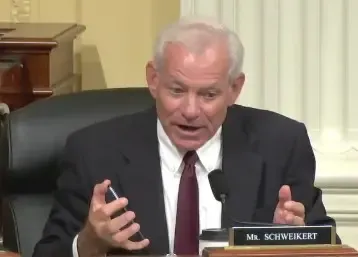
Congressman David Schweikert introduced the SMARTER Act (H.R.
10460) on 16 September , proposing to replace the H-1B lottery with a merit-based framework.
An initial cap of 85,000 visas would be retained, with a new five-member Skilled Migration Board setting annual limits based on economic conditions.
A points-based system would assess applicants on age, education, English proficiency, salary, and achievements; applicants aged 26–30 earn the highest age score.
Country-specific green-card caps would be removed , potentially easing India's lengthy employment-based backlog — though waiting times depend on overall visa ceilings.
The bill would end the Diversity Visa Programme and restrict family-sponsored immigration to spouses and minor children.
Republican staff estimate the proposal could cut federal spending by $335 billion and lift GDP by at least $549 billion over 10 years — projections not independently verified.
A Republican congressman has proposed overhauling America's H-1B visa selection framework, introducing a merit-based alternative that would prioritise highly skilled, better-compensated foreign workers — a development with significant implications for Indian technology professionals who rely heavily on the programme. The bill, introduced in Washington, remains at the committee stage and has not become law.
What the SMARTER Act Proposes
Congressman David Schweikert of Arizona, chairman of the Joint Economic Committee, unveiled the Securing Migration, Addressing Reform, and Talent Enhancement and Retention (SMARTER) Act — formally listed as H.R. 10460 — in an 19 October announcement. The legislation was originally introduced in the House of Representatives on 16 September and referred to the Judiciary Committee.
Under the proposal, the current lottery-based H-1B selection mechanism would be scrapped in favour of a framework that assesses applicants on economic contribution, qualifications, and labour-market demand. An initial numerical cap of 85,000 — mirroring the current H-1B ceiling — would be retained, with subsequent adjustments tied to broader economic conditions.
A New Board to Govern Skilled Migration
The bill proposes establishing a five-member Skilled Migration and Recruitment of Talent Board to determine annual immigration limits and allocate employment visas across industries. The board would weigh factors including labour shortages, unemployment levels, wages, productivity, and overall economic growth when setting admission numbers.
A points-based system for employment-based permanent immigration is also proposed, scoring applicants on age, education, English proficiency, salary, and exceptional achievements. Applicants aged 26 to 30 would receive the highest age-related scores, while higher educational qualifications and salaries significantly above the median household income in the applicant's state would further boost their points.
Key Provisions Relevant to Indian Nationals
One provision that could directly affect Indian nationals is the proposed removal of existing country-specific numerical limits on employment-based immigration. Indian applicants currently face some of the world's longest green-card waiting times — in some categories, backlogs stretch to decades — because per-country caps mean high-demand nationalities exhaust their share quickly. However, experts caution that actual waiting times under the new system would depend on the overall visa ceilings and how the points-based selection mechanism operates in practice.
The legislation also includes transitional provisions for certain pending immigration applications and would grant some long-delayed employment-based applicants greater flexibility to change employers — a practical relief for many Indian professionals already in the queue.
Restrictions on Family and Diversity Immigration
The bill would significantly reshape family-sponsored immigration, limiting it primarily to spouses and minor children and eliminating several existing preference categories. The Diversity Visa Programme, which currently allocates up to 55,000 visas annually through a lottery to nationals of historically low-immigration countries, would be ended entirely.
An additional provision would introduce a 'gold card' immigration programme, allowing qualifying applicants to obtain immigrant visas through substantial financial payments. The bill also proposes directing the Department of Homeland Security to deploy artificial intelligence to identify individuals who overstay their authorised visa periods.
Economic Projections and Political Context
Republican staff of the Joint Economic Committee projected that the proposal could reduce federal expenditure by approximately $335 billion and boost US gross domestic product by at least $549 billion over a decade. Notably, these are figures advanced by the bill's own proponents and have not been independently verified.
Schweikert argued that immigration reform must address America's ageing population and growing demand for skilled workers while protecting domestic employment. 'If we are serious about tackling our debt, growing our economy, and safeguarding our earned federal benefits, we must cultivate a workforce that continues to compete globally at the highest level,' he said.
The H-1B programme has for decades been a primary entry point for Indian technology professionals into the United States, and employment-based green-card backlogs have been a chronic grievance for Indian applicants. Whether this bill advances through Congress — where immigration legislation has repeatedly stalled — remains to be seen, as it currently sits in the Judiciary Committee without a scheduled hearing.
Point of View
But the bill's fate in a divided Congress is uncertain given immigration's history of gridlock. For Indian professionals, the removal of per-country caps is the most consequential provision, yet it is also the one most likely to face opposition from lawmakers protective of diversity in immigration. The projected GDP and fiscal figures, produced by the bill's own sponsors without independent verification, should be treated with considerable scepticism. Most critically, replacing a lottery with a salary-weighted points system risks entrenching a bias toward large tech corporations that can afford to offer above-median salaries, potentially squeezing out smaller employers and entrepreneurs who have historically diversified the H-1B talent pool.
NationPress
20 Oct 2026
Frequently Asked Questions
What is the SMARTER Act and what does it propose for the H-1B visa?
The SMARTER Act (H.R. 10460) is a US immigration bill introduced by Republican Congressman David Schweikert on 16 September, proposing to replace the H-1B lottery with a merit-based, points-driven selection system that prioritises highly skilled, better-paid applicants. It would also establish a five-member board to set annual immigration limits based on economic conditions, starting with an initial cap of 85,000 visas.
How does the SMARTER Act affect Indian professionals and green-card backlogs?
The bill proposes eliminating country-specific numerical caps on employment-based immigration, which have caused Indian nationals to face decades-long green-card waiting times due to high demand and limited per-country allocations. However, actual relief would depend on the overall visa limits set by the new board and how the points-based system allocates those numbers.
Has the SMARTER Act become law?
No. As of 20 October 2026, the bill has been referred to the House Judiciary Committee and has not been scheduled for a hearing. It has not been passed by Congress or signed into law.
What happens to the Diversity Visa Programme under this bill?
The SMARTER Act proposes ending the Diversity Visa Programme entirely. It would also restrict family-sponsored immigration to spouses and minor children, eliminating several existing family-preference categories currently available under US immigration law.
What are the projected economic benefits of the SMARTER Act?
Republican staff of the Joint Economic Committee estimated the bill could reduce federal expenditure by approximately $335 billion and increase US GDP by at least $549 billion over 10 years. These are projections put forward by the bill's proponents and have not been independently verified by external economists or agencies.