US military orders neutral vessels out of Iranian ports amid blockade
Synopsis
The US military has moved from warning to enforcement — broadcasting live radio orders to all neutral shipping to exit Iranian ports, threatening force against non-compliant vessels, and announcing a full coastal blockade effective Tuesday evening UTC. With strikes already completed against six Iranian military sites and the Strait of Hormuz's northern route declared closed by Iran, global oil shipping faces its most acute disruption threat in decades.
Key Takeaways
The US military broadcast VHF radio warnings on 14 July ordering all neutral vessels to immediately leave Iranian ports or halt Iran-bound transit.
Vessels failing to comply with the blockade were warned they would face force ; all ships are subject to interdiction and seizure regardless of flag or cargo.
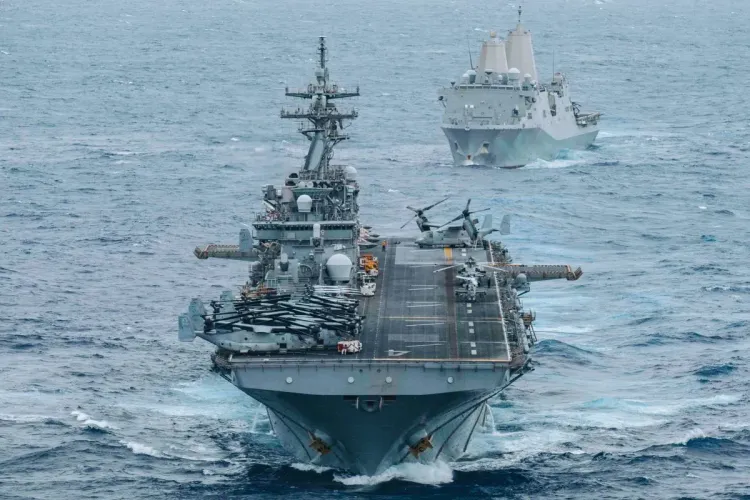
The US Central Command began enforcing a full maritime blockade of Iran's entire coastline from 20:00 UTC on Tuesday .
Iran declared the Strait of Hormuz closed; the US said a southern route near Omani waters remains open and under US navigation assistance.
The US Central Command confirmed completing a five-hour wave of strikes on Iranian military facilities including Bushehr , Chabahar , Jask , Konarak , Abu Musa , and Bandar Abbas .
Humanitarian cargo exemptions are available but must be pre-approved through the US military .
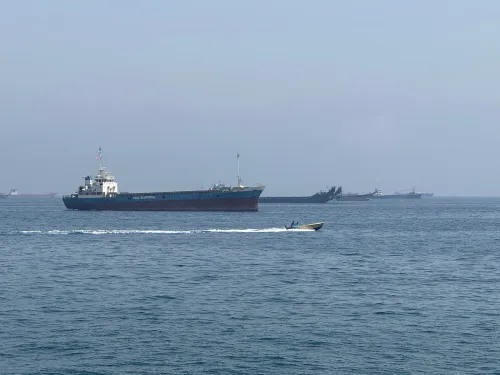
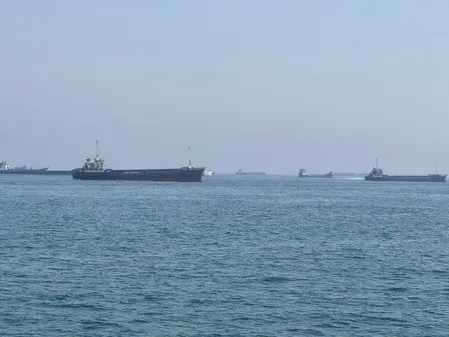
The US military on Tuesday, 14 July broadcast warnings over public maritime radio channels advising all neutral vessels to immediately depart Iranian ports or abandon transit if Iran was their next port of call, according to VHF radio recordings obtained from a crew member aboard a merchant vessel operating near the Strait of Hormuz. The development marks a sharp escalation in the US-Iran maritime standoff, with Washington moving from diplomatic pressure to active enforcement.
What the Radio Message Said
'All neutral vessels are advised to immediately depart Iranian ports and discontinue transit if Iran is your next port of call,' the broadcast stated. The message further warned that following the formal commencement of the blockade, the measures would apply to all vessels regardless of flag or cargo — a sweeping directive that puts third-country shipping squarely in the crosshairs.
Vessels transiting to or from an Iranian port, the recording indicated, may be subject to interdiction and seizure. Humanitarian cargo exemptions are available but must be requested directly through the US military. Ships failing to comply, the message warned, would face force.
The Blockade Takes Effect
The US-led Joint Maritime Information Centre announced on Monday that the US Central Command would begin enforcing a maritime blockade targeting all Iranian ports and Iran's entire coastal area from 20:00 UTC on Tuesday. The blockade's scope — covering the full Iranian coastline — is notably broad and has no publicly stated end date.
In a separate radio transmission, the US military acknowledged that Iran had declared the Strait of Hormuz closed, but stated that US forces were prepared to maintain freedom of navigation and safeguard lawful commerce. 'A southern route of the Strait remains open,' the message said.
Strait of Hormuz: Two Routes, New Tension
Under a pre-existing US-Iran Memorandum of Understanding (MoU), commercial vessels have historically used two routes through the Strait of Hormuz: a northern route under Iranian control and a southern route closer to Omani waters, where the US military provides navigation assistance. With Iran now reportedly declaring the northern route closed, the southern corridor has become the sole operational passage — a chokepoint the US says it will keep open.
This comes amid a broader military confrontation. The US Central Command said on its official X account that it completed a five-hour wave of strikes against Iran earlier on Tuesday, targeting military facilities in Bushehr, Chabahar, Jask, Konarak, Abu Musa, and Bandar Abbas.
Global Shipping at Risk
The Strait of Hormuz is one of the world's most critical energy transit chokepoints, through which roughly 20% of global oil supply passes. A sustained blockade — or even the credible threat of one — carries significant implications for global energy markets, insurance premiums on tankers, and the supply chains of oil-importing nations including India, China, and Japan. Indian state-run oil importers are among those with active cargo movements in the region.
How Iran responds to the blockade enforcement and whether third-party nations challenge the US interdiction authority under international maritime law will be closely watched in the hours ahead.
Point of View
India, and European flag states respond will test whether Washington can enforce this unilaterally. The strikes on six Iranian port cities in a single five-hour window suggest this is not a limited operation. If the Strait's northern route stays closed and the southern corridor becomes contested, the oil-price shock could arrive faster than energy markets are currently pricing.
NationPress
13 Oct 2026
Frequently Asked Questions
What did the US military's radio warning to ships near the Strait of Hormuz say?
The US military broadcast a message on public maritime VHF radio on 14 July advising all neutral vessels to immediately depart Iranian ports or discontinue transit if Iran was their next port of call. The message warned that ships failing to comply with the blockade would face force, and that all vessels — regardless of flag or cargo — were subject to interdiction and seizure.
When did the US maritime blockade of Iran take effect?
The US-led Joint Maritime Information Centre announced the blockade would begin at 20:00 UTC on Tuesday, 14 July, covering all Iranian ports and Iran's entire coastal area. The US Central Command is responsible for enforcement.
Is the Strait of Hormuz completely closed?
Iran declared the Strait of Hormuz closed, but the US military stated that a southern route of the Strait — running close to Omani waters — remains open and that US forces would maintain freedom of navigation there. The northern route, historically under Iranian control, is the one in dispute.
What strikes did the US carry out against Iran on 14 July?
The US Central Command said it completed a five-hour wave of strikes against Iranian military facilities in Bushehr, Chabahar, Jask, Konarak, Abu Musa, and Bandar Abbas earlier on Tuesday, 14 July. The announcement was made via the US Central Command's official account on X.
How does the US-Iran blockade affect India and global oil supply?
The Strait of Hormuz handles roughly 20% of global oil supply, and Indian state-run refiners are among the major buyers of crude transiting the route. A sustained blockade or closure of the northern passage could disrupt supply chains, spike tanker insurance premiums, and push oil prices higher — with downstream impact on India's import bill and fuel prices.