US brokers Israel-Lebanon peace framework, targets Hezbollah disarmament
Synopsis
The US, Israel, and Lebanon signed a trilateral framework on 27 June that explicitly aims to push Iran and Hezbollah out of Lebanon's security equation. With a US-facilitated Military Coordination Group, $100 million in immediate humanitarian aid, and performance-based conditions for Israeli withdrawal, this is Washington's most structured Middle East peace intervention in years — but Rubio himself called it only 'the beginning of the beginning.'
Key Takeaways
The US , Israel , and Lebanon signed a trilateral framework agreement in Washington on 27 June .
The accord targets Hezbollah disarmament, dismantling of its military infrastructure, and restoration of Lebanese sovereignty .
A US-facilitated Military Coordination Group for Lebanon (MCG4L) will oversee implementation.
Washington pledged $100 million in immediate humanitarian assistance and over $30 million in reimbursements to the Lebanese Armed Forces .
Secretary of State Marco Rubio described the deal as 'the beginning of the beginning,' acknowledging significant implementation challenges ahead.
Israeli Ambassador Yechiel Leiter declared the framework explicitly excludes Iran and Hezbollah from Lebanon's security future.
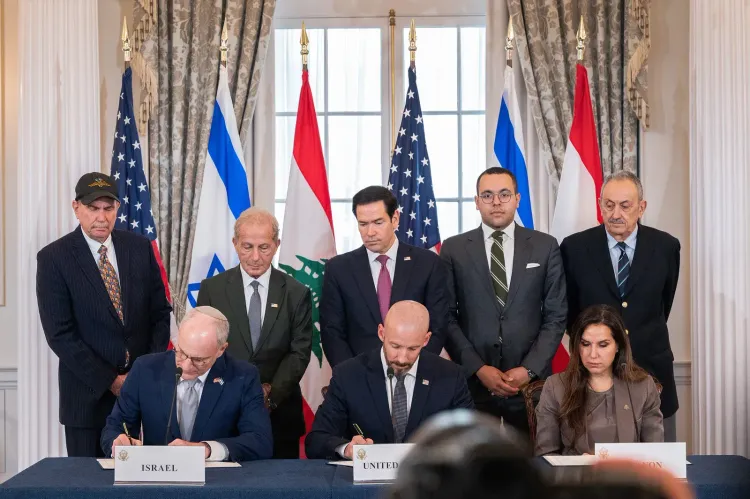
The United States, Israel, and Lebanon on 27 June signed a landmark trilateral framework agreement in Washington, marking what American officials described as the first concrete step toward ending decades of conflict along Israel's northern border, restoring Lebanese sovereignty, and charting a pathway for the disarmament of Hezbollah. The agreement was brokered with active US mediation and formalised at a signing ceremony attended by senior officials from all three parties.
What the Agreement Establishes
According to the State Department, the framework sets out 'a clear and structured process to restore Lebanon's sovereignty, disarm Hizballah and dismantle its terrorist infrastructure, and enable Israel to return to its borders once that threat to its citizens is removed.' Central to the accord is the creation of the Military Coordination Group for Lebanon (MCG4L), a US-facilitated body tasked with overseeing implementation by both sides. Officials stressed that the agreement is performance-based, meaning Israeli forces would withdraw to their borders only after security conditions are verifiably met.
What the Key Parties Said
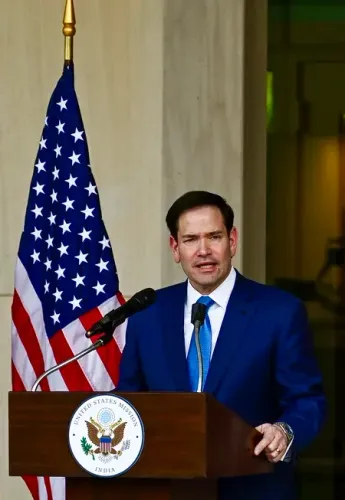
US Secretary of State Marco Rubio, speaking at the signing ceremony, called the accord 'a framework for lasting peace and security' and acknowledged the scale of the task ahead. 'It's the beginning of the beginning. There is a lot of work ahead. We don't in any way underestimate the difficulty of the task ahead. But we understand the importance of it, how vital it is, and we are honoured to have played a part in bringing this together,' Rubio said. He also highlighted the suffering of civilians on both sides, noting that the people of northern Israel had been 'targeted repeatedly by terrorist attacks launched from the territory of Lebanon,' while Lebanon's population had 'suffered tremendously now for decades as a result of outside interference in their affairs.'
Lebanese Ambassador to the United States Nada Hamadeh Moawad described the signing as 'a first step on the road to restoring Lebanese sovereignty and territorial integrity, securing a permanent and final cessation of hostilities, enabling our people to go back to their land, and allowing all Lebanese to live in peace, security, and prosperity.' Israeli Ambassador Yechiel Leiter framed the agreement in starker terms: 'In this performance-based trilateral framework agreement, Iran is out, Hizballah is out, and the road to peace between Israel and Lebanon is in.'
US Financial Commitments
Washington announced it would immediately provide $100 million in humanitarian assistance to Lebanon, coordinated through the United Nations. The Department of War also indicated it was prepared to reimburse the Lebanese Armed Forces with more than $30 million under existing authorities, aimed at strengthening Beirut's capacity to assert sovereignty across its own territory. These financial pledges signal that Washington intends to remain fully engaged beyond the signing stage.
Significance and Challenges Ahead
The accord represents a significant diplomatic development in a region where ceasefire agreements have historically struggled to hold. This comes amid broader US efforts to reshape the Middle East's security architecture following the 2023-2024 Gaza conflict and subsequent escalations. Notably, the explicit exclusion of Iran from the framework — as Ambassador Leiter underscored — reflects Washington's and Jerusalem's shared objective of rolling back Tehran's regional influence. Rubio himself conceded that implementation would be difficult, and analysts are likely to scrutinise whether the MCG4L has sufficient enforcement mechanisms to ensure Hezbollah's compliance. The coming weeks will test whether the framework translates from diplomatic language into verifiable action on the ground.
Point of View
Adapted, and outlasted every previous disarmament effort; a US-facilitated coordination group, however well-resourced, cannot substitute for Lebanese state capacity that has been hollowed out over decades. The performance-based withdrawal clause is the right structural instinct, but it places the burden of proof on Lebanon's armed forces, which Washington is simultaneously trying to strengthen with a $30 million reimbursement. The explicit framing of 'Iran is out' is as much a political signal to domestic US audiences as it is a security guarantee — and Tehran's response, not Rubio's statement, will determine whether that claim holds.
NationPress
27 Jun 2026
Frequently Asked Questions
What is the US-Israel-Lebanon trilateral framework agreement?
It is a peace framework signed in Washington on 27 June by the United States, Israel, and Lebanon, aimed at restoring Lebanese sovereignty, dismantling Hezbollah's military infrastructure, and enabling Israeli forces to return to their borders once security threats are removed. The agreement also establishes a US-facilitated Military Coordination Group for Lebanon (MCG4L) to oversee implementation.
What role does the Military Coordination Group for Lebanon play?
The MCG4L is a US-facilitated body created under the framework to help Israel and Lebanon implement the agreement's terms. It is designed to coordinate security measures, monitor compliance, and support the structured process of disarming Hezbollah and restoring Lebanese sovereignty.
How much financial aid is the US providing under this agreement?
Washington announced $100 million in immediate humanitarian assistance to Lebanon, coordinated through the United Nations. The Department of War also indicated it would reimburse the Lebanese Armed Forces with more than $30 million to bolster Lebanon's capacity to assert sovereignty across its territory.
What did Secretary of State Marco Rubio say about the deal?
Rubio called the agreement 'a framework for lasting peace and security' but cautioned it was only 'the beginning of the beginning,' acknowledging significant challenges in implementation. He stressed that both the people of Lebanon and northern Israel deserved peace and security after decades of conflict and cross-border attacks.
Why is Iran's exclusion significant in this framework?
Israeli Ambassador Yechiel Leiter explicitly stated that under the performance-based framework, 'Iran is out, Hizballah is out.' This signals a core objective of rolling back Iranian influence in Lebanon, which both the US and Israel view as the primary driver of Hezbollah's military capability and regional destabilisation.