US, Colombia sign critical minerals and nuclear pacts in Barranquilla
Synopsis
Washington and Bogotá have signed two consequential deals — one to lock in critical-minerals supply chains with a six-month financing deadline, another to open Colombia to US nuclear technology including small modular reactors. Signed during Rubio's three-country Latin America tour, the agreements signal a deliberate US push to counter Chinese resource influence and expand its strategic footprint across the Western Hemisphere.
Key Takeaways
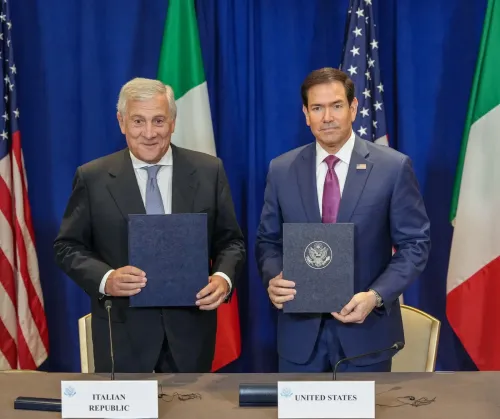
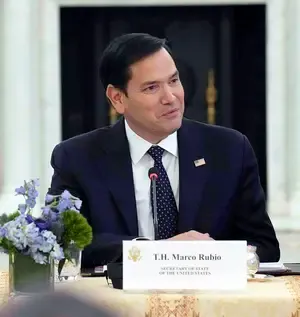
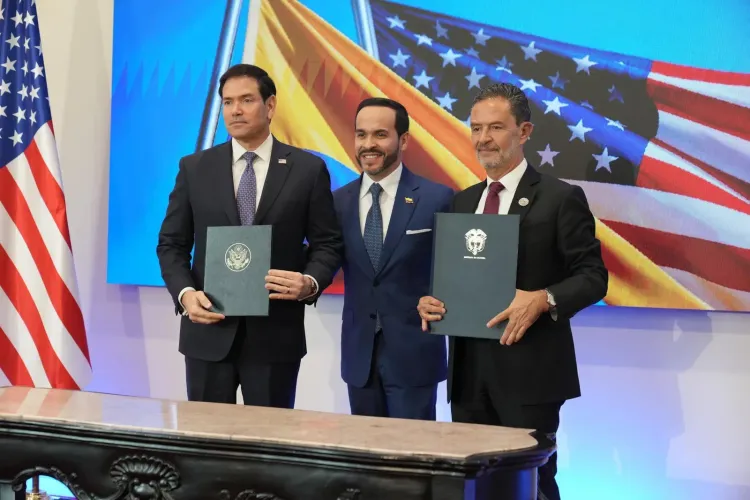
US Secretary of State Marco Rubio and Colombian Foreign Minister Omar Bula signed two bilateral arrangements in Barranquilla on 9 September .
The critical-minerals framework sets a six-month deadline to mobilise government and private-sector financing for mining and processing projects.
The civil nuclear memorandum opens the door to US small modular reactors (SMRs) , fuel, and services as Colombia explores nuclear power for energy security.
Both deals are grounded in Nuclear Non-Proliferation Treaty obligations and IAEA safeguards.
Rubio's tour also covers Peru and Ecuador , with Washington aiming to conclude trade agreements with all three countries 'in the foreseeable future'.
US Secretary of State Marco Rubio and Colombian Foreign Minister Omar Bula signed two landmark bilateral arrangements in Barranquilla on Tuesday, 9 September, covering critical-minerals supply chains and civil nuclear cooperation. The agreements, confirmed by the US State Department, are framed as a reinvigoration of a more-than-200-year partnership between Washington and Bogotá — and a bid to restore it as a central pillar of hemispheric security and economic cooperation.
The Critical Minerals Framework
Under the critical-minerals arrangement, both governments have committed to building secure, diversified, and fair supply chains for critical minerals and rare earths. The framework sets a six-month deadline for mobilising government and private-sector support to identify and finance mining and processing projects.
Available financing mechanisms could include guarantees, loans, equity investments, insurance, regulatory assistance, and offtake arrangements to purchase future production. The deal also calls for streamlined permitting, market-protective pricing tools — including price floors — and national security reviews of critical-mineral asset sales. Additional provisions cover investment in mineral-recycling technology and cooperation on geological mapping.
The Civil Nuclear Memorandum
The civil nuclear memorandum establishes a bilateral framework for strategic cooperation as Colombia considers deploying nuclear power to strengthen its energy security. Cooperation will be grounded in Colombia's obligations under the Nuclear Non-Proliferation Treaty and safeguards administered by the International Atomic Energy Agency (IAEA).
The arrangement opens the door to exploring US nuclear technologies, including advanced and small modular reactors (SMRs), as well as American fuel, equipment, and services. Cooperation could extend beyond electricity generation to research reactors, radioisotopes, nuclear medicine, agriculture, and waste management. Both governments committed to maintaining high standards of safety, security, and non-proliferation.
Rubio's Broader Regional Push
The Barranquilla signing was the first stop on a three-country tour that also takes Rubio to Peru and Ecuador. Before departing from Homestead Air Reserve Base in Florida, Rubio described the trip as part of a wider US effort to deepen regional alignment.
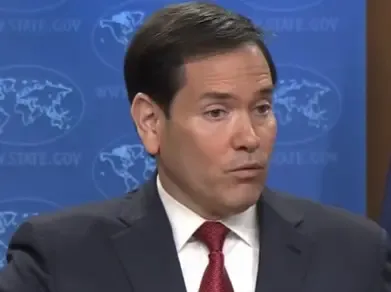
'So this is an important trip, obviously. We're going to go visit three countries strongly aligned with the United States,' Rubio told reporters. 'We have a lot of common interests with them, both taking on regional transnational criminal terrorism and also economic engagements.'
Rubio added that Washington hoped to conclude trade agreements with all three countries 'in the foreseeable future', framing the tour as consistent with a National Security Strategy priority of strengthening the US presence in the Western Hemisphere. He described Ecuador as one of Washington's closest regional security partners, with scope for greater economic cooperation, and said he planned to engage Peru following its recent period of political turmoil.
Why These Deals Matter
The critical-minerals pact comes amid intensifying global competition — particularly between the United States and China — for control of supply chains underpinning electric vehicles, semiconductors, and defence systems. Colombia holds significant deposits of minerals including nickel, cobalt, and copper. Securing preferential access and investment frameworks positions Washington to reduce dependence on Chinese-controlled processing capacity.
The nuclear memorandum, meanwhile, reflects a broader US strategy of expanding civilian nuclear partnerships across Latin America, a region historically cautious about atomic energy. If Colombia moves forward with SMR deployment, it would become one of the first countries in South America to do so — a development that could set a regional precedent.
Point of View
Not sit in a drawer. The nuclear memorandum is the more consequential document in the long run: if Colombia becomes an early SMR adopter, it hands the US a live reference project in Latin America at a moment when the global reactor market is fiercely contested. Critics will rightly ask whether the price-floor mechanisms in the minerals deal protect Colombian producers or primarily serve US industrial policy — a tension the text does not resolve.
NationPress
24 Oct 2026
Frequently Asked Questions
What did the US and Colombia sign in Barranquilla on 9 September?
The United States and Colombia signed two bilateral arrangements: a critical-minerals supply-chain framework and a civil nuclear cooperation memorandum. Both were signed by US Secretary of State Marco Rubio and Colombian Foreign Minister Omar Bula during Rubio's visit to Barranquilla.
What does the critical-minerals agreement involve?
The framework commits both governments to building secure, diversified supply chains for critical minerals and rare earths, with a six-month deadline to mobilise financing for mining and processing projects. Available tools include loans, guarantees, equity investments, price floors, and national security reviews of mineral-asset sales.
What is covered under the civil nuclear memorandum?
The memorandum establishes a framework for Colombia to explore US nuclear technologies, including advanced reactors and small modular reactors (SMRs), as well as American fuel, equipment, and services. Cooperation could extend to nuclear medicine, research reactors, agriculture, and waste management, all under IAEA safeguards.
Why is the US pursuing these deals with Colombia now?
The agreements are part of a broader US strategy to strengthen alliances in the Western Hemisphere, counter Chinese influence over critical-mineral supply chains, and expand civilian nuclear partnerships. Secretary Rubio framed the trip as reflecting a 'trend of alignment with the US' across the region.
Which other countries did Rubio visit on the same tour?
Rubio's three-country tour also included Peru and Ecuador. He said Washington hopes to conclude trade agreements with all three nations 'in the foreseeable future' and described Ecuador as one of the US's closest regional security partners.