US Congress China hearing erupts over race, birthright citizenship
Synopsis
A US Congressional hearing on Chinese influence operations turned into a flashpoint over race and citizenship — with Rep. Ro Khanna calling a witness's remarks on birthright citizenship 'bigoted and xenophobic.' The clash lays bare a fault line Washington has yet to resolve: how to counter Beijing's reach without turning national security into ethnic profiling.
Key Takeaways
The House Select Committee on the Chinese Communist Party hearing on 27 June erupted into a confrontation over race and birthright citizenship .
Congressman Ro Khanna accused witness Michael Lucci of State Armor of making 'bigoted and xenophobic' remarks targeting Chinese Americans .
Lucci denied racism, saying his comments applied only to individuals born in US territories with 'practically zero nexus' to the country who returned immediately to China.
Yang of Asian Americans Advancing Justice warned against replacing 'evidence-based enforcement' with 'ethnicity-based suspicion.' Lawmakers remain divided on countering Chinese espionage without undermining civil rights or deterring high-skilled immigrants.
A US Congressional hearing on China's influence operations descended into a sharp confrontation over race, immigration, and national security on 27 June, after a Democratic lawmaker accused a witness of promoting discriminatory views targeting Chinese Americans. The clash unfolded at the House Select Committee on the Chinese Communist Party and exposed deep divisions over how far Washington should go in countering Beijing's reach inside the United States.
The Exchange That Ignited the Room
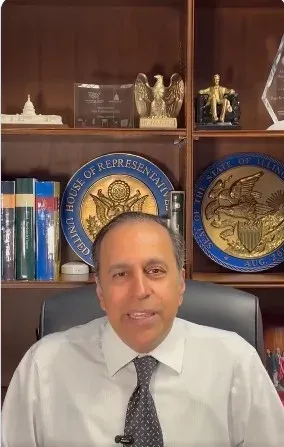
The most heated moment came when Indian American Congressman Ro Khanna confronted Michael Lucci, founder and chief executive of State Armor, over a past social media post. The post had suggested that individuals born as US citizens in American territories but raised in China should have their citizenship status reconsidered.
'I'd like to offer you an opportunity to correct the record for such a bigoted and xenophobic statement,' Khanna said. 'Do you believe millions of Chinese Americans who gained citizenship through birthright should be denaturalised, or are you simply a racist?'
Lucci pushed back, insisting his remarks were narrowly targeted at individuals born briefly in US territories who then returned immediately to China and spent their entire lives there. 'I think that if they have practically zero nexus to the United States America other than they were born in a territory, I think it's worth considering that, yes,' he said when pressed on whether such cases warranted review.
Khanna Presses on Scope and Intent
Congressman Khanna repeatedly challenged Lucci on whether the proposed citizenship review would apply exclusively to individuals connected to China or extend to those linked to other countries — a line of questioning aimed at testing whether the policy was conduct-based or ethnicity-based.
'We'll put out this exchange and how the American people can decide when you're talking about eliminating birthright citizenship for Chinese Americans, whether they think you're a racist,' Khanna said. 'I think a lot of Asian Americans, and many Americans will think you are.'
Lucci denied the allegation and pointed to his own household. 'My household has eight people. I'm the only one with no Chinese ethnicity in my entire household,' he said later in the hearing, arguing the debate should centre on national security policy rather than charges of racism.
Civil Rights Groups Warn Against Ethnic Profiling
John C. Yang, president and executive director of Asian Americans Advancing Justice, told lawmakers that the threat posed by the Chinese government was real — but warned against replacing 'evidence-based enforcement' with 'ethnicity-based suspicion.'
Yang urged Congress to ensure that counter-espionage policies focused on conduct rather than ancestry. He cautioned that sweeping measures could deter scientists, researchers, and students from choosing the United States. 'A targeted approach is not necessarily a softer approach,' Yang said. 'Rather, it is a more effective one.'
The Broader Policy Fault Line
The hearing reflects a defining tension in Washington as the US government intensifies efforts to counter Chinese espionage, technology theft, and foreign influence operations. While there is broad bipartisan consensus that China represents a major strategic challenge, lawmakers remain divided over how to bolster national security without eroding civil liberties or discouraging the high-skilled immigrants who underpin American innovation.
Notably, this is not the first time a China-focused Congressional proceeding has veered into questions of racial profiling — critics have long argued that broad national-security framing risks stigmatising an entire ethnic community. How Congress resolves that tension will shape both US competitiveness and the civil rights landscape for millions of Asian Americans.
Point of View
It hands Beijing a propaganda gift while simultaneously chilling the participation of Chinese American scientists and researchers that US competitiveness depends on. The bipartisan consensus on China as a threat is real — but consensus on the threat does not automatically produce consensus on the remedy, and that gap is becoming operationally costly.
NationPress
27 Jun 2026
Frequently Asked Questions
What happened at the US Congress China influence hearing on 27 June?
A House Select Committee on the Chinese Communist Party hearing on 27 June turned into a heated confrontation when Congressman Ro Khanna accused witness Michael Lucci of making discriminatory remarks about Chinese American birthright citizenship. The exchange highlighted divisions over how to counter Chinese espionage without ethnic profiling.
What did Michael Lucci say about birthright citizenship?
Lucci had posted on social media suggesting that individuals born as US citizens in American territories but raised entirely in China should have their citizenship reconsidered. He clarified at the hearing that his remarks targeted only those with 'practically zero nexus' to the United States beyond the circumstance of birth.
Why did Congressman Ro Khanna call Lucci's remarks racist?
Khanna argued that Lucci's proposal to review birthright citizenship for people connected to China amounted to discriminatory targeting of Chinese Americans as an ethnic group. He repeatedly pressed Lucci on whether the policy would apply equally to individuals linked to other countries, not just China.
What did Asian Americans Advancing Justice say at the hearing?
John C. Yang, president and executive director of Asian Americans Advancing Justice, acknowledged the real threat posed by the Chinese government but warned Congress against replacing evidence-based enforcement with ethnicity-based suspicion. He argued a targeted, conduct-focused approach would be more effective than broad ethnic measures.
What is the broader debate this hearing reflects?
The hearing reflects a wider tension in Washington between strengthening national security against Chinese espionage and protecting the civil rights of Chinese Americans and other Asian communities. Lawmakers broadly agree China is a strategic challenge but remain divided on enforcement methods that do not deter skilled immigrants or erode civil liberties.