US-Japan AMRAAM missile plant deal: 'Operation Supercharge' targets Indo-Pacific edge
Synopsis
In a move Japan called 'groundbreaking', the US and Japan have agreed to build an AMRAAM missile assembly facility on Japanese soil under 'Operation Supercharge' — a direct answer to China's military build-up. With a $20.7 billion Raytheon contract already in place and SM-3 Block IIA production also set to expand, this marks the most significant deepening of allied munitions co-production in the Indo-Pacific in years.
Key Takeaways
Japan and the United States agreed on 30 October 2025 to establish an AMRAAM final assembly and inspection facility in Japan.
The deal was announced by Defence Minister Shinjiro Koizumi at Cebu, the Philippines , on the sidelines of the ASEAN Defence Ministers' Meeting-Plus .
Both sides also agreed to share technical data to boost production of the SM-3 Block IIA ballistic missile interceptor.
Both steps fall under 'Operation Supercharge' , first proposed by Koizumi to Pete Hegseth in Singapore on 30 May .
Raytheon holds a multiyear AMRAAM contract worth up to $20.7 billion , with a target of at least 1,900 missiles a year .
The plant's location, industrial partner, and timeline have not yet been disclosed.
The United States and Japan have agreed to establish a final assembly and inspection facility in Japan for the AMRAAM air-to-air missile, a landmark step that Tokyo described as 'groundbreaking' for allied munitions production in the Indo-Pacific. The agreement was announced on Wednesday, 30 October 2025, in Cebu, the Philippines, on the sidelines of the ASEAN Defence Ministers' Meeting-Plus.
The Agreement and What Was Said
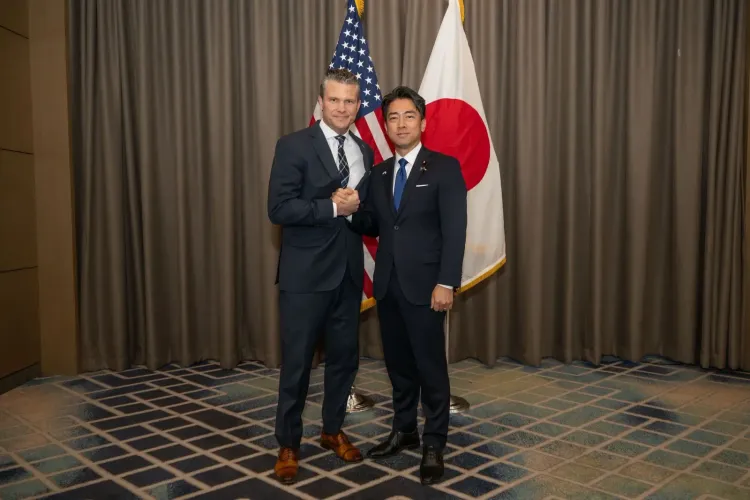
Japanese Defence Minister Shinjiro Koizumi revealed the deal at a press conference after meeting US Secretary of Defense Pete Hegseth. 'We finally reached an agreement on the establishment of a final assembly and inspection facility in Japan for the AMRAAM air-to-air missile, which is essential for the F-35,' Koizumi said.
'This is a groundbreaking agreement that will not only ensure the acquisition of equipment needed by both Japan and the United States, but will also strengthen Japan's defense industry base,' he added.
The two sides also agreed to share the technical information needed to increase production of the SM-3 Block IIA, the ship-based ballistic missile interceptor jointly developed by the two countries.
Operation Supercharge: The Framework Behind the Deal
Both steps fall under 'Operation Supercharge', an initiative Koizumi first proposed to Hegseth at their meeting in Singapore on 30 May to accelerate bilateral co-development and co-production of missiles, including the SM-3 Block IIA and AMRAAM, according to Japan's Ministry of Defense.
Notably, the Pentagon's readout of the meeting did not explicitly mention the AMRAAM facility. It stated that Hegseth 'welcomed Japan's efforts to strengthen its defense industrial capacity, and both leaders committed to continue close coordination on critical munitions production.' The readout also covered greater defence investment, expanded access and presence, realistic training including live-fire exercises, and distributed operations for denial defence in the First Island Chain.
Key Details Still Undisclosed
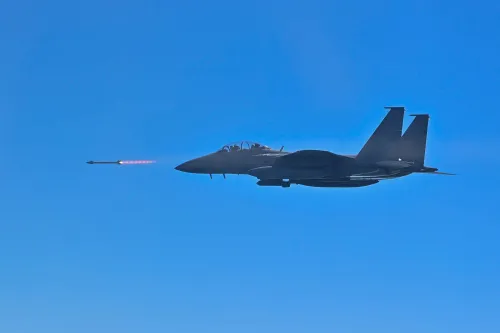
Koizumi did not name the Japanese industrial partner, the location of the plant, a production timeline, or expected output volumes. The AMRAAM, manufactured by RTX's Raytheon, is fired by fighter jets including the F-35 and from ground-based air defence systems.
In September, the Pentagon awarded Raytheon a multiyear AMRAAM contract worth up to $20.7 billion, with an earlier framework agreement calling for production of at least 1,900 missiles a year.
Broader Indo-Pacific Context
The Japan plant would be the latest step in a wider US push to expand allied co-production of munitions across the Indo-Pacific, where Washington and its partners have flagged growing concern over China's military build-up. At their May meeting, Koizumi and Hegseth also discussed cooperation with Australia, South Korea, and the Philippines, according to Japan's Defence Ministry.
Japan has also eased its rules on defence equipment exports in recent years — a revision Koizumi briefed Hegseth on in May — further enabling such co-production arrangements. This agreement marks a significant deepening of the US-Japan defence industrial relationship and signals an accelerating effort to build resilient munitions supply chains in the region ahead of potential contingencies.
Point of View
Possibly for industrial or diplomatic sensitivity reasons. More significantly, 'Operation Supercharge' represents a structural shift: Japan is no longer just a buyer of American weapons but an emerging co-producer, a transformation enabled by Tokyo's quiet rewriting of its arms export rules. The unnamed Japanese industrial partner and undisclosed location suggest the deal is politically sealed but operationally embryonic — the real test will be whether production timelines and output targets are ever made public, or whether, like many allied defence announcements, this remains aspirational.
NationPress
30 Oct 2026
Frequently Asked Questions
What is the US-Japan AMRAAM missile assembly plant agreement?
The United States and Japan have agreed to establish a final assembly and inspection facility in Japan for the AMRAAM air-to-air missile, as announced on 30 October 2025 in Cebu, the Philippines. The facility is intended to serve both nations' military requirements and strengthen Japan's domestic defence industry base.
What is 'Operation Supercharge'?
'Operation Supercharge' is a bilateral defence initiative first proposed by Japanese Defence Minister Shinjiro Koizumi to US Secretary of Defense Pete Hegseth at their meeting in Singapore on 30 May. It aims to accelerate co-development and co-production of missiles, including the SM-3 Block IIA and AMRAAM, between the two allies.
What is the AMRAAM missile and who makes it?
The AMRAAM (Advanced Medium-Range Air-to-Air Missile) is manufactured by RTX's Raytheon and is fired by fighter jets including the F-35 as well as ground-based air defence systems. In September, the Pentagon awarded Raytheon a multiyear AMRAAM contract worth up to $20.7 billion, with a production target of at least 1,900 missiles a year.
What details about the Japan plant are still unknown?
Defence Minister Koizumi did not disclose the Japanese industrial partner, the location of the plant, a production timeline, or expected annual output. These specifics are expected to be announced at a later stage.
Why is this agreement significant for the Indo-Pacific?
The deal is part of a broader US effort to expand allied munitions co-production in the Indo-Pacific amid shared concern over China's military build-up. It marks a deepening of the US-Japan defence industrial relationship and is linked to wider cooperation discussions involving Australia, South Korea, and the Philippines.