US lawmakers probe China link in Tiananmen museum attack in California
Synopsis
Two senior Republican congressmen are pushing the FBI and DOJ to determine whether Beijing ordered or inspired the vandalism of a Tiananmen Square memorial museum in California — framing the break-in not as ordinary crime but as a potential act of Chinese transnational repression, part of a documented pattern of alleged CCP interference targeting dissidents on US soil.
Key Takeaways
Representatives Chris Smith and John Moolenaar wrote to Acting Attorney General Todd Blanche urging a federal investigation into the museum attack.
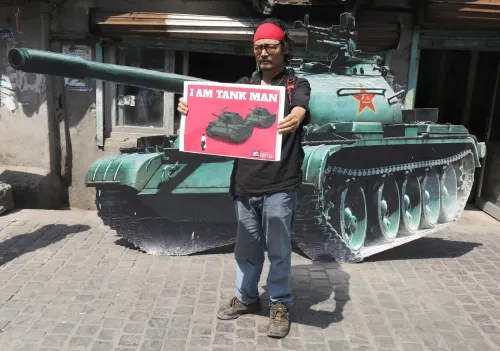
Unknown individuals broke into the June Fourth Massacre Memorial Museum in El Monte, California shortly before the 37th anniversary of the 4 June 1989 crackdown.
Intruders spray-painted exhibits, damaged property, and interfered with the museum's surveillance system .
Lawmakers cited a pattern of alleged CCP-linked incidents in California, including the 2023 APEC summit intimidation and charges against former Arcadia Mayor Eileen Wang .
Both lawmakers support the Transnational Repression Policy Act , bipartisan legislation to counter foreign government harassment on US soil.
Two senior Republican lawmakers have formally urged the US Justice Department and the FBI to investigate whether China was behind the vandalism of a Tiananmen Square memorial museum in El Monte, California, in a move that underscores growing congressional alarm over alleged Chinese transnational repression on American soil.
What Happened at the Museum
Representatives Chris Smith of New Jersey and John Moolenaar of Michigan sent a letter to Acting Attorney General Todd Blanche requesting a full federal investigation. According to public reporting cited by the lawmakers, unknown individuals broke into the June Fourth Massacre Memorial Museum in El Monte shortly before the 37th anniversary of the 4 June 1989 crackdown. The intruders spray-painted walls and exhibits, damaged property, and tampered with the museum's surveillance system.
What the Lawmakers Said
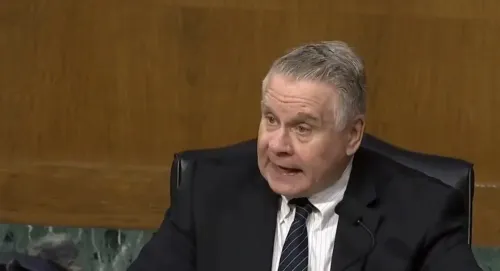
Smith, who co-chairs the Congressional-Executive Commission on China, said the museum 'preserves the irrefutable, brutal truth about the Tiananmen Massacre, the same truth that the CCP has spent nearly four decades actively denying and trying to bury.' He added that the Department of Justice 'must treat this attack with the seriousness it deserves and determine whether it was more than ordinary vandalism.'
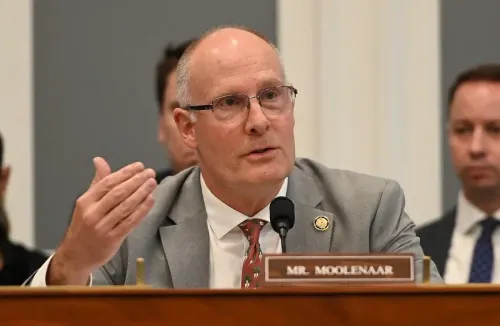
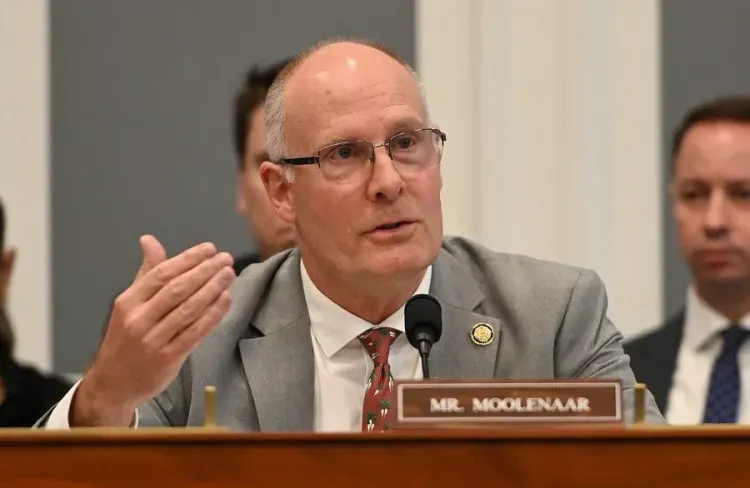
Moolenaar, who chairs the House Select Committee on China, said the Chinese Communist Party (CCP) was 'constantly seeking to silence its critics in the United States through transnational repression.' He called on the DOJ and FBI to investigate in order to 'protect the inalienable rights of the Chinese diaspora seeking freedom in the United States.'
A Pattern of Incidents in California
The lawmakers cited what they described as a troubling pattern of incidents in California. These include the destruction of sculptures and alleged surveillance targeting linked to Liberty Sculpture Park and dissident artist Chen Weiming. They also pointed to violence and intimidation against anti-CCP demonstrators during the 2023 Asia-Pacific Economic Cooperation (APEC) summit in San Francisco, and federal charges against former Arcadia Mayor Eileen Wang for allegedly acting as an illegal agent of China.
What They Are Asking For
The letter asked the Justice Department — including the FBI's Los Angeles Field Office and its National Security Division — to work alongside local authorities to determine whether the attack was connected to China, the CCP, or individuals acting in sympathy with Beijing's campaign to silence dissidents abroad. The lawmakers also requested a written response, a formal briefing, and details about existing reporting systems for museums, civil society organisations, and diaspora communities that suspect they are being targeted by foreign governments.
Both lawmakers have backed the Transnational Repression Policy Act, bipartisan legislation aimed at strengthening US government training, outreach, and accountability tools against foreign governments accused of harassing, intimidating, surveilling, or coercing individuals on American soil. The Chinese government has long suppressed public discussion of the Tiananmen Square crackdown, during which troops opened fire on pro-democracy demonstrators in Beijing in June 1989. Commemorations remain banned in mainland China.
Whether federal investigators will find a direct link to Beijing remains to be seen, but the congressional push signals that the US government is increasingly treating such incidents as potential acts of foreign interference rather than isolated vandalism.
Point of View
Taken alone, could be dismissed as isolated vandalism. Placed alongside the Liberty Sculpture Park incidents, the APEC intimidation episode, and the Eileen Wang prosecution, it starts to look like a pattern — and that is precisely the argument Smith and Moolenaar are making. The more significant question is whether the FBI's Los Angeles Field Office has the training and mandate to distinguish foreign-directed harassment from domestic crime; the lawmakers themselves doubt it does. If the DOJ investigation confirms a CCP link, it would mark a significant escalation in the documented reach of Chinese transnational repression within the United States, and put pressure on the Biden-era framework for countering it.
NationPress
10 Jul 2026
Frequently Asked Questions
What happened at the Tiananmen museum in California?
Unknown individuals broke into the June Fourth Massacre Memorial Museum in El Monte, California, shortly before the 37th anniversary of the 4 June 1989 crackdown. They spray-painted walls and exhibits, damaged property, and tampered with the museum's surveillance system.
Why are US lawmakers calling for a federal investigation?
Representatives Chris Smith and John Moolenaar believe the attack may have been connected to the Chinese Communist Party or individuals acting on Beijing's behalf to silence dissidents abroad. They argue it fits a broader pattern of alleged CCP-linked incidents targeting Chinese democracy advocates in California.
Who are the lawmakers behind the investigation request?
Representative Chris Smith of New Jersey, who co-chairs the Congressional-Executive Commission on China, and Representative John Moolenaar of Michigan, who chairs the House Select Committee on China, jointly wrote to Acting Attorney General Todd Blanche requesting the probe.
What is transnational repression and why does it matter here?
Transnational repression refers to efforts by foreign governments to harass, intimidate, surveil, or coerce their nationals living in other countries. The lawmakers argue the museum attack could be an example of China extending such tactics to the United States, targeting Chinese diaspora communities and democracy advocates.
What legislation are the lawmakers supporting to address this?
Both Smith and Moolenaar support the Transnational Repression Policy Act, a bipartisan bill designed to strengthen US government training, outreach, and accountability tools against foreign governments accused of targeting individuals on American soil.