US House Intelligence panel flags AI, cyber, bio threats in post-9/11 review
Synopsis
Nearly 25 years after 9/11, the US House Intelligence Committee is warning that America's next catastrophic attack could come via AI, cyberspace, or a biological agent — not a hijacked plane. The bipartisan panel's 20 new recommendations, approved at the Flight 93 Memorial itself, expose how much of the original 9/11 Commission's blueprint remains unfinished.
Key Takeaways
The US House Intelligence Committee approved a post- 9/11 review report by voice vote at the Flight 93 National Memorial , Shanksville, Pennsylvania .
The panel warns the next major attack could involve AI , cyberattacks , biological threats , or strikes on critical infrastructure — not hijacked aircraft.
The report tables 20 new recommendations , including a biometric entry-and-exit system and reauthorisation of Section 702 of the Foreign Intelligence Surveillance Act .
Several of the original 9/11 Commission's 41 recommendations from 2004 remain unimplemented, including merging House and Senate intelligence committees.
The review was co-chaired by Congresswoman Elise Stefanik (R-NY) and Congressman Josh Gottheimer (D-NJ), reflecting bipartisan backing.
The September 11, 2001 attacks killed nearly 3,000 people in New York , at the Pentagon , and in Pennsylvania .
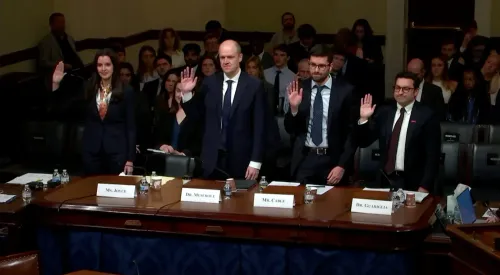
The US House Intelligence Committee has warned that the next major terrorist attack against the United States may not resemble the hijackings of 11 September 2001 — and could instead exploit artificial intelligence, cyberattacks, biological threats, or strikes on critical infrastructure. The committee approved a landmark review report by voice vote at the Flight 93 National Memorial near Shanksville, Pennsylvania, marking nearly 25 years since the attacks that killed close to 3,000 people.
What the Report Covers
The review examines whether the United States has fully implemented all 41 original recommendations of the 9/11 Commission, which issued its findings in 2004. It identifies current blind spots and tables 20 new recommendations to address vulnerabilities the original commission could not have anticipated. The task force was co-chaired by Republican Congresswoman Elise Stefanik of New York and Democratic Congressman Josh Gottheimer of New Jersey, signalling rare bipartisan consensus on national security priorities.
Key Threats Identified
Beyond traditional terrorism, the panel flags artificial intelligence, drones, unmanned systems, biological threats, attacks on telecommunications and the electricity grid, economic coercion, home-grown violent extremism, and asymmetric warfare as emerging national security dangers. The report specifically calls for preparations to address so-called 'Black Swan' risks linked to the rapid proliferation of AI — scenarios that are low-probability but potentially catastrophic.
New Recommendations
Among the 20 new recommendations, the committee calls for full implementation of a biometric entry-and-exit system for passport control comparable to the standard used by the European Union — a proposal that echoes longstanding concerns that stronger customs and immigration controls might have prevented several of the 11 September hijackers from entering the country. The panel also urges interoperable information-sharing systems across the US intelligence community, and closer coordination among intelligence agencies and federal, state, local, and tribal authorities.
Additional recommendations include reviewing intelligence-classification standards to reduce overclassification, reauthorising Section 702 of the Foreign Intelligence Surveillance Act — which permits collection of electronic communications involving foreign nationals outside the US — and exploring the possible creation of a National Intelligence Reserve Corps. Mandatory training in handling classified material and counterintelligence is also proposed for all members of Congress and congressional staff holding security clearances.
Unfinished Business from 2004
The task force found that several original commission proposals remain incomplete. Notably, the 9/11 Commission had recommended merging the separate House and Senate intelligence committees into a single joint body — a structural reform Congress never adopted. The committee's failure to act on that recommendation has, critics argue, left coordination gaps that persist to this day.
What Committee Leaders Said
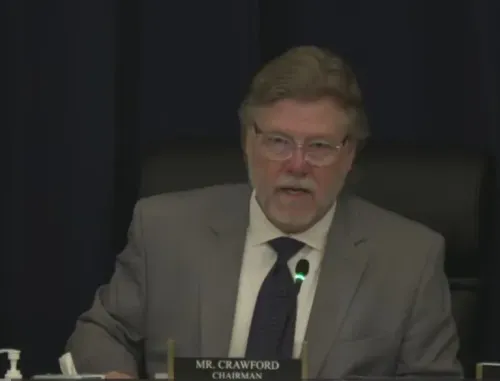
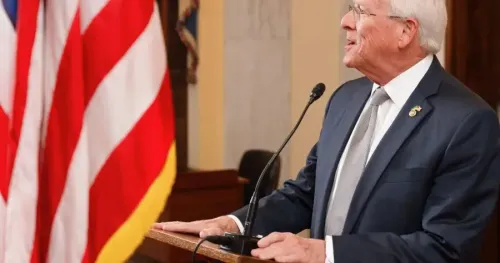
House Intelligence Committee Chairman Rick Crawford cautioned that the country could not repeat the 'failure of imagination' identified by the original 9/11 Commission. 'The next strategic attack against the United States may not involve hijacked airplanes,' Crawford said. The committee held consultations with victims' families, law-enforcement officials, and the Director of National Intelligence before approving the report. The reauthorisation of Section 702, in particular, is expected to reignite debate over the balance between intelligence gathering and civil liberties protections.
What Comes Next
The report's release comes as the United States approaches the 25th anniversary of the September 11 attacks. Whether Congress will act on the new recommendations — particularly the structural reforms it previously shelved — remains an open question. The creation of the Office of the Director of National Intelligence and the National Counterterrorism Center, both products of the 2004 commission, stand as benchmarks for what sustained political will can achieve; the current report tests whether that will still exists.
Point of View
Core 9/11 Commission reforms — including a unified congressional oversight body — remain unimplemented. The new recommendations on AI and biological threats are directionally sound, but the track record on follow-through is poor. Section 702 reauthorisation will predictably reignite the civil-liberties debate, risking another cycle of legislative stalemate. The deeper accountability question — why structural reforms recommended in 2004 were quietly shelved — goes largely unasked in the report itself.
NationPress
16 Oct 2026
Frequently Asked Questions
What did the US House Intelligence Committee report on 9/11 warn about?
The committee warned that the next major attack on the United States may not involve hijacked aircraft, but could instead exploit artificial intelligence, cyberattacks, biological threats, or strikes on critical infrastructure. The report was approved at the Flight 93 National Memorial near Shanksville, Pennsylvania, nearly 25 years after the September 11, 2001 attacks.
What are the 20 new recommendations in the report?
The 20 new recommendations include implementing a biometric entry-and-exit system comparable to the EU's, improving intelligence-sharing across agencies, reauthorising Section 702 of the Foreign Intelligence Surveillance Act, preparing for AI-related 'Black Swan' risks, and exploring a National Intelligence Reserve Corps. Mandatory counterintelligence training for all members of Congress and cleared staff is also proposed.
Which original 9/11 Commission recommendations remain unimplemented?
The task force found several proposals incomplete, most notably the recommendation to merge the House and Senate intelligence committees into a single joint body — a reform Congress never adopted. Changes to customs and immigration controls also remain only partially fulfilled.
What is Section 702 of the Foreign Intelligence Surveillance Act?
Section 702 permits the US government to collect electronic communications involving foreign nationals located outside the United States. Its reauthorisation, recommended in the report, is expected to renew debate over the balance between national security intelligence gathering and privacy protections.
Who led the bipartisan task force behind the report?
The task force was co-chaired by Republican Congresswoman Elise Stefanik of New York and Democratic Congressman Josh Gottheimer of New Jersey. The committee consulted victims' families, law-enforcement officials, and the Director of National Intelligence before approving the report by voice vote.