US plans faster arms-export approvals, new ITAR general-license route for trusted partners
Synopsis
Washington has unveiled a 12-action overhaul of ITAR, the rulebook governing US arms exports — cutting the licence-decision window from 60 to 50 days and creating a new general-licence route for trusted partners. The move lands against the backdrop of a Modi-Trump commitment to streamline defence trade, though India is not named and no country is yet guaranteed the new fast-track treatment.
Key Takeaways
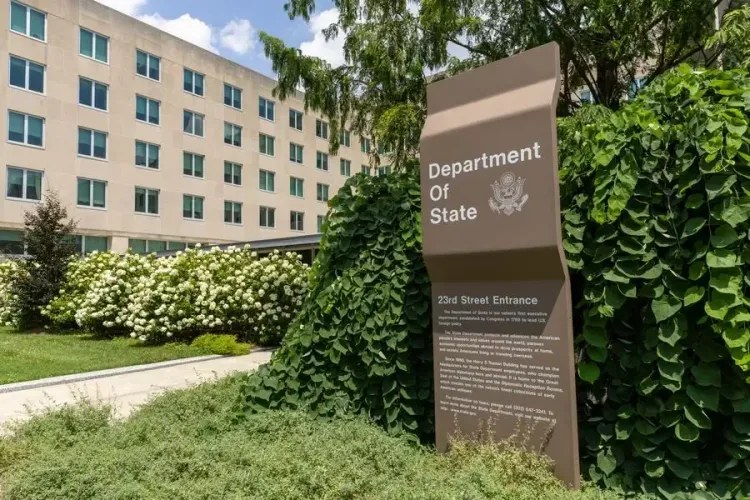
The US State Department announced a package of 12 regulatory actions to overhaul ITAR arms-export rules on 18 November 2026 .
Export-licence decisions would be targeted within 50 days — down from the current 60-day timeframe — where practicable.
A new ITAR General License mechanism would pre-approve certain defence transfers to trusted partner governments , though eligible countries have not been named.
The 90-day reform exercise , led by Under Secretary Thomas G.
DiNanno , ran from 30 July to 28 October 2026 , with 8 Federal Register notices already published.
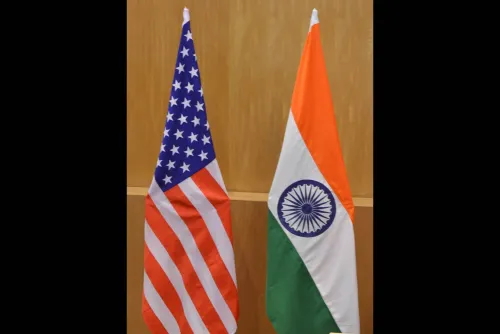
The changes follow a February 2025 Modi-Trump joint statement committing to streamline US-India defence trade, but Tuesday's announcement does not name India as an eligible partner.
The department adjudicated approximately 25,000 ITAR licences valued at about $200 billion in fiscal 2026 .
The United States has outlined a sweeping package of regulatory changes to speed up defence-export decisions and pre-approve certain arms transfers to trusted partner governments, the State Department announced on Tuesday, 18 November 2026. The reforms target the International Traffic in Arms Regulations (ITAR), which govern exports and transfers of specified defence equipment, technology, and services.
Key Reforms Announced
Under the proposed changes, the State Department said it would seek to decide export-licence applications within 50 days, where practicable — down from the current 60-day timeframe. A new general-licence mechanism is also planned, along with a presumption of approval for certain applications submitted without administrative deficiencies.
State Department spokesman Tommy Pigott said in a statement: 'Once in effect, we anticipate that the ITAR General License will pre-approve transfers of certain defence articles to some of America's most trusted partner governments.' The statement did not identify the eligible governments, the specific equipment covered, or an effective date for the new mechanism.
India Connection: Modi-Trump Commitment in Focus
The announcement is notable in the context of a February 2025 joint statement by Prime Minister Narendra Modi and President Donald Trump, in which the two leaders committed to reviewing arms-transfer regulations — including ITAR — to streamline defence trade, technology exchanges, maintenance, spare-parts supplies, and repairs of US-provided systems in India. However, Tuesday's announcement does not name India and does not establish that India will receive the proposed general-licence treatment.
Scope of the Reform Exercise
The changes stem from a 90-day reform exercise led by Under Secretary for Arms Control and International Security Thomas G. DiNanno, which ran from 30 July to 28 October 2026. The exercise advanced 12 regulatory actions, of which eight Federal Register notices have been published, with others expected shortly.
A central objective, according to the department, is to narrow the US Munitions List so that ITAR controls focus on technologies providing a critical military or intelligence advantage. One illustrative proposal published in the Federal Register on 1 October would remove certain items from the Munitions List, revise definitions, and create a licensing exemption for temporarily returning a foreign defence article to its foreign manufacturer. Public comments on that proposal remain open until 30 November.
Notably, items removed from the Munitions List under such proposals would transfer to Commerce Department export-control jurisdiction — not automatically become free of export restrictions.
Important Caveats
The proposed 50-day decision timeframe is qualified by whether it is 'practicable', and the announcement does not provide for automatic approval when that period expires. Pigott was explicit: 'None of these proposed reforms bypasses statutory requirements.'
The department said it adjudicated approximately 25,000 ITAR licences valued at about $200 billion during fiscal 2026 — figures describing licensing decisions rather than completed weapons deliveries.
Strategic Rationale
The administration argues that expanding foreign arms sales sustains American production lines, lowers unit costs for the US military, and gives manufacturers and suppliers more predictable demand. Critics and watchdog groups have previously argued that accelerating approvals must be balanced against human-rights vetting and end-use monitoring. This comes amid broader US efforts to strengthen defence-industrial partnerships across the Indo-Pacific and in Europe, where demand for US-origin systems has surged.
With public comment periods still open and several Federal Register notices yet to be published, the full contours of the reforms are expected to crystallise in the coming weeks.
Point of View
No equipment is listed, and no hard deadline is attached to the 50-day target. The reforms are architecturally promising but operationally vague at this stage. For India, the Modi-Trump February 2025 joint commitment on ITAR remains a political signal rather than a legal guarantee — the gap between that signal and an actual general-licence designation is wide and will depend on diplomacy well below the headline level. More broadly, the administration's argument that arms sales lower US unit costs and stabilise production lines is strategically coherent but sidesteps the harder question: accelerated approvals require commensurate rigour in end-use monitoring, and the announcement is silent on how that will be strengthened.
NationPress
18 Nov 2026
Frequently Asked Questions
What is the ITAR general-licence mechanism the US is proposing?
It is a new route under the International Traffic in Arms Regulations that would pre-approve certain defence transfers to trusted partner governments without requiring a case-by-case export-licence application. The State Department has not yet named the eligible countries or the specific equipment covered.
How does the proposed 50-day timeline change the current process?
Currently, the State Department targets export-licence decisions within 60 days. The new proposal would shorten that to 50 days where practicable, but it does not provide for automatic approval if the deadline is missed, and statutory requirements remain in place.
Does the announcement mean India will get faster arms-export approvals?
Not automatically. While Prime Minister Narendra Modi and President Donald Trump committed in a February 2025 joint statement to reviewing ITAR to streamline US-India defence trade, Tuesday's State Department announcement does not name India or any other specific country as an eligible partner for the general-licence route.
What was the 90-day ITAR reform exercise?
It was an internal review led by Under Secretary Thomas G. DiNanno that ran from 30 July to 28 October 2026, producing 12 regulatory actions. Eight Federal Register notices have been published, with more expected, covering changes to the US Munitions List, licensing exemptions, and definitional revisions.
What happens to items removed from the US Munitions List?
Items removed from the Munitions List do not automatically become free of export restrictions. They transfer to Commerce Department jurisdiction under separate export-control rules, meaning oversight continues under a different regulatory framework.