US views India as 'extraordinary' AI partner, eyes joint tech stack
Synopsis
Washington isn't just selling AI to India — it wants New Delhi as a co-builder of the global AI stack. US Commerce Secretary Howard Lutnick's 'extraordinary opportunity' framing at the G20 Innovation Ministerial in Chapel Hill is the clearest signal yet that India is being positioned as a structural partner in America's AI architecture, not merely a customer for its chips and models.
Key Takeaways
US Commerce Secretary Howard Lutnick called India an 'extraordinary opportunity' for AI cooperation at the G20 Innovation Ministerial in Chapel Hill, North Carolina on 3 September .
The US and India are working to build a joint AI technology stack , with American frontier models as the anchor layer.
G20 members reached consensus on the Carolina Principles for Emerging Technology , covering research investment, commercialisation, and a light-touch regulatory approach.
White House science advisor Michael Kratsios highlighted the American AI Exports Program , aimed at extending US chips, models, and applications to partner nations.
Kratsios urged G20 nations, including India, to integrate AI into scientific research across chemistry, mathematics, physics, and materials science .
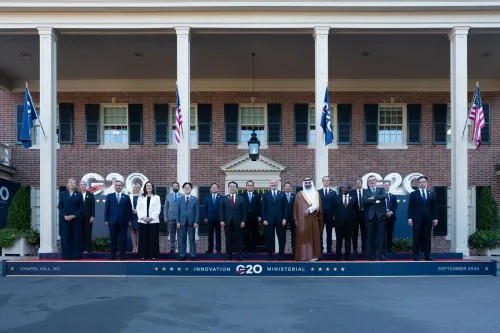
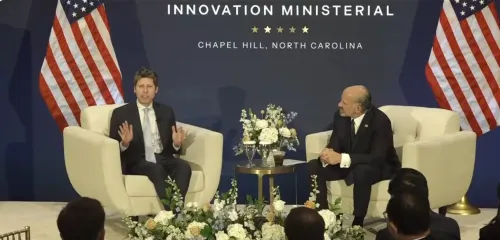
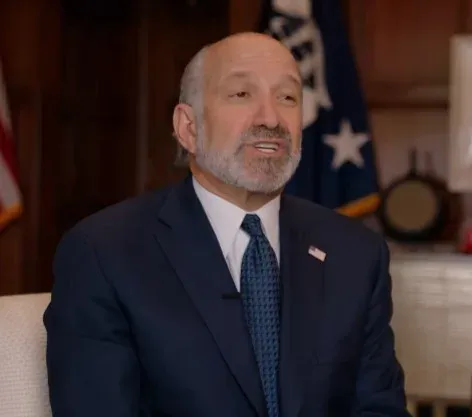
US Commerce Secretary Howard Lutnick on 3 September described India as an 'extraordinary opportunity' for artificial intelligence cooperation, saying Washington and New Delhi are actively working to build an integrated AI technology stack together. The remarks came at the close of the G20 Innovation Ministerial in Chapel Hill, North Carolina, marking one of the clearest public articulations yet of US intent to embed India into its global AI architecture.
What Lutnick Said
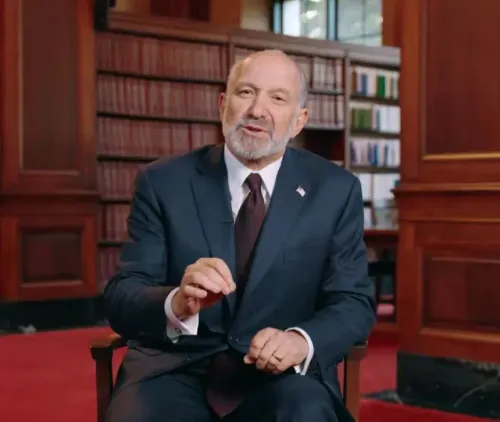
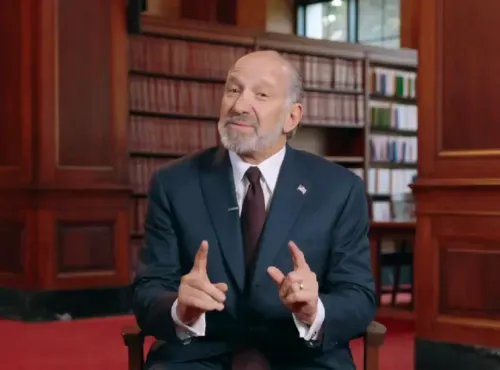
'India is an extraordinary opportunity, and we are working together, as I said, to try to build that AI stack together,' Lutnick told reporters after the two-day ministerial concluded. He outlined a model in which individual countries — including India — could develop national champions in specific segments of the AI value chain while anchoring to American frontier models and technology companies.
'The idea is the frontier models are clearly American models,' Lutnick said, adding that Washington's goal is to integrate its AI stack with national systems so that it can 'succeed globally.'
The Carolina Principles and G20 Consensus
Michael Kratsios, Director of the White House Office of Science and Technology Policy and science advisor to the President, said the ministerial concluded with agreement on the Carolina Principles for Emerging Technology — a framework designed to guide governments through the discovery, development, and deployment of new technologies.
'The Carolina Principles, which we all agree to here at the G20, reflect the common features of the innovation lifecycle across all emerging technologies,' Kratsios said. The principles call on governments to invest in foundational research, strengthen commercialisation pathways, encourage trusted adoption, and apply existing sector-specific rules where appropriate — reserving new regulation only for genuinely novel issues.
Lutnick noted that achieving consensus among all G20 members required extensive negotiations, acknowledging that geopolitical considerations routinely complicate multilateral agreement. 'When you bring global leaders together, there's always lots of politics,' he said.
AI in Science and the American Exports Push
Kratsios underscored the growing role of AI in scientific research, arguing that governments must push their scientific communities to absorb the technology into core workflows. 'Something that we shared with all the G20 nations, I think is very applicable to India is this fundamental belief that we have to sort of push our science community to absorb AI into what they do to work,' he said. He cited chemistry, mathematics, physics, and materials science as fields ripe for AI-driven transformation.
Kratsios also highlighted the Trump administration's American AI Exports Program, which is intended to make US chips, models, and applications available to partner nations. 'We have the very best chips, we have the very best models, we have the very best applications, and we wanna make those available to all of our partners, friends, and allies all around the world,' he said.
India-US Tech Partnership in Context
India and the United States have steadily deepened cooperation across artificial intelligence, semiconductors, quantum technology, telecommunications, and scientific research in recent years, with technology emerging as a central pillar of their broader strategic partnership. Lutnick's framing of India as an 'extraordinary opportunity' — rather than simply a market — signals a shift toward treating New Delhi as a co-architect of the US-led AI ecosystem, not merely an end-user. How that translates into concrete agreements on data governance, chip access, and model licensing will be the real measure of the partnership's depth.
Point of View
Which largely framed India as a recipient of American innovation. The real question is whether 'together' means genuine co-development or a more familiar arrangement where India gets access to frontier models on Washington's terms. The Carolina Principles' emphasis on existing sector rules over new regulation also deserves scrutiny: it effectively pre-empts countries from crafting independent AI governance frameworks, a tension India will have to navigate as it develops its own data and AI policy architecture. The partnership's depth will be tested not in ministerial statements, but in whether India gets meaningful access to advanced chips and model weights — or only the application layer.
NationPress
3 Sept 2026
Frequently Asked Questions
What did US Commerce Secretary Howard Lutnick say about India and AI?
Lutnick described India as an 'extraordinary opportunity' for AI cooperation and said the US is working with New Delhi to build an integrated AI technology stack. He made the remarks at the conclusion of the G20 Innovation Ministerial in Chapel Hill, North Carolina, on 3 September.
What are the Carolina Principles for Emerging Technology?
The Carolina Principles are a framework agreed upon by all G20 members at the Chapel Hill ministerial to guide governments in supporting the discovery, development, and deployment of emerging technologies. They call for investment in foundational research, stronger commercialisation pathways, and applying existing rules where possible rather than creating new regulations.
What is the American AI Exports Program?
The American AI Exports Program is a Trump administration initiative designed to make US chips, AI models, and applications available to partner countries and allies. White House science advisor Michael Kratsios described it as a mechanism to extend American AI capabilities globally.
How does this fit into the broader India-US relationship?
India and the US have expanded cooperation across AI, semiconductors, quantum technology, and telecommunications in recent years, with technology becoming a core pillar of their strategic partnership. Lutnick's remarks at the G20 ministerial reinforce that trajectory and suggest Washington wants India embedded in its global AI architecture.
What role does India play in the G20 AI framework?
India is a G20 member and, according to US officials, a priority partner for integrating American frontier AI models with national technology systems. The US framework envisions countries like India developing national AI champions in specific segments while anchoring to US-developed frontier models.