Roblox child safety hearing: US senators push bill to end forced arbitration
Synopsis
US senators took aim at Roblox on Tuesday over child exploitation allegations, launching a bipartisan bill to let affected families sue in court even when platforms demand private arbitration. With roughly 40% of Roblox's own reports falling into an informational category and Indian users exempt from its arbitration clause, the hearing exposes how online gaming's child-safety problem is as much a legal architecture problem as a content one.
Key Takeaways
The US Senate Judiciary Subcommittee on Crime and Counterterrorism held a hearing on Roblox and child exploitation allegations on Tuesday, 18 November 2026 .
Senators Josh Hawley and Dick Durbin introduced the No Forced Arbitration for Child Sexual Exploitation and Cyber Injuries Act , enabling families to pursue court action despite arbitration clauses.
Roblox's arbitration agreement covers US and Canadian residents but does not apply to residents of India .
Roblox Chief Safety Officer Matt Kaufman said roughly 40% of company reports are informational, cautioning against equating higher reporting with more abuse.
Roblox's in-app chat bars photo and video sharing; the platform uses age checks, link restrictions and grooming-detection systems.
The bill is not yet law and does not itself establish company liability; it now moves through the Senate legislative process.
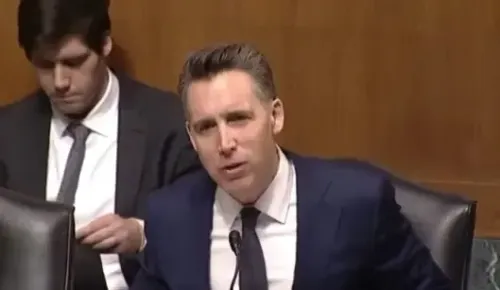
The US Senate Judiciary Subcommittee on Crime and Counterterrorism on Tuesday convened a formal hearing into allegations of child exploitation on Roblox, as a bipartisan legislative effort sought to strip technology companies of their ability to block affected families from pursuing court action through mandatory arbitration clauses.
The Bipartisan Bill at the Centre of the Debate
Republican Senator Josh Hawley of Missouri and Democratic Senator Dick Durbin of Illinois this week introduced the No Forced Arbitration for Child Sexual Exploitation and Cyber Injuries Act, following a joint congressional investigation into Roblox launched in August. The bill, if enacted, would allow families of children harmed by technology products or online sexual exploitation to pursue lawsuits in court — even when a platform's terms of service mandate private arbitration. It would also permit class or collective actions and vest authority in a judge, rather than an arbitrator, to determine whether the proposed protections apply. Families who prefer arbitration would still retain that option.
Durbin argued that legal agreements buried inside a platform's terms of service should not curtail a family's right to access a judge or jury. The proposal, however, is not yet law and would not itself establish a company's liability for alleged abuse.
What Roblox's Current Terms Allow
Roblox's existing arbitration agreement covers residents of the United States and Canada, with the exception of those in Quebec. Residents of India are not subject to the arbitration clause. The platform's terms also include a provision allowing covered users to opt out of arbitration by sending written notice within 30 days of first creating an account. For users under 18, Roblox requires a parent or guardian to accept its terms on their behalf.
Roblox's Safety Defence
In a statement published on 12 November — ahead of the Senate hearing — Roblox Chief Safety Officer Matt Kaufman said the company actively cooperates with law enforcement and reports suspected child sexual exploitation to the National Center for Missing and Exploited Children. Kaufman cautioned against interpreting a rise in reports as evidence that abuse was growing, noting that detection methods, platform design and reporting practices all influence the figures. He added that roughly 40 per cent of Roblox's reports fall into an informational category — including exchanges between minors involving explicit language absent any predatory adult.
The company said its safety infrastructure includes age-gated chat, restrictions on external links, and systems designed to detect grooming or attempts to move children off the platform. Notably, Roblox's in-app chat does not permit users to share photographs or videos.
The Broader Child Safety Concerns
The hearing's scope extended well beyond arbitration mechanics. Witnesses — including individuals identified by the committee as survivors, online safety advocates, a child-protection lawyer and a law professor — raised concerns about whom children are able to communicate with, what personal data they disclose on the platform, and whether bad actors encourage them to migrate conversations to third-party applications.
Roblox's own safety guidance warns that moving conversations to external platforms exposes users to different — and potentially weaker — protections, risks revealing personal information and can make it significantly harder for both the company and law enforcement to investigate wrongdoing. This comes amid growing global pressure on gaming and social platforms to implement more robust child-safety standards, with US legislators increasingly willing to pursue statutory remedies where voluntary measures are seen to have fallen short.
What Happens Next
The bill will now proceed through the Senate legislative process; its passage is not guaranteed. Tech industry groups are expected to contest provisions that override arbitration agreements, arguing such clauses streamline dispute resolution. For families of minors using Roblox and similar platforms, the outcome of this legislative fight could determine whether they ever see a courtroom.
Point of View
And whether its passage would actually improve detection and accountability or simply shift the venue for disputes.
NationPress
18 Nov 2026
Frequently Asked Questions
What is the No Forced Arbitration for Child Sexual Exploitation and Cyber Injuries Act?
It is a bipartisan bill introduced by Senators Josh Hawley and Dick Durbin that would allow families of children harmed by technology products or online sexual exploitation to sue companies in court, even when platform terms require private arbitration. The bill would also permit class actions and require a judge — not an arbitrator — to rule on whether the protections apply.
What did the US Senate hearing on Roblox cover?
The Senate Judiciary Subcommittee on Crime and Counterterrorism held a hearing on Tuesday examining allegations of child exploitation on Roblox. Witnesses included individuals identified as survivors, online safety advocates, a child-protection lawyer and a law professor, with discussion covering communication risks, data disclosure and arbitration barriers.
Does Roblox's arbitration clause apply to users in India?
No. Roblox's current arbitration agreement applies only to residents of the United States and Canada, excluding Quebec. It explicitly does not apply to residents of India.
What safety measures does Roblox say it has in place?
Roblox says it uses age-gated chat, restrictions on external links, and systems to detect grooming or attempts to move children off the platform. Its in-app chat does not allow users to share photos or videos, and the company reports suspected child sexual exploitation to the National Center for Missing and Exploited Children.
What happens next with the proposed legislation?
The bill must pass through the full Senate legislative process and would need to be signed into law before taking effect. It does not currently establish any company's liability for alleged abuse and faces likely opposition from technology industry groups that favour arbitration as a dispute-resolution mechanism.