US Supreme Court upholds birthright citizenship, Indian Americans cheer ruling
Synopsis
The US Supreme Court's reaffirmation of birthright citizenship is more than a legal footnote — it directly shields over 5.2 million Indian Americans, including 400,000 H-1B professionals and 1.2 million stuck in the green card backlog, from the consequences of a Trump executive order that critics called flatly unconstitutional. Indian American lawmakers across party lines were unified in their response, a rare show of solidarity on an issue that cuts to the heart of immigrant identity.
Key Takeaways
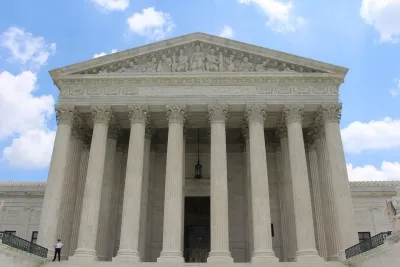
The US Supreme Court on 1 July reaffirmed birthright citizenship under the Fourteenth Amendment , invalidating President Trump's executive order.
Indian American lawmakers Raja Krishnamoorthi , Suhas Subramanyam , Pramila Jayapal , and Shri Thanedar all welcomed the ruling.
The decision affects nearly 5.2 million Indian Americans , including over 1.2 million in the employment-based green card backlog and 400,000+ H-1B professionals.
FIIDS President Khanderao Kand said the ruling allows millions of families to plan their futures with greater certainty.
Birthright citizenship has been guaranteed under the Fourteenth Amendment since 1868 ; the ruling reinforces that it cannot be altered by executive order.
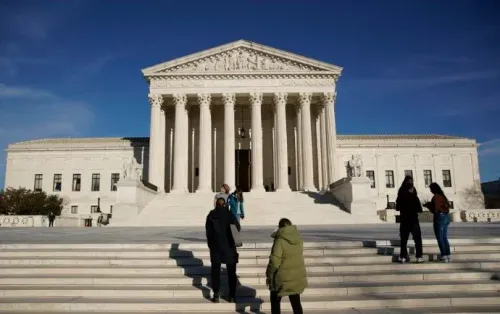
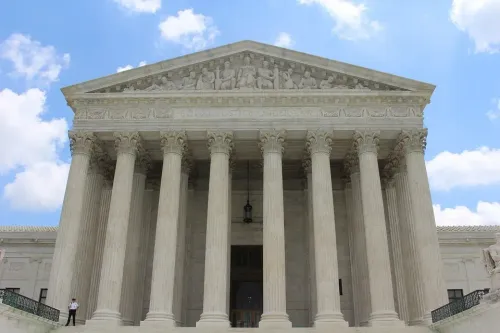
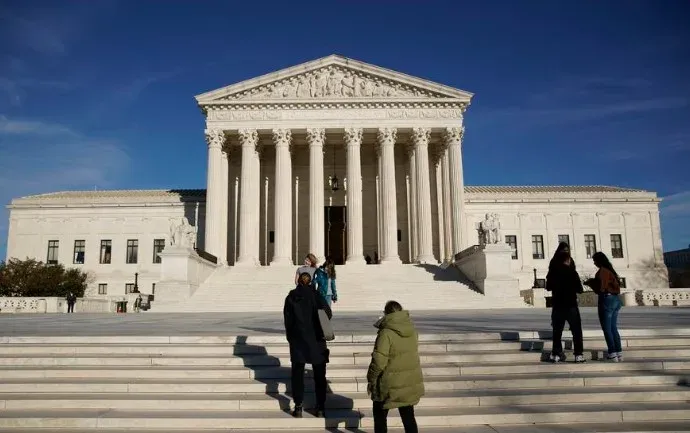
The US Supreme Court on 1 July reaffirmed birthright citizenship under the Fourteenth Amendment, striking down President Donald Trump's executive order that sought to curtail it — a decision welcomed by Indian American lawmakers, community leaders, and advocacy groups who called it a victory for the Constitution and immigrant families across the country.
Indian American Lawmakers Respond
Congressman Raja Krishnamoorthi said the ruling reaffirmed 'a fundamental constitutional principle: every child born in the United States is an American citizen.' He noted that since its ratification following the Civil War, the Fourteenth Amendment has enshrined equal citizenship and equal protection under the law. 'The Supreme Court's decision makes clear that those constitutional rights cannot be rewritten by executive order because the Constitution, not the President, governs the rights of the American people,' Krishnamoorthi said.
Virginia Congressman Suhas Subramanyam welcomed what he described as the court's recognition that Trump's order was unconstitutional. 'I'm glad the courts recognised that President Trump's birthright citizenship executive order was a blatant and unconstitutional attempt to strip citizenship from children of immigrants all across the country,' he said. 'These immigrants are folks who have served our country in so many ways and contributed to the success of our economy. And make no mistake: they are American.' Subramanyam added that lawmakers would 'continue to push for long overdue, commonsense immigration reform and fight this administration's blatant immigration overreach.'
Congresswoman Pramila Jayapal was equally direct. 'Donald Trump is not a king, and he cannot, with the stroke of a pen, change our Constitution,' she said. 'Today's ruling rightly reaffirms that if you are born in America, you are American, plain and simple.' She urged the administration to stop issuing executive orders that were 'clearly illegal, anti-immigrant and traumatising to Americans across the country.'
Michigan Congressman Shri Thanedar called the judgment 'a major win for civil rights and the rule of law,' adding that the decision was 'a reminder of how fragile our rights can be.'
What the Ruling Means for Indian Americans
The verdict carries particular weight for the Indian American community — one of the fastest-growing immigrant groups in the United States. According to the Foundation for India and Indian Diaspora Studies (FIIDS), there are nearly 5.2 million Indian Americans in the country, including more than 1.2 million individuals in the employment-based green card backlog and over 400,000 Indian H-1B professionals.
FIIDS President Khanderao Kand said birthright citizenship 'has been a cornerstone of realizing the American Dream for immigrants' and that the ruling would allow 'millions of families' to plan their futures with greater certainty. Indian American leader Bhavini Patel called the decision 'a beautiful celebration and acknowledgement of the power of the US Constitution,' adding that it reaffirmed 'the fabric of this country is built on its diversity.'
Trump's Reaction
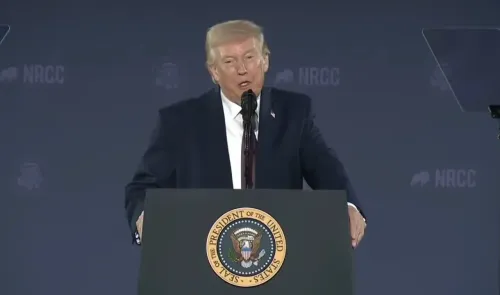
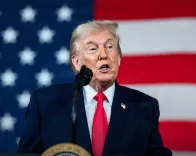
President Trump responded on social media with a post that appeared to mock the outcome, writing: 'I would like to congratulate President Xi, and the Great Country of China, on their massive Birthright Citizenship WIN!' The remark drew attention for its sarcastic framing, though the White House did not immediately elaborate on next steps.
Constitutional Background
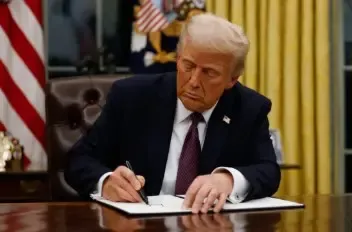
Birthright citizenship has been guaranteed under the Citizenship Clause of the Fourteenth Amendment since 1868, adopted in the aftermath of the Civil War. The clause has long ensured that nearly all children born on US soil automatically acquire American citizenship, regardless of their parents' immigration status. Trump's executive order, issued earlier this year, had sought to restrict that guarantee — a move critics immediately challenged as unconstitutional.
What Comes Next
With the Supreme Court's ruling now on record, legal experts say a fresh constitutional challenge to birthright citizenship would face an exceptionally high bar. Indian American lawmakers have signalled they will press for broader immigration reform, including addressing the green card backlog that leaves hundreds of thousands of Indian professionals in prolonged limbo. The ruling, for now, restores legal certainty — but the broader immigration debate in Washington is far from settled.
Point of View
But it does not resolve the underlying political pressure on immigration that the Trump administration has consistently applied. For Indian Americans specifically, the decision is relief, not resolution — the green card backlog remains one of the most acute immigration failures in US policy, entirely unaddressed by this ruling. The bipartisan praise from Indian American lawmakers also obscures a harder truth: birthright citizenship should never have been in legal jeopardy in the first place, and the fact that it reached the Supreme Court reflects how aggressively the current administration has tested constitutional limits. The next front will likely be H-1B policy and backlog reform, where no comparable judicial shield exists.
NationPress
1 Jul 2026
Frequently Asked Questions
What did the US Supreme Court rule on birthright citizenship?
The US Supreme Court reaffirmed on 1 July that birthright citizenship is constitutionally guaranteed under the Fourteenth Amendment and cannot be revoked by executive order. The ruling effectively struck down President Donald Trump's executive order that had sought to restrict automatic citizenship for children born on US soil to immigrant parents.
Why does this ruling matter for Indian Americans?
The ruling directly affects nearly 5.2 million Indian Americans, including over 1.2 million individuals in the employment-based green card backlog and more than 400,000 H-1B professionals. Birthright citizenship protects the US-born children of these workers, many of whom face decades-long waits for permanent residency.
What did Indian American lawmakers say about the ruling?
Congressmen Raja Krishnamoorthi, Suhas Subramanyam, Shri Thanedar, and Congresswoman Pramila Jayapal all welcomed the decision. They called it a reaffirmation that constitutional rights cannot be altered by executive order and pledged to continue pushing for broader immigration reform.
How did President Trump react to the Supreme Court's decision?
President Trump responded on social media with a sarcastic post congratulating China's President Xi, writing: 'I would like to congratulate President Xi, and the Great Country of China, on their massive Birthright Citizenship WIN!' The White House did not immediately clarify the administration's next steps.
What is the Fourteenth Amendment's Citizenship Clause?
The Citizenship Clause of the Fourteenth Amendment, ratified in 1868 after the Civil War, guarantees that nearly all children born on US soil automatically become American citizens regardless of their parents' immigration status. The Supreme Court's ruling reaffirmed that this constitutional provision cannot be overridden by presidential executive action.