CISA rebuild: Trump plans 600 new hires to counter China, Russia cyber threats
Synopsis
The Trump administration has admitted that CISA — America's primary cyber defence agency — is running at half strength, and has pledged to hire 600 specialists and install new leadership. With China, Russia, Iran, and North Korea intensifying attacks on US infrastructure, Homeland Security Secretary Mullin's testimony signals a belated but significant course correction, with a 12-month rebuild clock now ticking.
Key Takeaways
Homeland Security Secretary Markwayne Mullin told Congress on 26 June that CISA is operating at roughly half its required staffing level.
The Trump administration plans to hire approximately 600 additional cybersecurity specialists and appoint a new CISA director .
Mullin estimated the rebuild would take roughly 12 months once new leadership is in place.
State-sponsored cyber threats from China , Russia , Iran , and North Korea are targeting US government networks, businesses, and critical infrastructure daily.
DHS is reviewing internal regulations to remove bureaucratic obstacles slowing cyber operations, and may seek new legislative guidance on AI -related challenges.
The US has expanded cybersecurity cooperation with allies including India , making CISA's effectiveness a broader strategic concern.
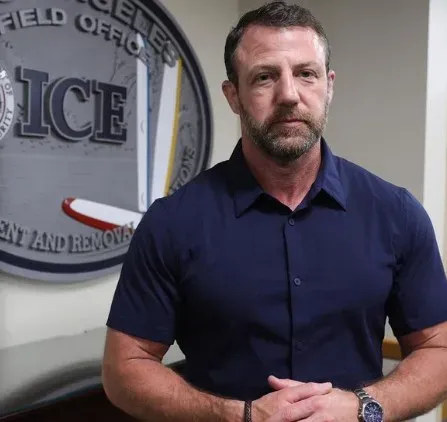
Homeland Security Secretary Markwayne Mullin told lawmakers on 26 June that the Trump administration intends to overhaul the Cybersecurity and Infrastructure Security Agency (CISA), hiring roughly 600 additional specialists and installing new leadership to sharpen the agency's defences against state-sponsored cyber attacks from China, Iran, Russia, and North Korea. Mullin made the remarks while testifying before the House Appropriations Subcommittee on Homeland Security.
Why CISA Needs Rebuilding
Mullin acknowledged that the agency had drifted from its core mandate in recent years, saying it 'probably got a bad rap because it wasn't utilising its authority.' He estimated that CISA is currently operating at roughly half the staffing level it requires, making it ill-equipped to handle the scale and sophistication of modern cyber threats targeting government networks, businesses, and critical infrastructure.
'We have adversaries that are attacking not just our government, but attacking our businesses every single day,' Mullin said. 'The one that has that authority to do it is CISA.'
The Staffing and Leadership Plan
The administration plans to appoint a new CISA director and recruit approximately 600 specialists — not a full restoration of all departed staff, but a targeted rebuild focused on capability. Mullin was candid about the timeline: 'Once he's in place, it's going to take me probably 12 months to build this back,' he said, referring to the incoming director.
He added that the goal was not merely to restore the agency to a baseline but to make it the definitive cybersecurity authority in the country. 'We want to be the go person for cybersecurity in the nation,' Mullin said.
Government-Private Sector Cooperation
A recurring theme in Mullin's testimony was the limits of what private technology companies can do alone against nation-state adversaries. 'We can't expect Meta or Google to do it on their own,' he said. 'They're fighting an army.' He called for closer coordination between federal agencies and the private sector, framing it as a structural necessity rather than an optional partnership.
The Department of Homeland Security (DHS) is also reviewing internal regulations to remove bureaucratic bottlenecks that have slowed cyber operations. Mullin indicated that as artificial intelligence and rapidly evolving cyber technologies create new legal and operational challenges, DHS may seek additional legislative guidance from Congress.
Broader Context and India Dimension
The push to revitalise CISA comes as cybersecurity has moved to the centre of US national security strategy. Governments and corporations worldwide face escalating attacks on critical infrastructure, financial systems, healthcare networks, and government databases. Notably, the United States has steadily expanded cybersecurity cooperation with allies, including India, covering critical technologies and the protection of digital infrastructure — making the health of CISA a matter of consequence beyond American borders.
How quickly the administration can translate Mullin's testimony into a functioning, fully staffed agency will be the measure of whether this rebuilding effort marks a genuine turning point in US cyber resilience.
Point of View
And it has been allowed to hollow out precisely as adversary capabilities have accelerated. The 600-hire target is modest given the scale of the threat, and a 12-month timeline means the gap remains dangerously open in the interim. The call for public-private cooperation is not new; what's missing is a binding framework that obligates tech companies to share threat intelligence in real time. Without that, the 'fighting an army' metaphor remains apt — and the army keeps winning.
NationPress
26 Jun 2026
Frequently Asked Questions
What is CISA and why is the Trump administration rebuilding it?
CISA, the Cybersecurity and Infrastructure Security Agency, is the primary US federal body responsible for protecting government networks, businesses, and critical infrastructure from cyber attacks. The Trump administration is rebuilding it because, according to Homeland Security Secretary Markwayne Mullin, the agency lost direction in recent years and is currently operating at roughly half its required staffing level, leaving it under-equipped to counter growing threats from China, Russia, Iran, and North Korea.
How many people will be hired to rebuild CISA?
Homeland Security Secretary Mullin said approximately 600 specialists need to be hired to restore CISA's capabilities. He clarified this does not mean rehiring all departed staff, but a targeted recruitment of the most critical roles.
How long will the CISA rebuild take?
Secretary Mullin estimated the rebuild would take roughly 12 months once a new CISA director is appointed and in place. The administration has signalled it is actively searching for new leadership as a first step.
Which countries are behind the cyber threats CISA is meant to counter?
Mullin specifically named China, Russia, Iran, and North Korea as state-sponsored adversaries conducting daily cyber attacks on US government systems and private businesses. These nations have been linked to attacks on critical infrastructure, financial systems, and healthcare networks.
How does this affect India and other US allies?
The United States has expanded cybersecurity cooperation with allies including India, covering critical technologies and digital infrastructure protection. A weakened CISA undermines the credibility and effectiveness of these partnerships, making the agency's rebuild a matter of shared strategic interest for partner nations.