Will US Under Secretary Allison Hooker’s Visit to India Strengthen Bilateral Relations?
Synopsis
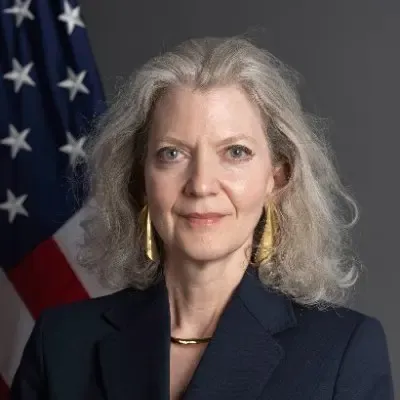
US Under Secretary of State for Political Affairs, Allison Hooker, is on a crucial visit to India, focusing on strengthening bilateral relations, discussing economic cooperation, and addressing regional security concerns. This trip highlights the ongoing commitment between the US and India to enhance their strategic partnership in the Indo-Pacific region.
Key Takeaways
Allison Hooker's visit aims to enhance US-India strategic relations.
Discussions will include economic cooperation and regional security.
Focus on counter-terrorism and emerging technologies.
Hooker will visit ISRO to foster innovation in research partnerships.
Commitment to a free and open Indo-Pacific is emphasized.
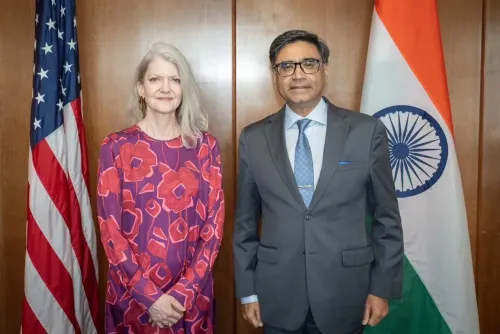
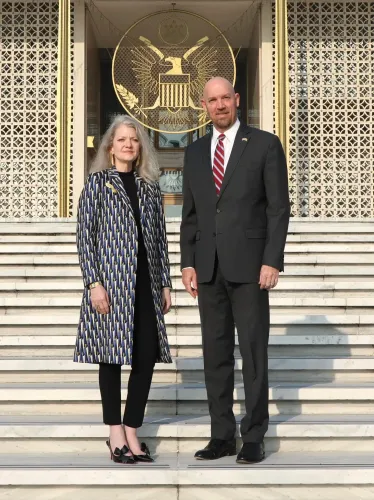
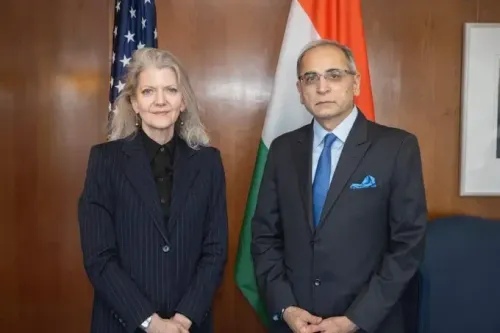
Washington, Dec 7 (NationPress) Allison Hooker, the US Under Secretary of State for Political Affairs, is visiting India from December 7-11. During her stay, she is set to meet with Foreign Secretary Vikram Misri and other officials to engage in discussions on regional security, economic cooperation, and shared priorities in the Indo-Pacific.
In addition to her engagements in New Delhi, Hooker will also head to Bengaluru, where she plans to visit the Indian Space Research Organisation (ISRO) and meet with leaders from India’s vibrant space, energy, and technology sectors. This is aimed at promoting innovation in US-India research collaborations and identifying opportunities for enhanced cooperation, as per the statement issued by the US Embassy and Consulates in India.
The US Embassy emphasized that Hooker’s visit is centered around strengthening the US-India strategic partnership, boosting economic and commercial relations, including the elevation of American exports, and fostering collaboration in emerging technologies such as artificial intelligence and space exploration.
This visit represents a significant stride in fulfilling US President Donald Trump's agenda for a robust bilateral partnership and a free and open Indo-Pacific.
Previously, on December 3, India and the United States assessed a broad spectrum of traditional and emerging threats during the 21st Meeting of the India-US Joint Working Group (JWG) on Counter Terrorism (CT) and the 7th Designations Dialogue in New Delhi.
Both nations unequivocally condemned terrorism in all forms, including cross-border terrorism. They expressed alarm over the increasing employment of unmanned aerial vehicles (UAVs), drones, and AI for terrorist activities.
They condemned the terrorist attack in Pahalgam, Jammu and Kashmir, on April 22, and a recent attack near the Red Fort in New Delhi on November 10, 2025, stressing that those accountable for terrorism must be brought to justice,” the Joint Statement following the meetings stated.
Participants from both India and the US deliberated on enhancing law enforcement and judicial collaboration, which includes sharing information and assisting with mutual legal requests.
They also discussed ways to bolster cooperation against various challenges through training, cybersecurity, sharing best practices, and maintaining bilateral and multilateral efforts.
The Ministry of External Affairs (MEA) emphasized that tackling terrorism demands coordinated and sustained action. In this regard, both nations renewed their commitment to strengthening multilateral cooperation in countering terrorism, including within the UN, Quad, and the Financial Action Task Force (FATF).
Both countries called for further designations of ISIS and al-Qa'ida affiliates, as well as Lashkar-e-Taiba (LeT) and Jaish-e-Mohammad (JeM) and their associated groups, under the UN 1267 sanctions regime to ensure their members face a global asset freeze, travel ban, and arms embargo.
Highlighting the increasing alignment between India and the US on counterterrorism, the Indian delegation expressed gratitude to the US Department of State for designating The Resistance Front (TRF), a proxy of LeT, as a Foreign Terrorist Organization (FTO) and a Specially Designated Global Terrorist (SDGT),” added the Joint Statement.
Point of View
I believe this visit by Under Secretary Hooker is pivotal for fostering collaboration between India and the United States. The focus on regional security and counter-terrorism reflects a shared commitment to combat global threats. Given the geopolitical landscape, such dialogues are essential for sustaining peace and promoting economic ties.
NationPress
28 Sept 2026
Frequently Asked Questions
What is the purpose of Allison Hooker's visit to India?
The purpose of Allison Hooker's visit is to strengthen the US-India strategic partnership, focusing on regional security, economic cooperation, and shared priorities in the Indo-Pacific.
Which key officials will Hooker meet during her visit?
During her visit, Hooker is scheduled to meet with Foreign Secretary Vikram Misri and other officials.
What areas of cooperation are being discussed?
The discussions will cover regional security, economic cooperation, counter-terrorism, and collaboration in emerging technologies, such as artificial intelligence and space exploration.
Why is counter-terrorism a focus of the talks?
Counter-terrorism is a focus because both nations aim to address and combat the rising threats of terrorism, including the use of technology by terrorist groups.
What recent events have prompted these discussions?
Recent terrorist incidents and emerging challenges, such as the use of drones and AI for terrorist purposes, have prompted these important discussions.