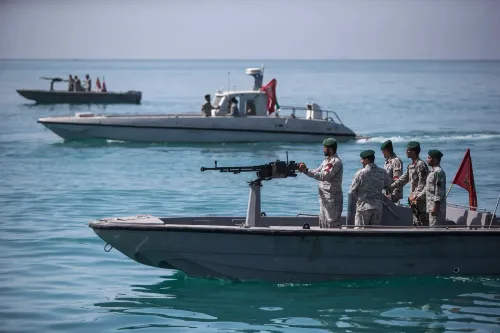
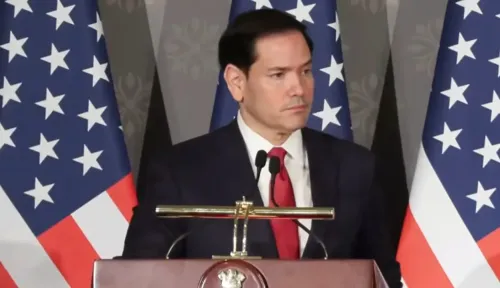
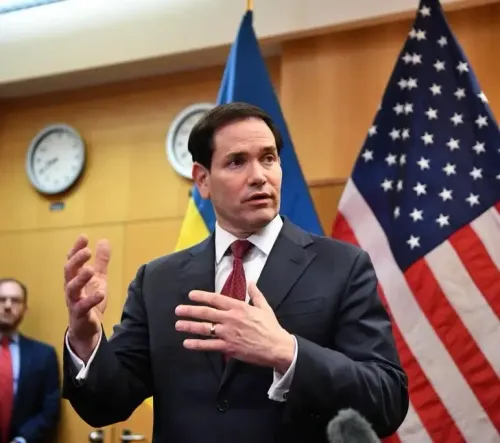
US Secretary of State Calls for Global Action on Hormuz Shipping Threats
Synopsis
In a recent statement, US Secretary of State Marco Rubio urged global partners, including G7 nations, to take action against threats to shipping in the Strait of Hormuz, emphasizing the significance of international cooperation for energy security.
Key Takeaways
Marco Rubio calls for increased action from G7 nations regarding threats in the Strait of Hormuz.
Emphasis on global energy security and adherence to international law.
Ongoing indirect diplomatic exchanges with Iran facilitated by intermediary countries.
Rubio advocates for shared responsibility in securing the vital waterway.
Signs of improvement in energy flow are noted, but caution is advised.
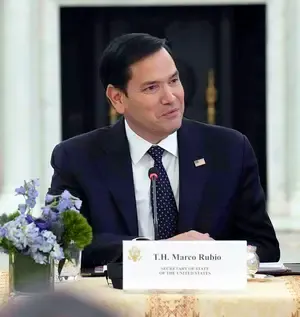
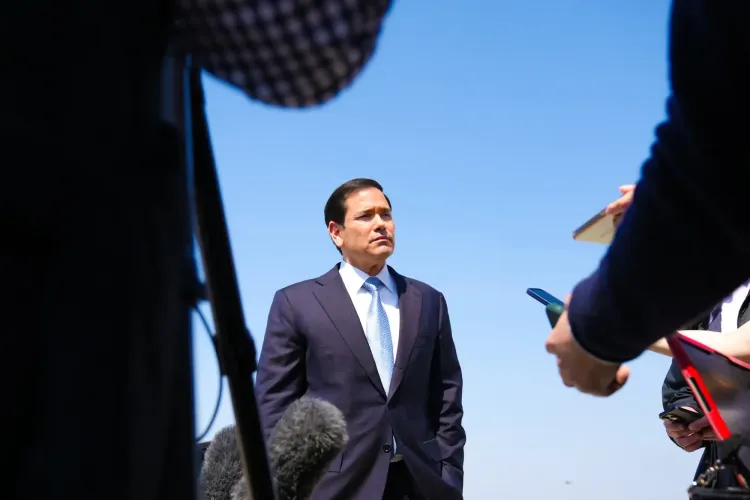
Washington, March 27 (NationPress) - US Secretary of State Marco Rubio urged international allies, including G7 nations, to enhance their engagement regarding the threats posed to maritime traffic in the Strait of Hormuz, asserting that such disruptions represent a serious challenge to international law and global energy security.
“It’s in their interest to help,” Rubio stated during a press briefing at Joint Base Andrews, mentioning that “other nations rely more heavily on fuel shipments from there than we do.”
When asked about specific requests, he refrained from providing details, indicating that such decisions would be determined by military officials. “Those specifics, I’ll leave for the Department of War to clarify,” he explained.
Rubio emphasized that the responsibility for securing this crucial waterway should not rest solely on the United States. “It’s not assistance for us… very little of our energy comes through the Strait of Hormuz. The global community has a significant interest in this, and they should take action,” he remarked.
The Secretary expressed that the situation could quickly become stable if Iran changed its conduct. “It could be fully operational tomorrow if Iran ceases its threats to global shipping, which is outrageous and violates international law,” he stated.
Rubio also confirmed ongoing indirect diplomatic communications with Iran, facilitated by intermediary nations. “There are intermediary countries that are transmitting messages, and progress has been made. Some tangible advancements have been achieved,” he noted.
He highlighted early signs of improvement, stating, “there’s an increasing volume of energy being transported through the strait — not as much as should be, but there has been some uptick.”
However, Rubio urged caution against excessive optimism. “That’s an ongoing and fluctuating situation and not one we are going to negotiate or discuss publicly,” he commented, adding, “We’ll see how it unfolds. I don’t want to make premature judgments.”
On wider geopolitical strains, Rubio remarked that Russia seems primarily focused on its conflict in Ukraine. “I believe Russia is mainly concentrating on the war it is currently engaged in,” he said, opting not to elaborate further.
He also addressed inquiries regarding US expectations from European allies, reflecting President Donald Trump’s concerns over equitable burden-sharing. The United States, he stated, has “contributed more to that conflict than any other nation in the world” regarding the situation in Ukraine, despite European leaders sometimes suggesting the conflict does not concern them.
Rubio clarified that his diplomatic efforts would remain centered on US interests. “The individuals I aim to satisfy are the citizens of the United States. That’s who I represent,” he concluded.
Point of View
It is important to convey an unbiased perspective on the call for increased international cooperation regarding shipping security in the Strait of Hormuz. The emphasis on global responsibility highlights the interconnectedness of nations in ensuring energy safety and adherence to international laws.
NationPress
22 Sept 2026
Frequently Asked Questions
What did Marco Rubio say about the Strait of Hormuz?
Marco Rubio called on global partners to enhance their actions regarding threats to shipping in the Strait of Hormuz, asserting that it poses a challenge to international law and energy security.
Are there ongoing diplomatic talks with Iran?
Yes, Rubio confirmed that indirect diplomatic exchanges with Iran are taking place through intermediary countries.
What is the significance of the Strait of Hormuz?
The Strait of Hormuz is a crucial maritime route for global oil shipments, making its security vital for international energy supply.
What did Rubio say about the responsibilities of other nations?
Rubio emphasized that the responsibility for securing the Strait of Hormuz should not fall solely on the US, as other nations have a significant interest in the region.
How is the situation in the Strait of Hormuz evolving?
Rubio noted early signs of improvement in energy flow through the strait and stated that the situation could stabilize if Iran changes its behavior.