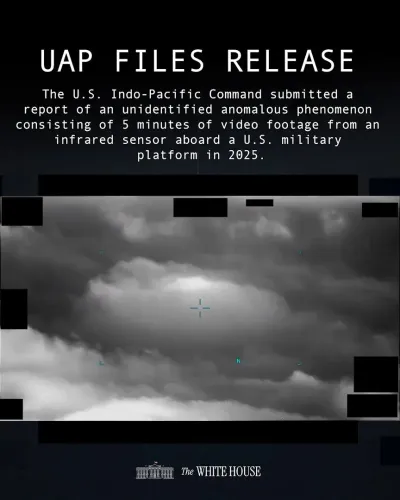
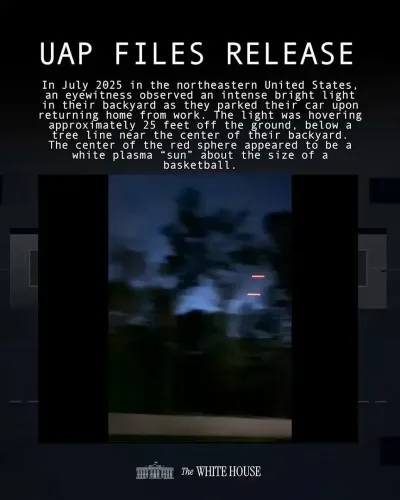
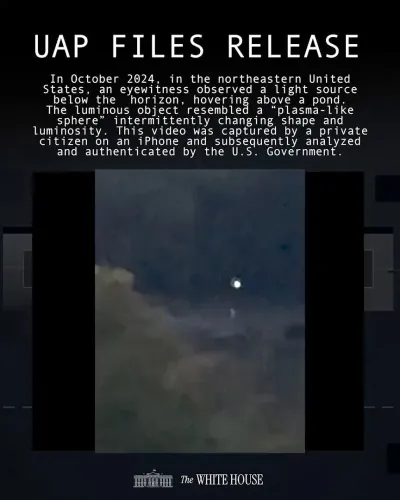
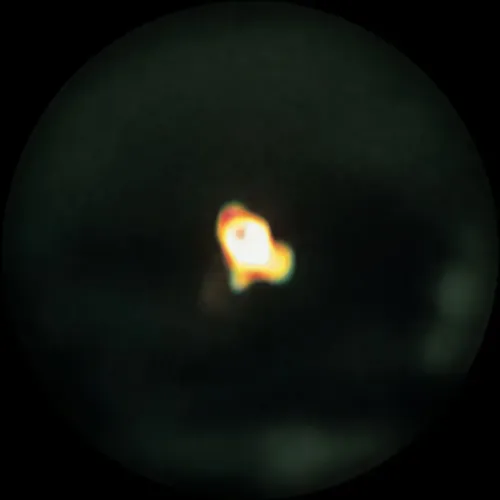
White House Announces Fourth UAP File Release
Synopsis
The White House announced the fourth release of UAP declassified files on 10 July 2026, citing an unresolved 2019 incident in the Gulf of America. The disclosure continues a legislatively mandated U.S. transparency drive on Unidentified Anomalous Phenomena that began formally in 2021.
Key Takeaways
The White House announced a fourth batch of UAP file releases on 10 July 2026 .
The release references an unresolved UAP report from 2019 linked to the Gulf of America .
The All-domain Anomaly Resolution Office (AARO) , established under the NDAA FY2022 , is the primary U.S. body mandated to investigate and report on UAP incidents.
The U.S. government's UAP disclosure programme has been ongoing since the ODNI preliminary assessment submitted to Congress in June 2021 .
Primary stakeholders include military aviators , the intelligence community , and Congress , which receives annual AARO reports.
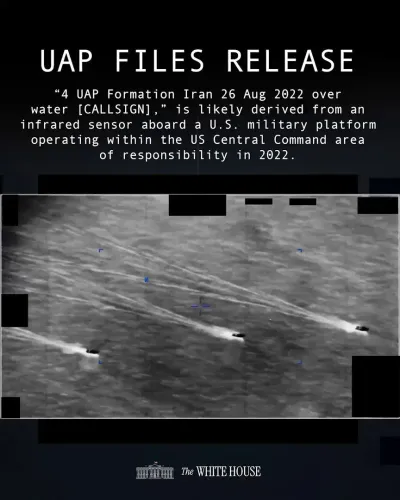
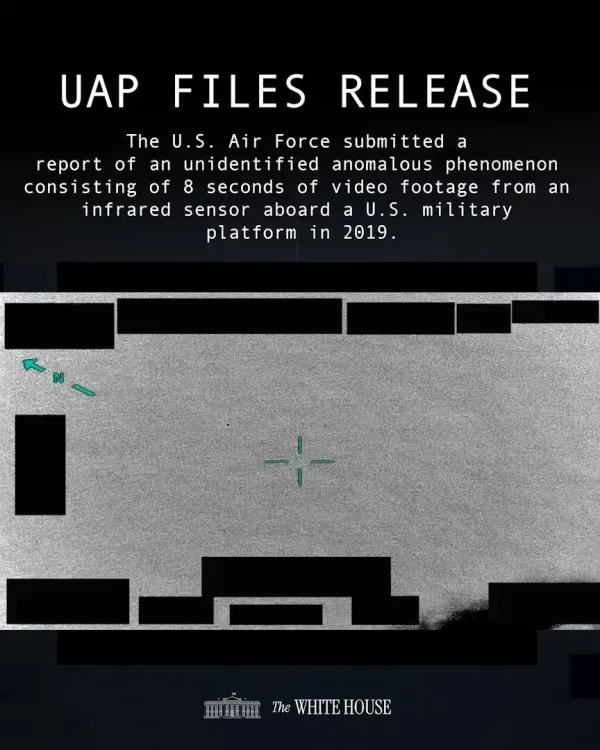
The White House announced the release of a fourth batch of Unidentified Anomalous Phenomena (UAP) declassified files on Friday, 10 July 2026, directing the public to the official government portal for UAP disclosures. The announcement referenced an unresolved UAP report linked to the Gulf of America from 2019.
Context
The White House post, shared on the official Executive Office of the President account, announced: 'JUST DROPPED: FOURTH UAP FILE RELEASE' and pointed to the government's UAP disclosure portal. The reference to a 2019 incident in the Gulf of America marks the latest in a series of government-sanctioned releases of previously classified or restricted UAP-related records.
The United States government has been on a sustained, legislatively mandated path of UAP transparency since 2021, when the Office of the Director of National Intelligence (ODNI) submitted a preliminary assessment on UAP to Congress — the first formal public acknowledgement of documented military encounters with unidentified aerial objects.
Policy Backdrop
The current declassification effort is rooted in the National Defense Authorization Act (NDAA) for FY2022, which directed the Department of Defense to establish the All-domain Anomaly Resolution Office (AARO) — a dedicated body tasked with investigating and resolving UAP reports across air, sea, space, and other domains. AARO is also mandated to submit annual reports to Congress.
Prior to AARO, the Pentagon UAP Task Force served as the primary body collecting and analysing reports from naval aviators, particularly those filed from 2019 onward. The 2019 encounter referenced in the latest White House post falls squarely within that collection window, suggesting the newly released file may originate from that era of military documentation.
Since 2017, the U.S. government's posture has shifted decisively — from institutional dismissal of UAP reports to mandating standardised data collection and recurring public summaries. The stated drivers are flight safety and concerns over potential adversary technology, not claims of extraterrestrial origin.
Stakeholders and Impact
Military aviators and the broader intelligence community are the primary stakeholders in this disclosure process, as the underlying reports typically originate from documented flight encounters by trained service personnel. Congress remains the institutional audience for formal AARO assessments, with successive NDAA provisions tightening the reporting and declassification obligations placed on the executive branch.
For the Indian strategic community and defence analysts, the U.S. government's systematic UAP disclosure programme is closely watched as a benchmark for how democracies can balance national security sensitivities with legislative and public transparency mandates.
What's Next
Attention will now turn to the contents of the fourth file release and whether it includes sensor data, pilot testimony, or analytical conclusions related to the 2019 Gulf of America incident. The next formal milestone in the U.S. UAP transparency cycle is the upcoming annual AARO report to Congress, along with any follow-up findings from NASA's independent UAP study programme.
If the newly released files contain unresolved findings — as the White House post explicitly labels this an 'unresolved UAP report' — it could intensify Congressional pressure on AARO and the intelligence community for further declassification and analytical clarity.
Point of View
Attention-grabbing language on its official account — signals a deliberate communications strategy to normalise UAP transparency as a mainstream executive function rather than a fringe disclosure. This fits a broader arc in which successive U.S. administrations have used legislative mandates and incremental declassification to manage public curiosity while keeping the most sensitive intelligence under wraps. The explicit labelling of the 2019 Gulf of America report as 'unresolved' is notable: it sustains public and Congressional interest without committing to conclusions the intelligence community is not yet prepared to assert. For India and other nations tracking U.S. defence transparency norms, this pattern offers a template — and a reminder that what governments choose to release is as telling as what remains classified.
NationPress
10 Jul 2026
Frequently Asked Questions
What is the fourth UAP file release announced by the White House?
The White House announced on 10 July 2026 the release of a fourth batch of declassified Unidentified Anomalous Phenomena (UAP) files, including an unresolved report from a 2019 incident in the Gulf of America.
What is AARO and what does it do?
AARO stands for the All-domain Anomaly Resolution Office, a U.S. Department of Defense body established under the NDAA FY2022 to investigate UAP reports across air, sea, and space domains and submit annual reports to Congress.
What was the 2021 ODNI UAP report?
In June 2021, the Office of the Director of National Intelligence submitted a preliminary assessment on Unidentified Aerial Phenomena to Congress — the first formal public acknowledgement of documented military UAP encounters by the U.S. government.
Why is the US government releasing UAP files?
U.S. law, specifically successive National Defense Authorization Acts, mandates the Department of Defense to collect, analyse, and publicly report on UAP incidents, driven by flight-safety concerns and the need to assess whether encounters involve adversary technology.
What does 'unresolved UAP report' mean?
An unresolved UAP report means the U.S. government has documented the incident but has not been able to identify the origin, nature, or explanation of the phenomenon observed, based on available intelligence and sensor data.