White House puts $49 trillion price tag on DSA agenda

Synopsis
The White House has released an estimate claiming the Democratic Socialists of America's policy platform would cost $49 trillion over the next decade — roughly $355,000 per American household — publishing the figure at a dedicated government URL in an aggressive counter-messaging push.
Key Takeaways
The White House released an official cost estimate for the DSA's policy platform on 2 October 2026 .
The estimate puts the total cost at $49 trillion over the next ten years.
Broken down per household, the figure amounts to approximately $355,000 for every American family.
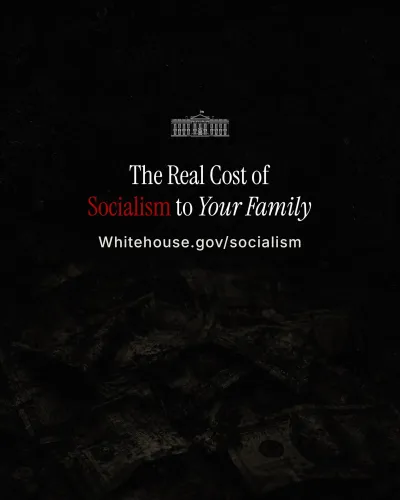
The release was published at the dedicated government address WH.GOV/Socialism , signalling a sustained messaging campaign.
No independent verification of the $49 trillion figure has been confirmed as of publication.
The DSA had not issued a formal public response to the estimate at the time of reporting.
A single number — $49 trillion — is now the White House's sharpest weapon against the Democratic Socialists of America. On Friday, 2 October 2026, the White House released what it calls a cost estimate for the DSA's policy platform, translating that figure into something every American can feel: roughly $355,000 per household over the next decade.
The $49 trillion figure — what it represents
The White House's estimate aggregates the projected federal expenditure required to implement the full DSA policy platform across a ten-year budget window. By dividing that total across American households, the administration arrives at the $355,000-per-household figure — a framing designed to make an abstract legislative price tag viscerally personal. The official release was directed to WH.GOV/Socialism, a dedicated government web address that itself signals the administration's intent to make this a sustained messaging campaign, not a one-day news cycle.
DSA platform and the policy battle behind the number
The Democratic Socialists of America have, over recent electoral cycles, pushed a sweeping policy slate that includes universal healthcare, free public college, aggressive climate investment, and expanded social housing — programmes that individually carry multi-trillion-dollar estimates. The White House's composite figure appears to bundle these proposals into a single headline number, a technique the executive branch has deployed before to frame opposition agendas ahead of electoral contests. The DSA has not yet issued a formal response to the administration's estimate as of publication.
Political timing and the cost-framing strategy
Cost-estimate releases of this kind rarely emerge in a vacuum. By attaching a per-household dollar figure, the White House converts a policy debate into a household-budget conversation — a proven rhetorical move in American politics. The dedicated government URL and the high-visibility social media push suggest this estimate is the opening salvo of a broader counter-programming effort against progressive economic proposals heading into the next political season. Whether independent fiscal analysts validate the $49 trillion figure remains to be tested in the public arena.
Point of View
Blurring the line between governance communication and electoral strategy. Independent fiscal scoring will ultimately determine whether the $49 trillion figure holds up — or whether the framing itself becomes the bigger story.
NationPress
2 Oct 2026
Frequently Asked Questions
What is the White House's estimate for the DSA agenda cost?
The White House estimates that the Democratic Socialists of America's policy platform would cost $49 trillion over the next decade, or approximately $355,000 per American household .
What does the DSA's policy agenda include?
The DSA's platform broadly includes proposals for universal healthcare, free public college tuition, large-scale climate investment, and expanded social housing, all of which carry significant federal expenditure projections.
Has the $49 trillion figure been independently verified?
As of publication, the $49 trillion figure is the White House's own estimate. No independent fiscal body has publicly confirmed or disputed the number.
Where did the White House publish this cost estimate?
The White House published the estimate at the dedicated government web address WH.GOV/Socialism and promoted it via the official White House account on X.
Has the DSA responded to the White House cost estimate?
The DSA had not issued a formal public response to the White House's $49 trillion cost estimate at the time of this report.