White House Warns Iran of Unprecedented Military Force
Synopsis
The White House declared the US 'locked and loaded' against Iran at force levels unseen since World War II, while simultaneously revealing that Iran and other Middle Eastern nations have asked Washington to pause any attack — a rare fusion of maximum threat and diplomatic signal in a single official post.
Key Takeaways
The White House stated on August 2, 2026 that the US is prepared to strike Iran at military force levels 'not seen since World War II.' Iran and other unspecified Middle Eastern countries have reportedly asked the US to hold off any attack.
The post fuses a maximum military threat with an acknowledgment of active diplomatic back-channel contact.
The US-Iran confrontation has escalated cyclically since the 2018 JCPOA withdrawal and the 2020 Soleimani strike .
Gulf states joining Iran's request for restraint signals broad regional alarm at the prospect of imminent conflict.
Key indicators to watch include congressional notifications, Pentagon statements, and any Iranian public response.
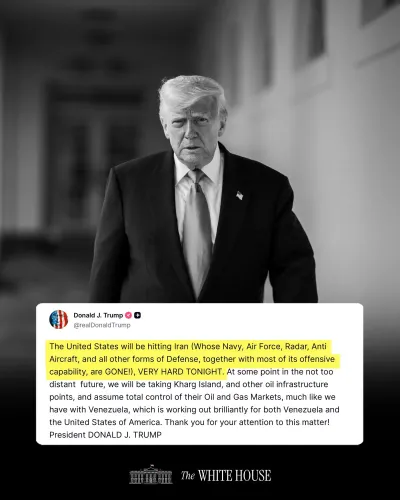
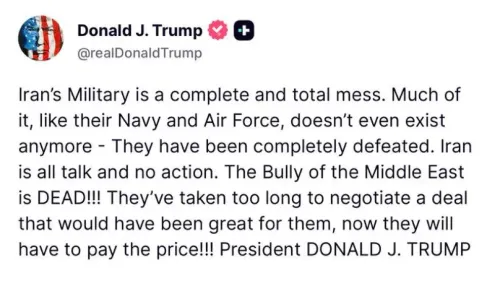
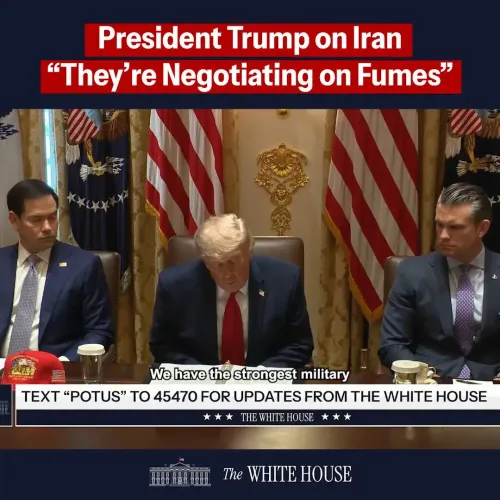
The United States issued one of its starkest military warnings to Iran in decades — and then, in the same breath, revealed that Tehran and other Middle Eastern nations had asked Washington to stand down. The White House posted on Sunday, August 2, 2026, that the US is 'locked and loaded and ready to go against the Islamic Republic of Iran, at levels of Military Terror, Strength, and Power not seen since World War II' — while simultaneously disclosing that Iran and regional governments had requested a pause on any attack.
The Warning and the Request in the Same Sentence
The post's construction is itself the story. The White House did not separate the threat from the diplomatic signal — it fused them, presenting maximum military readiness and an Iranian request for restraint as two sides of the same moment. The phrase 'not seen since World War II' invokes the last time the United States mobilised its full industrial and military apparatus — a deliberate historical benchmark meant to signal that this is not routine posturing.
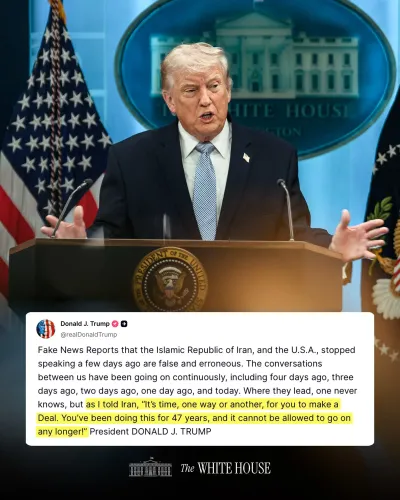
Equally significant is the acknowledgment that Iran, alongside unspecified 'other Middle Eastern Countries,' has actively sought to hold off a US strike. That admission — embedded inside a threat — suggests back-channel contact is already underway, even as the public posture remains maximally aggressive.
A Pattern Stretching Back to 2018
The current confrontation did not arrive without a long runway. When the US withdrew from the Joint Comprehensive Plan of Action (JCPOA) in 2018 and reimposed sweeping sanctions, it set off a cycle of escalation that has never fully resolved. The January 2020 US strike that killed Iranian general Qasem Soleimani marked a previous peak in direct military signaling — a moment that brought the two countries to the edge of open conflict before regional and diplomatic pressure pulled them back.
That pattern — maximum pressure, forward military deployment, followed by a quiet request from Gulf states or European allies to de-escalate — has repeated across administrations. What the August 2026 post signals is that the cycle may have reached a new, sharper inflection point, with the rhetoric calibrated at a register not previously used in official White House communications.
What the Gulf's Request Actually Means
The detail that 'other Middle Eastern Countries' joined Iran in asking the US to hold off is not a minor footnote. Gulf states — many of which host US military assets and have their own fraught relationships with Tehran — have historically served as the quiet pressure valve in US-Iran crises. Their reported request for restraint, if accurate, indicates that regional capitals are alarmed enough by the prospect of imminent conflict to intervene diplomatically, even while publicly remaining aligned with Washington.
The next indicators to watch: any formal congressional notification of military action, follow-on statements from the State Department or Pentagon, and whether Tehran publicly acknowledges or denies the reported outreach.
The US has made its position unmistakable. Whether the restraint being requested — by Iran and its neighbours alike — is granted, and for how long, is now the only question that matters.
Point of View
Where escalatory rhetoric is used as leverage in parallel with back-channel negotiation. The inclusion of 'other Middle Eastern Countries' in the restraint request is the sharpest geopolitical signal — it suggests Gulf partners, who depend on US security guarantees, are alarmed enough to intervene, which historically has been the circuit-breaker in past US-Iran crises. Whether this moment follows the familiar de-escalation arc or breaks from it will define the next chapter of Middle Eastern security architecture.
NationPress
2 Aug 2026
Frequently Asked Questions
Why is the US threatening Iran with military force in 2026?
The White House stated the US is 'locked and loaded' against Iran , though the specific triggering incident has not been publicly detailed. The broader confrontation stems from years of escalation following the 2018 US withdrawal from the JCPOA and subsequent sanctions and military signaling.
Has Iran asked the US not to attack?
Yes. The White House itself disclosed in the post that Iran and other Middle Eastern countries have requested the US hold off any attack, indicating back-channel diplomatic contact is underway even as public rhetoric remains at its most aggressive.
What does 'levels not seen since World War II' mean?
World War II represents the last time the United States mobilised its full industrial and military capacity. The White House's use of that benchmark is a deliberate signal that the threatened response would be of an extraordinary, historically unprecedented scale.
Which Middle Eastern countries asked the US to pause the attack?
The White House post did not name the countries beyond Iran , referring only to 'other Middle Eastern Countries.' Gulf states have historically played a back-channel role in de-escalating US-Iran crises, given their hosting of US military assets and their own concerns about regional stability.
What happened between the US and Iran after the JCPOA was abandoned?
After the US withdrew from the JCPOA in 2018 , Washington reimposed sweeping sanctions on Iran . Tensions peaked in January 2020 when the US killed Iranian general Qasem Soleimani in a drone strike, bringing both countries to the brink of direct military conflict before regional pressure helped contain the crisis.