Jal Jeevan Mission 2.0: Water conservation in monsoon focus at 11th Peyjal Samvad
Synopsis
At the 11th Peyjal Samvad, the Centre pushed districts to turn monsoon season into a water conservation opportunity — with over 2 lakh villages already Har Ghar Jal certified, the next challenge is community-led management, user-charge collection, and women-led water monitoring under Sujalam Shakti.
Key Takeaways
Drinking Water and Sanitation Secretary Ashok K.K.
Meena chaired the 11th Peyjal Samvad on 11 August , focused on JJM 2.0 implementation.
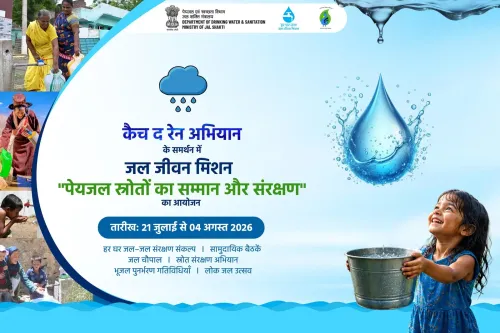
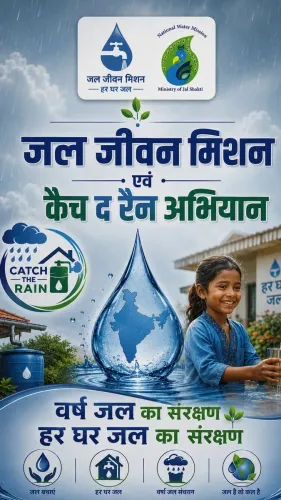
Districts urged to intensify the 'Catch the Rain – Jal Sanchay Jan Bhagidari' campaign during the monsoon season.
Best practices shared by Uttara Kannada , Khowai , Didwana Kuchaman , and Chatra districts.
Over 2 lakh villages and 1 lakh Gram Panchayats have achieved Har Ghar Jal certification.
Sujalam Shakti roadmap presented — focuses on women-led village support groups for water quality monitoring.
Districts directed to collect user charges at GP level and leverage 16th Finance Commission-tied grants for water and sanitation.
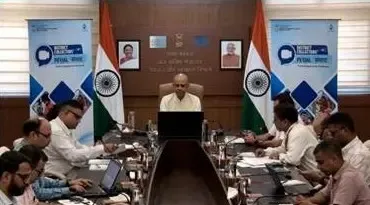
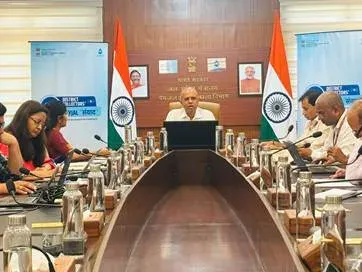
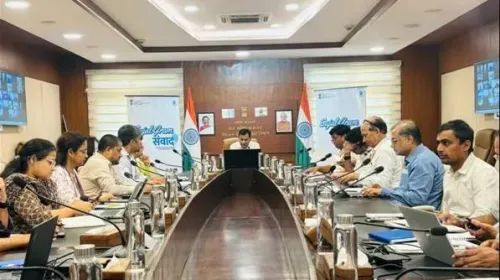
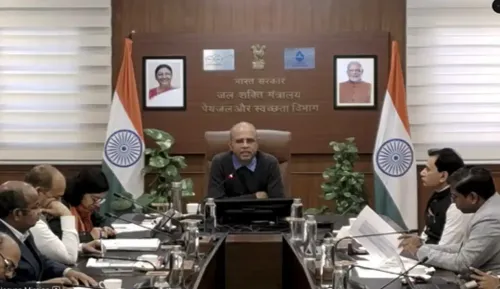
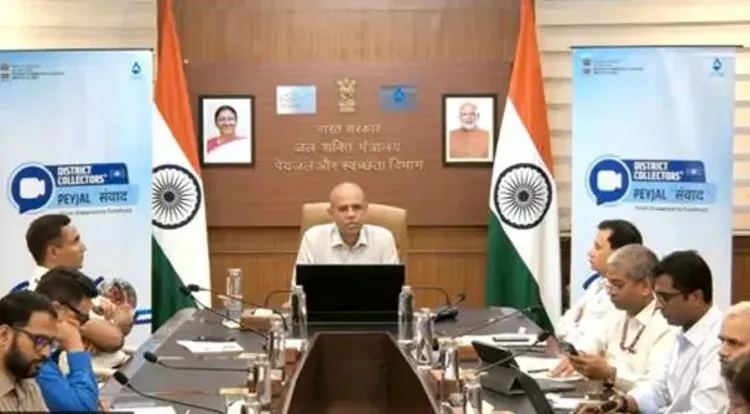
Drinking Water and Sanitation Secretary Ashok K.K. Meena on Tuesday, 11 August called on districts across India to intensify water conservation efforts during the monsoon season, urging wider mobilisation of Gram Panchayats, students, and self-help groups under the 'Catch the Rain – Jal Sanchay Jan Bhagidari' campaign. His remarks came at the 11th edition of the Peyjal Samvad, a flagship dialogue platform of the Department of Drinking Water and Sanitation (DDWS) under the Ministry of Jal Shakti, held via video conferencing from New Delhi.
Key Developments at the 11th Peyjal Samvad
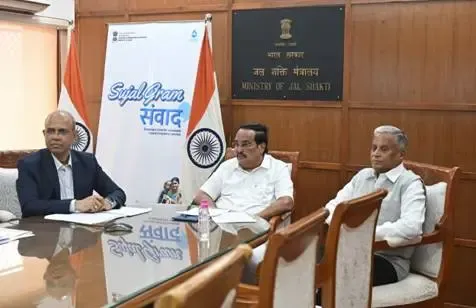
The session was chaired by Meena and attended by Kamal Kishore Soan, Additional Secretary and Mission Director of the National Jal Jeevan Mission (NJJM), along with senior officers from State Water and Sanitation Missions (SWSM) and DDWS. District Collectors, District Magistrates, and Deputy Commissioners from across the country joined the deliberations, which centred on accelerating implementation of Jal Jeevan Mission (JJM) 2.0.
Four districts — Uttara Kannada (Karnataka), Khowai (Tripura), Didwana Kuchaman (Rajasthan), and Chatra (Jharkhand) — presented their best practices in source sustainability, behaviour change through Information, Education, and Communication (IEC) activities, grievance redressal, and programme convergence. The cross-learning format is designed to help other districts replicate effective models under JJM 2.0.
What the Government Said
Meena underscored the District Water and Sanitation Mission (DWSM) as the primary institutional mechanism for delivery, urging districts to hold regular monthly meetings and upload proceedings on the JJM Integrated Management Information System (IMIS) portal. He also called for greater use of the Decision Support System (DSS) for scientific assessment of source sustainability.
On asset handover, Meena urged districts to expedite Jal Arpan ceremonies for completed schemes following the prescribed commissioning process and mandatory trial run, enabling formal transfer of water supply assets to Gram Panchayats. He stressed that such handovers are essential for community-led, long-term management of rural water infrastructure.
Har Ghar Jal Milestone and Community Management
Meena noted that more than 2 lakh villages and over 1 lakh Gram Panchayats have achieved Har Ghar Jal certification — a benchmark indicating functional tap water connections to every household. He said the next priority is translating this coverage into sustained, community-led management, including the collection of user charges at the GP level to support operation and maintenance of village water supply systems.
He also highlighted the importance of convergence with programmes such as VB-G RAM G for source sustainability and greywater management, and effective use of 16th Finance Commission-tied grants for water and sanitation infrastructure.
Sujalam Shakti: Women-Led Water Monitoring
A dedicated presentation on the Sujalam Shakti implementation roadmap was also shared at the Samvad. The initiative focuses on establishing women-led village support groups to strengthen water quality monitoring, community participation, and source sustainability at the grassroots level. This comes amid broader government efforts to mainstream gender participation in rural public service delivery.
What's Next
With the monsoon season providing a critical window for groundwater recharge and rainwater harvesting, the DDWS is pushing districts to maximise the 'Catch the Rain' campaign before the season ends. The continued rollout of JJM 2.0, Sujalam Shakti, and Jal Arpan ceremonies will be tracked through the IMIS portal, with monthly DWSM meetings serving as the primary accountability mechanism going forward.
Point of View
Cross-district, collector-led — is one of JJM's more credible accountability tools, but the shift from coverage to sustainability is where past rural water schemes have historically stalled. Certifying 2 lakh villages under Har Ghar Jal is a supply-side achievement; getting Gram Panchayats to collect user charges and maintain assets without central handholding is an entirely different governance challenge. The Sujalam Shakti push for women-led monitoring is a sound design principle, but its impact will depend on whether these groups receive real authority or remain advisory. The monsoon window for rainwater harvesting is narrow — whether districts act on the 'Catch the Rain' directive or treat it as another circular will define JJM 2.0's long-term credibility.
NationPress
25 Sept 2026
Frequently Asked Questions
What is the Peyjal Samvad and why is it held?
The Peyjal Samvad is a regular dialogue platform organised by the Department of Drinking Water and Sanitation under the Ministry of Jal Shakti, bringing together District Collectors and senior officials to review Jal Jeevan Mission implementation and share best practices. The 11th edition was held on 11 August via video conferencing, focusing on monsoon water conservation and JJM 2.0 progress.
What is the 'Catch the Rain – Jal Sanchay Jan Bhagidari' campaign?
It is a government-led initiative encouraging communities to harvest and conserve rainwater during the monsoon season. The campaign involves Gram Panchayats, students, and self-help groups in local water conservation activities, and is being intensified under JJM 2.0.
How many villages have achieved Har Ghar Jal certification?
More than 2 lakh villages and over 1 lakh Gram Panchayats across India have achieved Har Ghar Jal certification, indicating functional tap water connections to every household. The government is now focused on ensuring sustained community-led management of these water supply systems.
What is Sujalam Shakti?
Sujalam Shakti is an initiative under the DDWS that focuses on establishing women-led village support groups to strengthen water quality monitoring, community participation, and source sustainability at the grassroots level. Its implementation roadmap was presented at the 11th Peyjal Samvad.
Which districts presented best practices at the 11th Peyjal Samvad?
Four districts — Uttara Kannada (Karnataka), Khowai (Tripura), Didwana Kuchaman (Rajasthan), and Chatra (Jharkhand) — presented innovative practices covering source sustainability, IEC-based behaviour change, grievance redressal, and programme convergence to facilitate cross-learning under JJM 2.0.