Lakhpati Didi: 200 Assam women complete hospitality training under CM Sarma's scheme
Synopsis
Assam's Lakhpati Didi scheme has moved beyond financial transfers — 200 women have now completed structured hospitality training covering kitchen management, hygiene, and customer service. CM Sarma's framing of a 'quiet revolution' signals a deliberate pivot from welfare handouts to enterprise-ready skilling, with ASOMI Rongali Canteens serving as the real-world launchpad.
Key Takeaways
200 women under Assam's Lakhpati Didi initiative completed professional hospitality training on 25 June 2025 .
Training covered food preparation , hygiene standards , kitchen management , and customer service .
The ASOMI Rongali Canteens platform is being used to provide real-world enterprise exposure to participants.
The scheme targets Self-Help Group (SHG) members, aiming to raise annual income to at least ₹1 lakh through skilling, credit access, and market linkages.
Assam has integrated the programme across sectors including food services , agriculture , handicrafts , and rural industries .
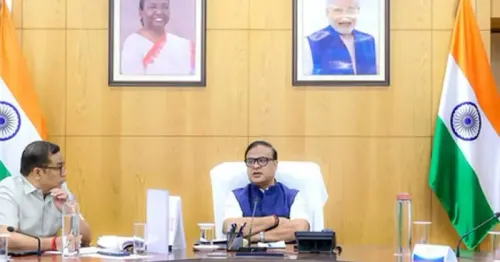
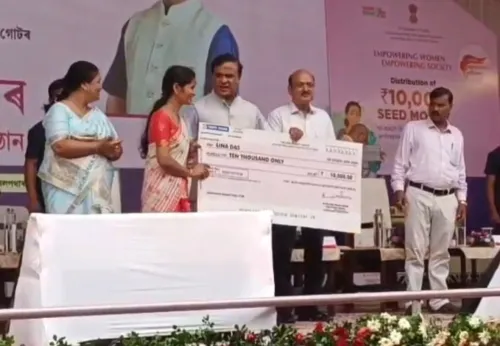
Assam Chief Minister Himanta Biswa Sarma on Thursday, 25 June announced that 200 women entrepreneurs enrolled under the state's Lakhpati Didi initiative have successfully completed professional training in the hospitality sector, marking a significant milestone in the government's push for sustainable women-led enterprises across Assam.
What the Training Covered
The hospitality training programme provided participants with hands-on exposure to food preparation, hygiene standards, kitchen management, and customer service. The curriculum was designed to equip women with the practical skills needed to independently operate canteens and other food-based enterprises at a professional level.
The training was delivered in part through the ASOMI Rongali Canteens initiative, which the state government has integrated into the Lakhpati Didi framework as a real-world training and enterprise platform for women in food services.
What the Chief Minister Said
Sharing the update in a post on X, Chief Minister Sarma described the development as a 'quiet revolution' unfolding in Assam. He said the Lakhpati Didi initiative is 'not only about providing capital but also about nurturing talent,' emphasising that the government's goal is to 'transform aspirations into enterprise and create a new workforce of Lakhpati Didis and changemakers.'
Sarma added that through programmes such as the ASOMI Rongali Canteens, women are gaining 'professional skills, confidence and entrepreneurial acumen to establish and manage their own businesses.'
About the Lakhpati Didi Initiative
The Lakhpati Didi scheme targets members of Self-Help Groups (SHGs), aiming to transform them into entrepreneurs earning a minimum annual income of ₹1 lakh. Beneficiaries receive a bundled package of support — financial assistance, access to bank credit, skill development, market linkages, and specialised sectoral training.
In Assam, the state government has broadened the programme's scope beyond its central mandate, embedding it within multiple livelihood verticals including food services, agriculture, handicrafts, and rural industries. This integration is part of a wider strategy to strengthen rural entrepreneurship and raise household incomes across the state.
Broader Context and What Comes Next
This comes amid a sustained policy push by the Assam government to increase women's participation in the state's formal economy. The hospitality training cohort represents one of several skill verticals being activated under the Lakhpati Didi umbrella, with further sectoral expansions expected as the programme scales.
Notably, linking SHG members directly to operational enterprises such as canteens — rather than providing only financial transfers — signals a shift toward outcome-linked skilling models at the state level. How effectively these trained women are able to launch and sustain independent enterprises will be the true measure of the initiative's impact.
Point of View
But the harder question is sustainability: how many of these 200 women will translate training into independently viable enterprises within 12 months? State-run canteen platforms provide a controlled launchpad, but real entrepreneurship requires market exposure beyond government-facilitated settings. Assam's integration of SHG frameworks with sectoral skilling is structurally sound — the risk is that outcome tracking remains weak, and 'completed training' becomes a headline metric that masks uneven post-training employment. The Centre's own Lakhpati Didi data has faced scrutiny over how annual income gains are measured and verified at the household level.
NationPress
24 Sept 2026
Frequently Asked Questions
What is the Lakhpati Didi initiative in Assam?
The Lakhpati Didi initiative is a scheme that aims to transform Self-Help Group (SHG) members into entrepreneurs earning a minimum annual income of ₹1 lakh. It provides financial support, bank credit access, skill development, market linkages, and specialised training across sectors such as food services, agriculture, and handicrafts.
What did the 200 women train in under the Lakhpati Didi scheme?
The 200 women completed professional training in the hospitality sector, covering food preparation, hygiene standards, kitchen management, and customer service. The programme was designed to enable participants to operate canteens and food-based enterprises independently.
What are ASOMI Rongali Canteens?
ASOMI Rongali Canteens are a state government initiative integrated with the Lakhpati Didi programme in Assam. They serve as operational platforms where trained women can gain real-world professional experience and entrepreneurial skills in the food services sector.
Who announced the completion of the hospitality training?
Assam Chief Minister Himanta Biswa Sarma announced the milestone on 25 June in a post on X, describing it as part of a 'quiet revolution' in women's entrepreneurship across the state.
Which sectors does Assam's Lakhpati Didi programme cover?
In Assam, the Lakhpati Didi initiative spans multiple livelihood sectors including food services, agriculture, handicrafts, and rural industries, going beyond the central scheme's original scope to embed women-led enterprises across the state economy.