25 years on: How Washington now negotiates with the Taliban it vowed to destroy
Synopsis
Twenty-five years after the US-led invasion began, the Taliban governs Afghanistan again — and Washington, refusing to grant it recognition, is nonetheless negotiating with it over $7 billion in abandoned military hardware and detained American citizens. It is one of the starkest diplomatic paradoxes in modern US foreign policy history.
Key Takeaways
The US-led invasion of Afghanistan began on 7 October 2001 in response to the 9/11 attacks carried out by Al Qaeda .
The Doha Agreement , signed on 29 February 2020 , committed the US to full withdrawal in exchange for Taliban counterterrorism guarantees.
The Taliban re-entered Kabul on 15 August 2021 , following the final US military withdrawal under President Joe Biden .
Equipment worth approximately $7 billion — including aircraft, vehicles, and weapons — fell into Taliban hands, according to Pentagon assessments.
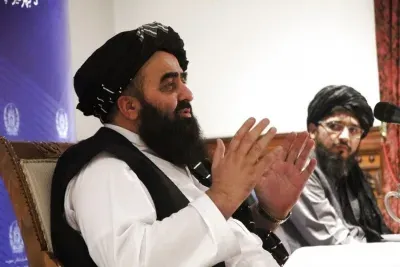
Afghanistan's Foreign Ministry has said the abandoned equipment is now state property and is not open to negotiation.
No country has formally recognised the Taliban government except reportedly Russia ; the US continues to engage Kabul without recognition, including over detained American nationals.
A full 25 years after a US-led coalition launched its invasion of Afghanistan on 7 October 2001, the Taliban — the very movement that invasion sought to dismantle — is back in power in Kabul, and Washington finds itself in the paradoxical position of engaging with a government it refuses to formally recognise. The conversations span prisoners' release, detained American nationals, and the fate of approximately $7 billion worth of military equipment left behind during the 2021 US withdrawal.
How the War Began and What It Built
The invasion was a direct response to the September 11, 2001 (9/11) attacks orchestrated by Al Qaeda, whose leader Osama bin Laden had reportedly operated from Afghan territory under Taliban protection. NATO forces launched Operation Enduring Freedom, beginning with an air campaign that swiftly evolved into what became America's longest war — spanning more than two decades and consuming vast military, political, and economic resources.
International donors poured funding into roads, schools, hospitals, telecommunications networks, and government institutions. Afghan girls, barred from education under earlier Taliban rule, entered classrooms. Universities emerged, private media flourished, and Kabul was transformed from a war-scarred capital into a rapidly expanding city with office buildings, shopping centres, and modern infrastructure.
The Taliban's Return and the Doha Agreement
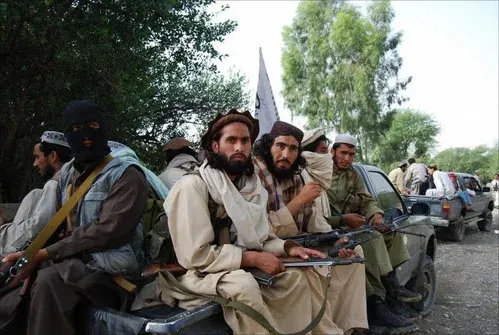
Despite these visible gains, the war never truly concluded. The Taliban regrouped steadily, especially in rural areas, reportedly aided by militant networks including Al Qaeda and the Islamic State Khorasan Province (ISIS-K). By the late 2010s, successive US administrations were actively seeking a negotiated exit.
That effort culminated in the Doha Agreement, signed on 29 February 2020, between the United States and the Taliban during President Donald Trump's first administration. The accord committed Washington to withdraw all foreign forces in exchange for Taliban counterterrorism guarantees and intra-Afghan negotiations. Notably, according to some reports, the Afghan government was not a direct party to that agreement.
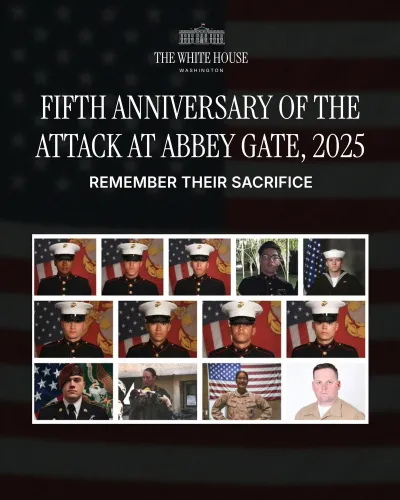
Under the pact, US troop levels were significantly reduced and air operations against the Taliban declined — developments that critics argue eroded the morale of Afghan security forces and signalled an American departure regardless of conditions on the ground. President Joe Biden ultimately executed the final withdrawal, and on 15 August 2021, Taliban fighters entered Kabul, completing their sweep of provincial capitals.
The $7 Billion Equipment Question
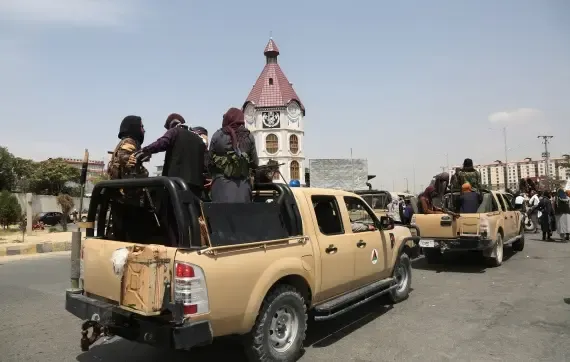
When US forces departed, they left behind substantial military hardware. According to Pentagon assessments cited in reports, equipment worth approximately $7 billion — including aircraft, vehicles, and hundreds of thousands of weapons — ultimately fell into Taliban hands. The group has since displayed much of this equipment at military parades and reportedly uses some of it for security operations.
Afghan media reported last month that Kabul considers the equipment abandoned by US forces to be the lawful property of Afghanistan's government, and is not prepared to negotiate over it. Qahar Balkhi, spokesperson for Afghanistan's Foreign Ministry, reportedly said that the United States 'killed many people in the country during the war and destroyed large parts, and should pay for the consequences of its actions.'
Detainees and Ongoing Engagement
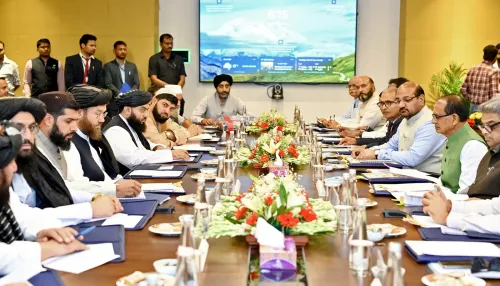
Washington's engagement with the Taliban extends beyond the hardware dispute. Following the release of American academic Dennis Coyle earlier this year, US officials were quoted in reports as saying that efforts were ongoing to secure the return of at least two other Americans still held in Afghanistan.
No country has granted the current Taliban administration official recognition — except, according to reports, Russia — though many states maintain working relations over security interests and continue to channel humanitarian aid into the country.
The Diplomatic Paradox Washington Faces
A quarter-century after the first US bombs struck Taliban positions, the strategic irony is stark: the movement Washington set out to destroy now governs the country, and American officials must engage it on substantive issues while publicly withholding recognition. This stands as one of the more consequential unresolved legacies of post-9/11 US foreign policy, with no clear resolution in sight.
Point of View
Which critics argued legitimised the Taliban without extracting meaningful concessions, is now the foundation on which the US must build whatever engagement it can manage. The $7 billion equipment dispute and the detained Americans are symptoms of a deeper structural failure: a withdrawal managed for domestic political optics rather than durable ground-level outcomes. The refusal to recognise the Taliban government is increasingly a symbolic stance that does not prevent substantive dealings — it simply makes them harder and less accountable.
NationPress
8 Oct 2026
Frequently Asked Questions
Why did the United States invade Afghanistan in 2001?
The US-led invasion on 7 October 2001 was a direct response to the 9/11 attacks, which were orchestrated by Al Qaeda under Osama bin Laden, reportedly operating from Taliban-controlled Afghanistan. The immediate aim was to dismantle Al Qaeda and remove the Taliban government that sheltered it.
What was the Doha Agreement and what did it promise?
The Doha Agreement, signed on 29 February 2020 between the United States and the Taliban during President Donald Trump's first administration, committed Washington to withdraw all foreign forces in exchange for Taliban counterterrorism guarantees and participation in intra-Afghan negotiations. Reports noted that the Afghan government was not a direct party to the accord.
What happened to US military equipment left behind in Afghanistan?
According to Pentagon assessments, equipment worth approximately $7 billion — including aircraft, vehicles, and hundreds of thousands of weapons — fell into Taliban hands after the 2021 US withdrawal. The Taliban has displayed much of it at military parades and reportedly uses some for security operations. Kabul has since stated the equipment is Afghan state property and is not up for negotiation.
Has any country recognised the Taliban government in Afghanistan?
No country has granted the Taliban administration official diplomatic recognition, except reportedly Russia, though many states maintain working relations for security and humanitarian purposes. The United States continues to engage the Taliban on issues such as detainees and abandoned equipment without formally recognising it as Afghanistan's government.
What is the current state of US-Taliban engagement in 2025-2026?
Washington continues to engage the Taliban over detained American nationals — at least two Americans were reportedly still being sought following the release of academic Dennis Coyle earlier this year — as well as over the fate of military hardware left behind in 2021. The engagement proceeds without formal recognition, creating a persistent diplomatic paradox for US foreign policy.