How Will AI Transform Jobs and Education as India Seeks Global Leadership?

Synopsis
Political leaders at the India-AI Impact Summit 2026 are debating the profound impact of artificial intelligence on jobs and education. Some see it as a transformative force while others express concerns about risks and gaps in readiness. The summit aims to position India as a global leader in AI.
Key Takeaways
AI's impact on jobs and education is a central topic of discussion.
Reskilling is crucial to adapt to the AI era.
India aims to position itself as a global leader in AI.
Over 250,000 attendees are expected at the summit.
Government policies must address gaps and maximize benefits.
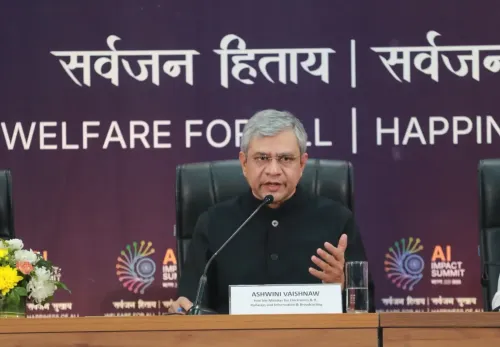
New Delhi, Feb 17 (NationPress) The topic of artificial intelligence took center stage in political discussions on Tuesday as leaders from various parties expressed their views on its influence on employment, education, and governance at the India-AI Impact Summit 2026. Some leaders acknowledged its potential to transform, while others voiced concerns about associated risks and the readiness to adapt.
Shiv Sena-UBT MP Priyanka Chaturvedi remarked that the anxiety surrounding job losses due to AI reflects prior fears encountered during the introduction of computers and the internet. She emphasized the importance of reskilling to seize new opportunities.
“While there are genuine concerns, with proper reskilling and repurposing of our youth, AI has the potential to create numerous job opportunities. The pressing question is how we can adapt, mitigate risks, and harness the benefits of this emerging technology,” she said, urging governments to develop policies that maximize benefits while addressing existing gaps and loopholes.
Chaturvedi pointed out that AI is already playing a vital role in our everyday lives and will increasingly influence the future, making human adaptation and responsible governance essential.
BJP leader and former Rajya Sabha member Amar Patnaik highlighted AI's transformative effect on education, particularly in customizing learning experiences for students.
Referring to discussions at a recent technology summit, he stated that the role of AI in pedagogy, making education more tailored to individual requirements, is significant. Patnaik described the government's initiative as a visionary step towards achieving a developed India, asserting that India is positioning itself as a global leader not just in AI application but also in setting global standards.
BJP spokesperson Gaurav Vallabh defended the scale of the summit in the face of opposition criticism, stating that previous governments had not organized global events showcasing India's capabilities.
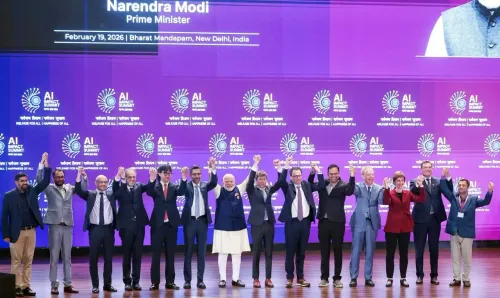
He mentioned that the current summit features around 500 sessions, over 3,500 speakers from India and abroad, participation from over 300 startups, and the presentation of 12 indigenous AI models, with an expected attendance of over 250,000.
He asserted that the event symbolizes India's ambition to lead the world in artificial intelligence, adding that critics often view such initiatives through a lens of skepticism.
“For us, AI signifies an Atmanirbhar India on the journey to becoming a Viksit Bharat by 2047,” he stated.
The India-AI Impact Summit 2026 has convened policymakers, industry leaders, researchers, and innovators to discuss the extensive implications of artificial intelligence across various sectors, including employment, education, governance, and economic growth.
Point of View
The discussions at the India-AI Impact Summit 2026 reflect a crucial turning point in how we perceive and harness artificial intelligence in India. The dual focus on addressing potential job losses through reskilling and the proactive stance towards leading in AI technology underscores a commitment to responsible governance and innovation.
NationPress
23 Sept 2026
Frequently Asked Questions
What is the purpose of the India-AI Impact Summit 2026?
The summit aims to gather policymakers, industry leaders, and innovators to discuss the implications of artificial intelligence across various sectors, including employment and education.
Who are the key political figures mentioned in the summit discussions?
Key figures include Shiv Sena-UBT MP Priyanka Chaturvedi, BJP leader Amar Patnaik, and BJP spokesperson Gaurav Vallabh.
What are the concerns raised about AI?
Concerns include potential job losses, the need for reskilling, and the risks associated with the rapid adoption of AI technology.
How many participants are expected at the summit?
The summit is expected to attract over 250,000 attendees.
What vision does India have regarding AI?
India aims to lead globally in artificial intelligence and to achieve a developed status by 2047.