AJP chief Lurinjyoti Gogoi vows organisational overhaul after Assam poll rout
Synopsis
The AJP won zero of 10 seats it contested in the Assam Assembly elections — and now its president is publicly dissecting why. Lurinjyoti Gogoi's admission of organisational failure, combined with allegations of BJP 'money power and fear tactics,' reveals the depth of the crisis facing Assam's regional nationalist politics.
Key Takeaways
AJP President Lurinjyoti Gogoi announced a comprehensive post-poll review on Wednesday in Guwahati .
The party won zero seats out of 10 contested in alliance with Congress in the Assam Assembly elections.
Gogoi personally lost from Khowang constituency in Dibrugarh district to BJP 's Chakradhar Gogoi .
The party has identified organisational weaknesses and is preparing three-year and five-year rebuild plans.
Gogoi alleged BJP used 'money power, intimidation tactics and beneficiary politics' during the elections.
The AJP reaffirmed its commitment to Assamese nationalism, language, culture, and identity.
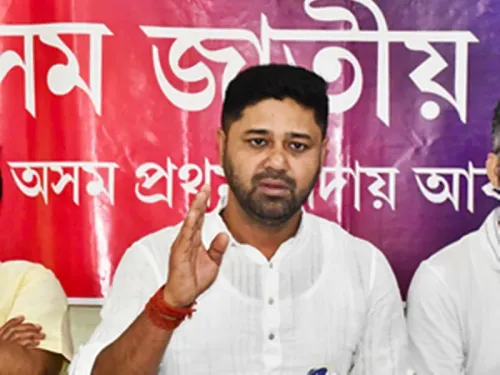
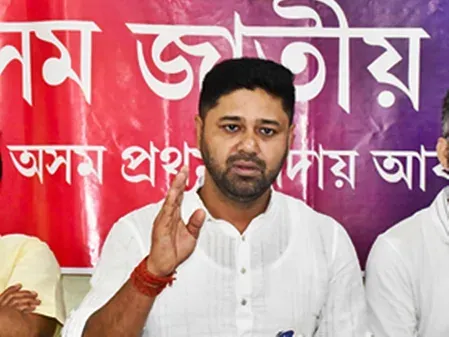
Assam Jatiya Parishad (AJP) President Lurinjyoti Gogoi on Wednesday said the regional party has launched a comprehensive review of its dismal showing in the recently concluded Assam Assembly elections and is now charting a long-term roadmap to rebuild its organisational strength and advance its Assamese nationalist agenda.
Post-Poll Review Underway
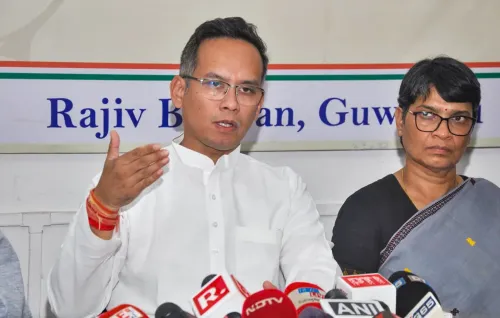
Speaking to reporters in Guwahati after a series of internal meetings, Gogoi said the party spent three days conducting a detailed assessment of the election results — including why the Opposition alliance failed to make the expected dent against the ruling Bharatiya Janata Party (BJP).
'We have conducted extensive discussions and analysis over the last three days regarding the election results. We examined why we could not achieve success despite Opposition unity and why the expected poll results did not come,' Gogoi said.
The AJP had contested 10 seats in alliance with the Congress but failed to win a single one. Gogoi himself lost from the Khowang Assembly constituency in Dibrugarh district, defeated by BJP candidate Chakradhar Gogoi.
Organisational Weaknesses Identified
According to Gogoi, the review identified several structural gaps that hurt the party's electoral performance. 'One of the major factors was that we could not expand and strengthen our organisation in the way it was required. We need to take our ideology, vision and nationalist principles more effectively to the people,' he said.
The AJP chief also alleged that Opposition parties faced a difficult playing field, citing what he described as the BJP's 'money power, intimidation tactics and beneficiary politics.' He claimed that delimitation, Hindu-Muslim political polarisation, financial inducements, and fear tactics all played a role — allegations the BJP has not publicly responded to.
Three-Year and Five-Year Plans in the Works
Despite the setback, Gogoi said the party is now preparing both three-year and five-year organisational plans. 'We are analysing where our limitations are and how nationalist politics can be expanded further,' he said, reaffirming the party's focus on protecting Assam's language, culture, identity, and economic interests.
Notably, this is not the first time the AJP — formed in 2020 by former All India United Democratic Front (AIUDF) and student movement leaders — has had to recalibrate after a poor electoral showing. The party has struggled to convert its ideological appeal into seat wins since its founding.
Appeal to Voters and the Road Ahead
Gogoi appealed to the people of Assam to maintain faith in the party and offer constructive criticism. 'We will not deviate from the ideals of self-respect, self-confidence and Assamese nationalism,' he said, stressing that personal political ambition was not the party's primary driver.
With the next round of electoral battles on the horizon, the AJP's ability to translate its post-mortem into ground-level organisational expansion will be the real test of whether the party can remain a credible force in Assam's competitive regional politics.
Point of View
And the Congress carries legacy baggage that alienates the very voters the AJP needs. Gogoi's allegations of money power and fear tactics, while politically convenient, do not explain why the alliance's messaging failed to cut through even in seats it had previously targeted. The three-year and five-year plans sound organised, but regional parties in Assam have announced rebuilds before; what matters is whether the AJP can build booth-level machinery rather than remain a leadership-driven outfit with limited grassroots depth.
NationPress
19 Sept 2026
Frequently Asked Questions
How did the AJP perform in the Assam Assembly elections?
The Assam Jatiya Parishad won zero seats out of the 10 it contested in alliance with Congress in the recently concluded Assam Assembly elections. It was a complete electoral shutout for the regional party.
Did Lurinjyoti Gogoi win his own seat?
No. AJP President Lurinjyoti Gogoi contested from the Khowang Assembly constituency in Dibrugarh district and lost to BJP candidate Chakradhar Gogoi.
What reasons did the AJP give for its poor performance?
The AJP cited organisational weaknesses, an inability to expand its ideological reach, and alleged BJP use of money power, inducements, and intimidation tactics. Gogoi also pointed to delimitation and Hindu-Muslim political polarisation as contributing factors.
What plans has the AJP announced going forward?
The party is preparing both three-year and five-year organisational plans to strengthen its base and expand its Assamese nationalist politics across the state.
What is the Assam Jatiya Parishad?
The AJP is a regional political party in Assam focused on protecting Assamese language, culture, identity, and economic interests. It was formed in 2020 and has positioned itself as a nationalist alternative to both the BJP and Congress in the state.