Akhilesh Yadav Champions Small Traders at Agra Summit
Synopsis
Samajwadi Party president Akhilesh Yadav posted a Hindi poem at the Vision India PDA Agra Summit on 14 June 2026, invoking the 'golden bird' metaphor to champion small traders and shopkeepers as the engine of India's revival.
Key Takeaways
Akhilesh Yadav posted a four-line Hindi poem on 14 June 2026 tied to the Vision India PDA Agra Summit .
The verse calls for small trades and shops to bring prosperity and smiles across India .
The post invokes the sone ki chidiya ('golden bird') metaphor, a cultural symbol of India's historical wealth.
The message targets small traders, shopkeepers, and MSME owners — a key Samajwadi Party constituency in Uttar Pradesh .
Agra , the summit's host city, is a hub of leather goods, handicrafts, and small-scale manufacturing.
The Samajwadi Party may follow up with concrete trader-welfare policy announcements ahead of upcoming Uttar Pradesh electoral cycles.
Samajwadi Party president Akhilesh Yadav on Sunday, 14 June 2026, shared a poetic message calling for the revival of small businesses and shops across India, posting the verse on the occasion of the Vision India PDA Agra Summit. The four-line Hindi poem invokes the image of India as a 'golden bird' and expresses hope that small traders and shopkeepers will once again bring smiles to every face in the country.
Context
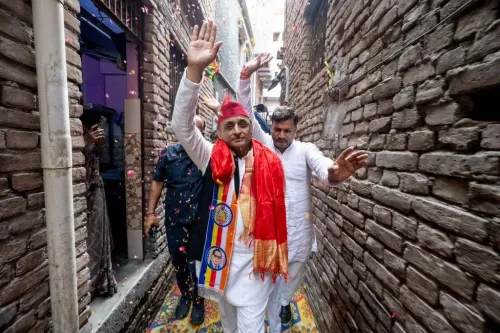
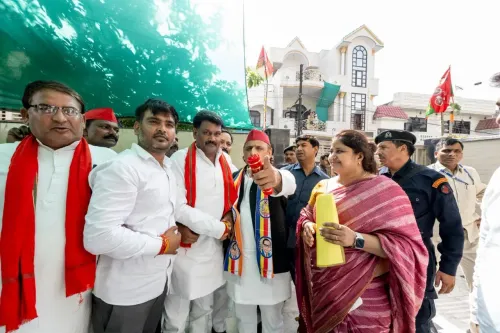
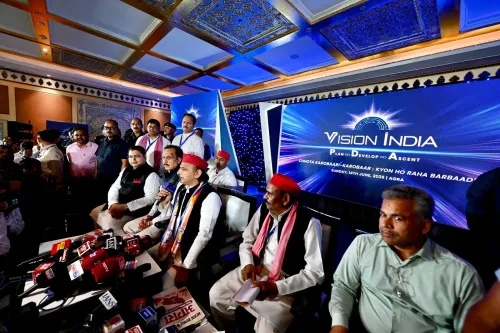
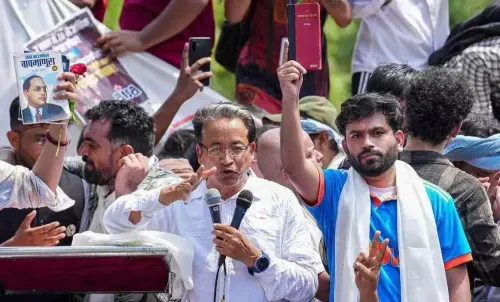
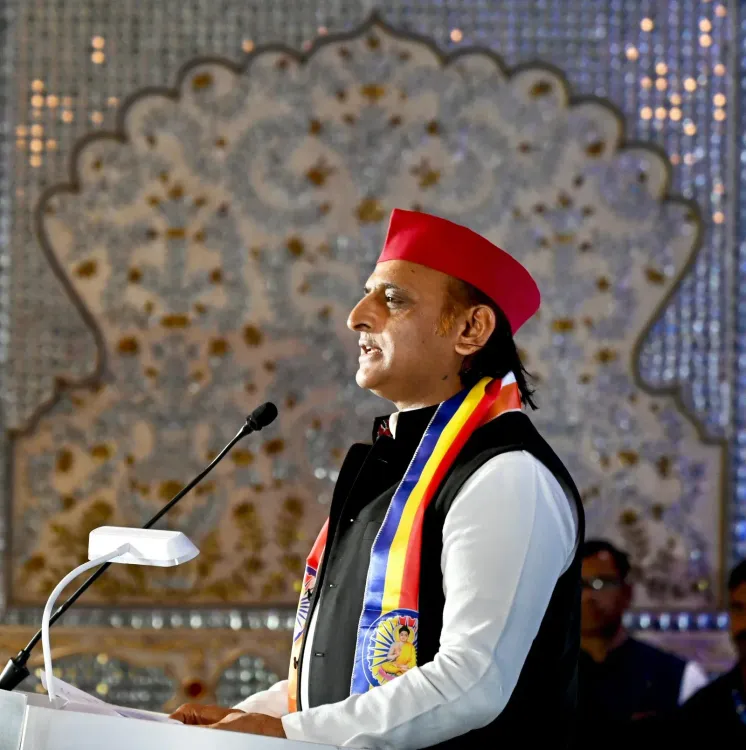
Yadav's post, written entirely in Hindi verse, reads: 'Ho chhota vyapar ya dukaan / Sabke chehre par aaye muskaan / Sone ki chidiya-sa chahke / Phir se apna Hindustan' — translated as: 'Be it a small trade or a shop / Let smiles come to every face / May our India flourish again / Like a golden bird.' The verse was accompanied by four images and tagged under the hashtag #Vision_India_PDA_Agra_Summit, indicating its connection to a summit convened in Agra, Uttar Pradesh.
The 'golden bird' metaphor — sone ki chidiya — is a long-standing cultural reference to India's historical prosperity, frequently deployed in political discourse to contrast a romanticised past with present economic conditions. Yadav's use of it here anchors the message firmly in the aspirations of small traders and micro-entrepreneurs.
Policy Backdrop
The Samajwadi Party has historically positioned itself as a champion of small-scale traders, artisans, and the informal economy. During Akhilesh Yadav's tenure as Chief Minister of Uttar Pradesh from 2012 to 2017, his government introduced schemes targeting small-scale industries, including interest subsidies and market infrastructure support for traders.
The party's messaging on small businesses frequently contrasts its approach with the central government's emphasis on large-scale industrial investment and digital formalisation of commerce — a narrative the Samajwadi Party argues has bypassed millions of street-level and neighbourhood traders. Uttar Pradesh, with its dense network of small markets, mandis, and artisan clusters, remains a critical battleground for this economic argument.
Stakeholders and Impact
Small and micro traders, shopkeepers, and MSME owners form the core constituency addressed by Yadav's message. This segment represents a significant share of employment in Uttar Pradesh and across India's heartland states, where informal retail and small manufacturing remain primary livelihoods for crores of families.
The Agra setting carries additional resonance: the city is a hub of leather goods manufacturing, handicrafts, and tourism-linked commerce — sectors heavily populated by small and medium enterprises. A political outreach anchored in Agra thus speaks directly to communities whose livelihoods depend on the health of small-scale trade and artisanal production.
What's Next
The hashtag and summit context suggest the Samajwadi Party may use the Vision India PDA Agra Summit platform to roll out or signal trader-welfare policy positions ahead of upcoming electoral cycles in Uttar Pradesh. Observers will watch for follow-up announcements on state-level schemes, credit access proposals, or alliance-building moves targeting the small-business community.
If the party translates this poetic framing into concrete policy pledges — on taxation relief, market infrastructure, or credit subsidies for small traders — it could sharpen the Samajwadi Party's economic contrast with both the ruling dispensation at the Centre and in Lucknow, ahead of any assembly or local body elections on the horizon.
Point of View
Designed to resonate emotionally with the vast informal-economy constituency in Uttar Pradesh. The 'golden bird' invocation is a well-worn but durable rhetorical device that positions the Samajwadi Party as the custodian of a prosperous, trader-friendly India that has allegedly been neglected by incumbent governments. Tying this message to a named summit in Agra signals organisational intent beyond social-media optics, suggesting the party is building a structured outreach to MSME and small-trader communities. If backed by specific policy pledges, this framing could meaningfully sharpen the SP's economic contrast ahead of the next Uttar Pradesh electoral contest.
NationPress
15 Sept 2026
Frequently Asked Questions
What did Akhilesh Yadav say at the Agra Summit?
Akhilesh Yadav posted a Hindi poem calling for small trades and shops to flourish and bring smiles to every Indian face, invoking the 'golden bird' image of a prosperous India, in connection with the Vision India PDA Agra Summit on 14 June 2026.
What is the Vision India PDA Agra Summit?
The Vision India PDA Agra Summit is an event associated with the Samajwadi Party referenced in Akhilesh Yadav's 14 June 2026 post; the full details and organisers of the summit have not been independently confirmed.
What does 'sone ki chidiya' mean in Indian politics?
'Sone ki chidiya' literally means 'golden bird' and is a cultural metaphor for India's historical wealth and prosperity; it is frequently used by opposition politicians to argue that India's traditional economic strengths have been undermined by current policies.
What is the Samajwadi Party's position on small traders?
The Samajwadi Party has consistently positioned itself as a champion of small traders, shopkeepers, and MSME owners, contrasting its approach with what it describes as the central government's focus on large-scale industry and digital formalisation.
Why did Akhilesh Yadav choose Agra for this event?
Agra is a significant commercial city in Uttar Pradesh known for leather goods, handicrafts, and tourism-linked small businesses, making it a symbolically apt location for a political message centred on small-trader welfare.