Amit Shah Backs Census Self-Enumeration in 16 Languages
Synopsis
Union Home Minister Amit Shah backed PM Modi's call for citizens to self-enumerate on India's multilingual census portal, available in 16 languages including Hindi, through their mobile phones — a key step in India's long-delayed first fully digital census.
Key Takeaways
Union Home Minister Amit Shah on September 27, 2026 promoted the digital census self-enumeration drive on X.
The census portal is available in 16 languages including Hindi , enabling mobile-based self-registration by citizens.
India's last completed census was in 2011 ; the current exercise is designed as the country's first fully digital census .
Self-enumeration via mobile app was first planned around 2019-2020 as part of wider e-governance reforms.
The portal is part of the Digital India programme launched in 2015 to expand multilingual e-governance access.
Census data directly informs parliamentary delimitation, welfare targeting, and infrastructure planning for the next decade.
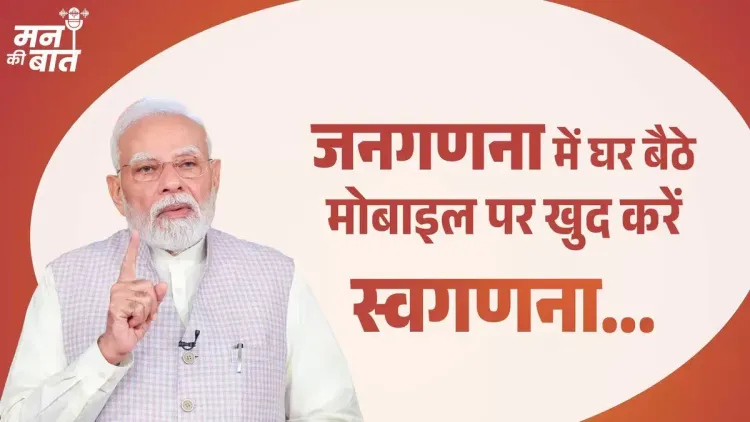
India's most ambitious census in decades is arriving on your smartphone — and it speaks your language. Union Home Minister Amit Shah on Sunday, September 27, 2026, amplified Prime Minister Narendra Modi's call for citizens to register themselves through a digital self-enumeration portal available in 16 languages including Hindi, urging every Indian to participate and help lay what he called 'a strong foundation for the country's future.'
Sharing Modi's message on X, Shah wrote: 'Modi ji ne bataya ki janganana ka portal Hindi sahit 16 bhashaon mein upalabdh hai' — ('Modi ji has informed that the census portal is available in 16 languages including Hindi'). He added that citizens can use their mobile phones to complete self-enumeration and ensure their details are recorded accurately.
India's first fully digital census — and why timing matters
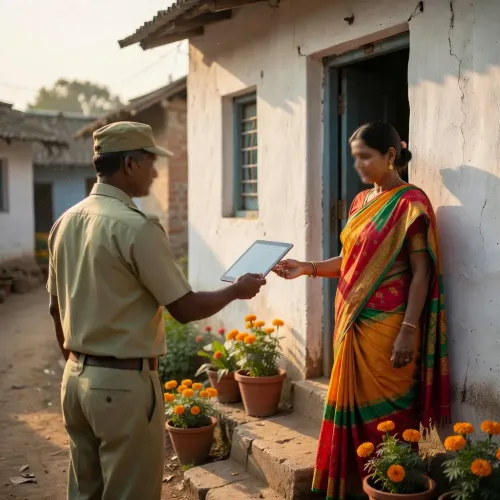
The Census of India was last completed in 2011. The subsequent decennial count, originally scheduled for 2021, was postponed — first by the COVID-19 pandemic, then by logistical and legislative considerations. Its eventual arrival marks a structural shift: for the first time, India is moving away from door-to-door paper-based enumeration to a model where households can log their own data directly through a government portal.
Self-enumeration via mobile app was first outlined in government planning documents around 2019-2020, positioning technology as a way to widen reach and reduce data-entry error. A multilingual interface — covering India's diverse linguistic landscape — is central to making that promise real. A portal that only works in English or Hindi would exclude hundreds of millions of citizens from the process entirely.
Digital India's multilingual push behind the portal
The 16-language portal does not exist in isolation. It is the latest expression of the Digital India programme, launched in 2015, which has systematically pushed e-governance platforms to support regional languages — from tax filings to social-benefit registrations to national ID services. The census portal extends that architecture to the most consequential data exercise the state conducts.
The National Population Register, updated alongside earlier census cycles, saw similar multilingual rollouts, establishing a precedent the current portal builds on. The political logic is straightforward: census data underpins parliamentary seat delimitation, welfare scheme targeting, and infrastructure planning. Incomplete or skewed data has downstream consequences that last a decade.
What citizens are being asked to do
The ask is direct: pick up your phone, navigate to the census portal in your preferred language, and fill in your household's details accurately. Shah's post frames participation not merely as an administrative task but as a civic act — becoming a stakeholder, as he put it, in building the nation's future. For a count that feeds everything from hospital construction to school placement to rural road budgets, that framing is not hyperbole.
The census is only as good as the data it collects. And that data is only as complete as the number of Indians who actually show up — digitally — to be counted.
Point of View
The government is also pre-emptively building public legitimacy for census data that will eventually drive the politically sensitive delimitation of Lok Sabha constituencies.
NationPress
27 Sept 2026
Frequently Asked Questions
What is the India census self-enumeration portal?
It is a government digital platform that allows Indian citizens to register their own household data for the national census using their mobile phones, without waiting for an enumerator to visit.
How many languages is the India census portal available in?
According to Prime Minister Modi's statement shared by Home Minister Amit Shah, the portal is available in 16 languages including Hindi .
When was India's last census completed?
India's last census was completed in 2011 . The subsequent decennial census, originally due in 2021, was delayed and is now underway as India's first fully digital census.
How can I complete self-enumeration for the India census?
Citizens can visit the official census portal on their mobile phone, select their preferred language from the 16 available, and enter their household details directly online.
Why is the census important for ordinary citizens?
Census data determines how welfare schemes, hospitals, schools, roads, and other public resources are allocated across India, and it also informs the delimitation of parliamentary constituencies.