Amit Shah Calls Libraries 'Oceans of Knowledge' for Youth
Synopsis
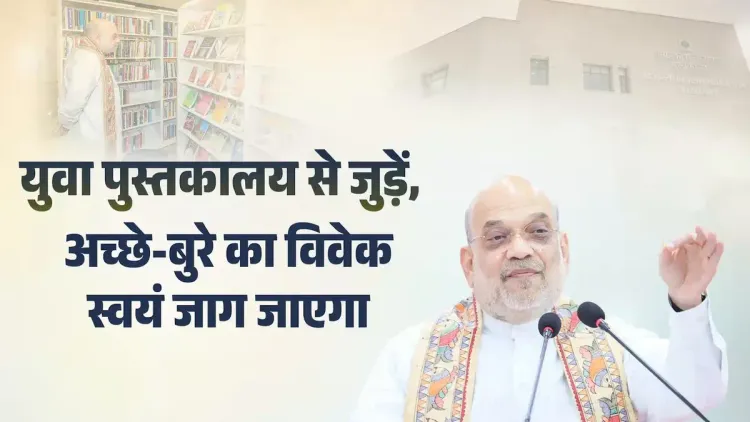
Union Home Minister Amit Shah on 11 July 2026 called libraries 'oceans of knowledge' and urged India's youth to form reading habits, saying such habits naturally awaken the wisdom to distinguish good from bad — echoing themes central to the National Education Policy 2020 and the National Mission on Libraries.
Key Takeaways
Union Home Minister Amit Shah posted on 11 July 2026 urging India's youth to connect with public libraries.
He described libraries as 'oceans of knowledge' and said reading habits help young people develop the ability to distinguish good from bad.
The appeal aligns with the National Mission on Libraries , launched in 2014 , which aims to modernise public library infrastructure across India.
The National Education Policy 2020 explicitly directs states to maintain well-stocked libraries and introduce daily reading periods in schools.
No new scheme or announcement was made; the post is a values-driven appeal to youth.
Policy watchers will monitor library funding in the next Union Budget and state-level implementation of existing library modernisation grants.
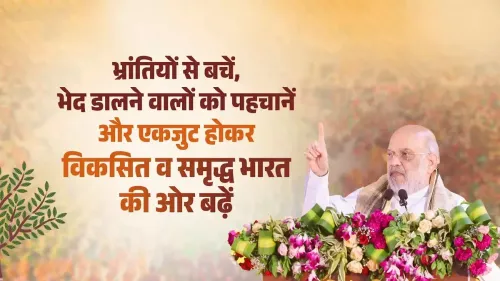
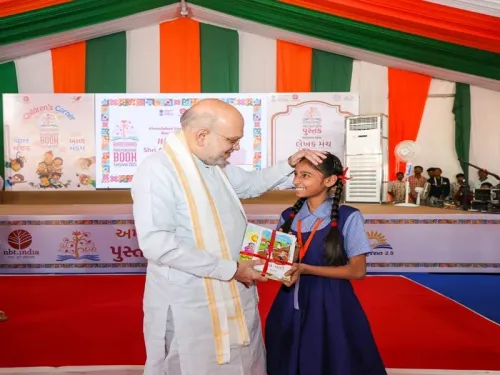
Union Home Minister Amit Shah on Saturday, 11 July 2026 took to X to champion the role of public libraries in shaping the moral and intellectual character of India's youth, urging young people to cultivate a reading habit as a path to developing their own sense of right and wrong.
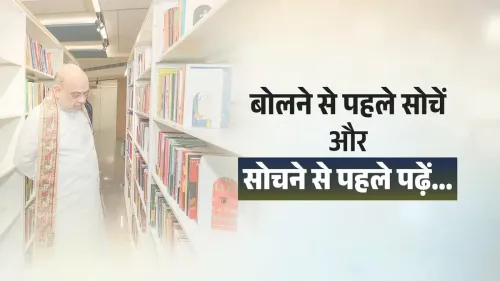
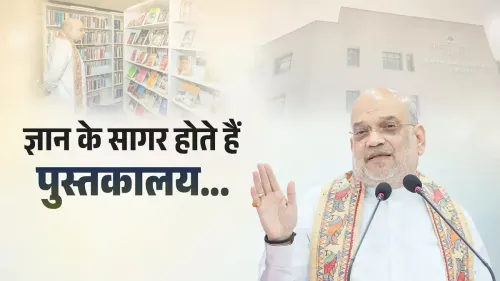
In his post, Shah wrote in Hindi: 'पुस्तकालय ज्ञान के सागर हैं।' ('Libraries are oceans of knowledge.') He added that once young people connect with libraries and form a reading habit, 'the wisdom to distinguish between good and bad will awaken on its own.'
Context
The post carries no reference to a specific event or scheme launch, presenting itself instead as a reflective appeal directly to India's youth. Shah, who also serves as Minister of Cooperation and is a senior leader of the Bharatiya Janata Party, has previously used his social media presence to promote cultural and educational values alongside policy messaging.
The sentiment echoes a long-standing consensus across successive central governments that public libraries are foundational instruments for literacy, informed citizenship, and value formation — a tradition that dates to the post-independence period.
Policy Backdrop
The appeal lands against a backdrop of two significant central policy frameworks. The National Mission on Libraries, launched in 2014 under the Ministry of Culture, was designed to modernise public library infrastructure, expand digitisation, and improve services across states. The mission explicitly aimed at broadening access to knowledge resources for citizens at every level.
The National Education Policy 2020 went further, directing states to ensure well-stocked libraries in schools and mandating daily reading periods to build lifelong learning habits. The policy linked expanded library access to both skill development and ethical reasoning among young citizens — a connection Shah's post makes in plain, accessible language.
Stakeholders and Impact
The primary audience is India's student and youth population, a demographic that policymakers across the spectrum have identified as central to the country's development ambitions. Shah's framing is notably values-driven: he positions the reading habit not merely as an academic tool but as a mechanism for cultivating personal discernment and moral clarity.
Public librarians, educators, and state education departments are indirect stakeholders, as any renewed political attention to libraries can influence budget allocations and infrastructure priorities at the state level. Recent policy documents have consistently linked voluntary reading habits with efforts to balance the rapid expansion of digital tools with traditional knowledge sources.
What's Next
While the post does not announce a new scheme or initiative, it may be read as a signal of continued political will at the highest levels of the central government to keep library modernisation on the agenda. Observers will watch for any references to library funding in the next Union Budget, parliamentary committee reviews of the National Mission on Libraries, and state-level implementation reports on library modernisation grants. The broader question of how India's public library network can be made more accessible and relevant to a digitally connected youth generation remains an open policy challenge.
Point of View
He reinforces the BJP's long-running effort to frame governance as value-driven nation-building. The timing, without a specific policy hook, suggests the message is as much about political positioning — associating the party with youth empowerment and traditional learning — as it is about education advocacy. It also quietly keeps pressure on state governments to deliver on the library infrastructure commitments embedded in the National Education Policy 2020.
NationPress
11 Jul 2026
Frequently Asked Questions
What did Amit Shah say about libraries?
Amit Shah said libraries are 'oceans of knowledge' and urged India's youth to connect with them, stating that once a reading habit is formed, the wisdom to distinguish good from bad awakens on its own.
What is the National Mission on Libraries in India?
The National Mission on Libraries is a central scheme launched in 2014 under the Ministry of Culture to upgrade public library infrastructure, expand digitisation, and improve library services across Indian states.
Does India's National Education Policy mention libraries?
Yes. The National Education Policy 2020 explicitly calls on states to maintain well-stocked school libraries and introduce daily reading periods to build lifelong learning habits among students.
Why is Amit Shah talking about libraries?
Shah made the appeal on 11 July 2026 via a post on X, without referencing a specific event or scheme. The message is a values-driven appeal to youth, consistent with the government's broader push to promote reading and ethical development alongside digital education.
How can Indian youth access public libraries?
Indian youth can access public libraries through local municipal and district libraries, as well as through the digitised resources being expanded under the National Mission on Libraries , which aims to make library services available across all states.