Amit Shah Launches BSF Tech Projects at Siliguri Border Post
Synopsis
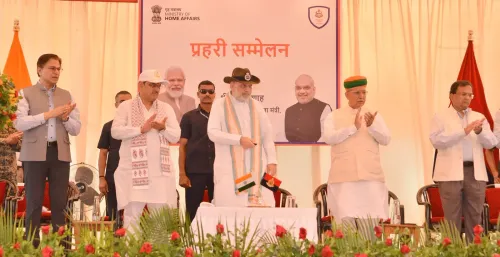
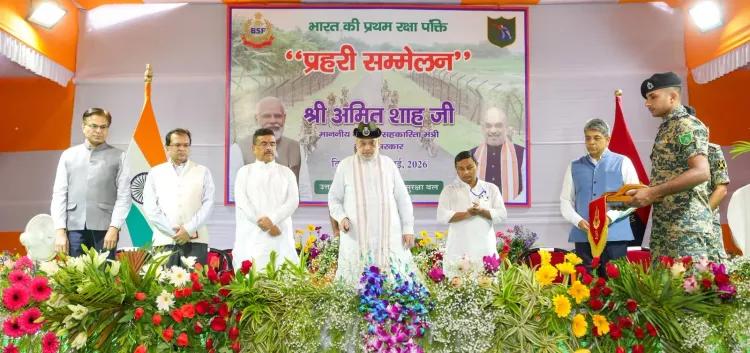
Union Home Minister Amit Shah on 18 July 2026 visited the Jumagachh Border Outpost in Siliguri, West Bengal, where he inaugurated indigenous BSF technology projects — including an Intruder Warning System and Radio-Based Fence Intrusion Detection System — and reviewed operational readiness at a Prahri Sammelan with border troops.
Key Takeaways
Amit Shah addressed BSF personnel at a 'Prahri Sammelan' at the Jumagachh Border Outpost , Siliguri, on 18 July 2026 .
He inaugurated and laid foundation stones for multiple BSF technology projects along the India-Bangladesh border .
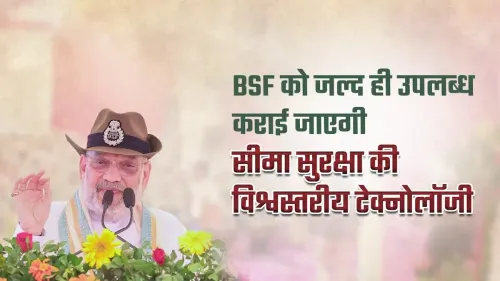
Four systems were exhibited: an Intruder Warning System , a Radio-Based Fence Intrusion Detection System , Gate Management Software , and an indigenous Border Security System on a new-design fence.
The projects align with the Comprehensive Integrated Border Management System (CIBMS) and the Border Infrastructure and Management scheme approved in 2020 .
West Bengal shares a 2,216 km border with Bangladesh — the longest eastern land frontier managed by the BSF.
The indigenous technology push reflects the Atmanirbhar Bharat policy applied to internal security hardware.
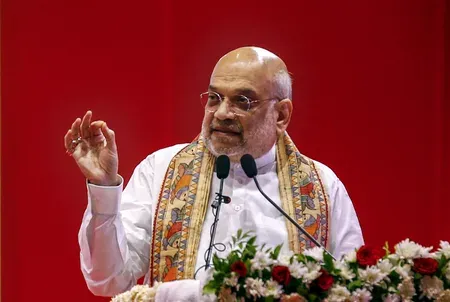
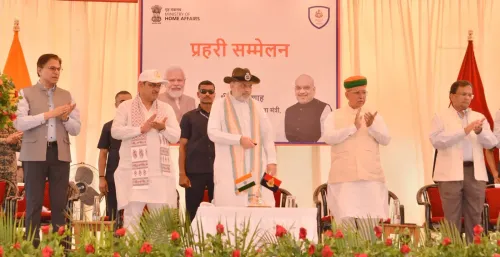
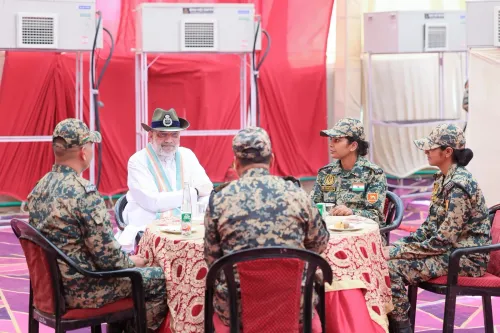
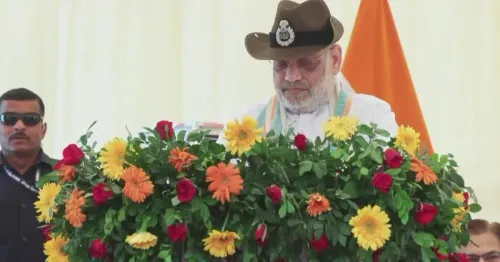
Union Home Minister Amit Shah on Saturday, 18 July 2026, visited the Jumagachh Border Outpost in Siliguri, West Bengal, where he addressed BSF personnel at a 'Prahri Sammelan' and inaugurated as well as laid the foundation stones for several border security projects along the India-Bangladesh frontier.
Posting on X, Shah wrote: 'aaj Siliguri (Paschim Bengal) mein Jumagachh seema chowki par aayojit Prahri Sammelan mein BSF ke veer jawanon se samvad kiya' — 'Today, at the Prahri Sammelan held at the Jumagachh border outpost in Siliguri (West Bengal), I interacted with the brave BSF jawans and inaugurated and laid the foundation stones for various BSF projects.' He added that the occasion also included a review of operational preparedness through an exhibition of newly deployed indigenous border security systems.
Context
The 'Prahri Sammelan' — a congregation of border guards — brought Shah face-to-face with BSF troops deployed along one of India's most sensitive stretches. West Bengal shares a 2,216 km border with Bangladesh, making it the longest international land boundary managed by the Border Security Force (BSF) on the eastern front. The Siliguri sector is particularly strategic, sitting at the narrow 'Chicken's Neck' corridor that connects the northeastern states to mainland India.
During the event, Shah reviewed an exhibition featuring four technology systems: an Intruder Warning System, a Radio-Based Fence Intrusion Detection System, Gate Management Software, and an indigenous Border Security System mounted on a new-design fence.
Policy Backdrop
The technological push on the eastern border is part of a multi-year modernisation programme under the Border Infrastructure and Management scheme, approved by the Ministry of Home Affairs in 2020. It builds on the Comprehensive Integrated Border Management System (CIBMS), which was first piloted on the India-Pakistan border in 2016-17 using sensors, radars, and thermal cameras before being extended to the Bangladesh frontier.
The emphasis on indigenous systems — described by Shah as making India's borders 'an ideal example of modern border security' — directly mirrors the Atmanirbhar Bharat policy applied to internal security hardware since 2019. The shift from purely physical fencing to multi-layered technological surveillance addresses persistent challenges including illegal immigration, cattle smuggling, and cross-border crime networks along the eastern border.
Stakeholders and Impact
BSF personnel deployed in the Siliguri sector stand to benefit most immediately from the new alert and detection systems, which are designed to reduce dependence on round-the-clock manual patrolling in difficult terrain. Border residents in West Bengal's frontier districts — who have long lived with the pressures of illegal migration and associated social disruption — are the broader civilian constituency for these measures.
The deployment of indigenous systems also carries industrial significance, signalling continued government procurement from domestic defence and security hardware manufacturers under the Atmanirbhar framework, potentially opening a larger market for Indian firms supplying smart-border technology.
What's Next
Attention will now turn to the roll-out timelines and geographic coverage of the newly inaugurated systems across other BSF sectors in the eastern theatre. Any supplementary budgetary demands for further scaling of border modernisation infrastructure are expected to surface in the next parliamentary session. Shah's visit also sets the political tone ahead of continued central scrutiny of West Bengal's border management, a subject that has repeatedly featured in the BJP-led government's internal security agenda.
Point of View
The Home Minister ties internal security modernisation to the Atmanirbhar Bharat narrative, lending it electoral as well as policy weight. The Siliguri Corridor's strategic sensitivity means any upgrade here carries outsized symbolic value for both the armed forces and the BJP's national security messaging. The real test will be whether the new systems translate into measurable reductions in infiltration incidents, a metric that will define the programme's legacy beyond the inauguration optics.
NationPress
18 Jul 2026
Frequently Asked Questions
Why did Amit Shah visit Siliguri in July 2026?
Amit Shah visited Siliguri on 18 July 2026 to attend a 'Prahri Sammelan' at the Jumagachh Border Outpost, where he interacted with BSF troops and inaugurated several indigenous border security technology projects along the India-Bangladesh frontier.
What is the Jumagachh Border Outpost?
The Jumagachh Border Outpost is a BSF forward post in the Siliguri sector of West Bengal, located along the international border with Bangladesh and strategically positioned near the Siliguri Corridor.
What technology systems were launched at the BSF event in Siliguri?
Four systems were showcased: an Intruder Warning System, a Radio-Based Fence Intrusion Detection System, Gate Management Software, and an indigenous Border Security System mounted on a new-design fence.
What is the Prahri Sammelan?
A Prahri Sammelan is a formal gathering or conference of border guards, where senior officials interact directly with BSF troops deployed on the frontier to review morale, operational readiness, and welfare.
How long is India's border with Bangladesh in West Bengal?
West Bengal shares approximately 2,216 km of international border with Bangladesh, making it the longest stretch of the India-Bangladesh frontier and a priority sector for BSF modernisation efforts.