Amit Shah Launches NIA Anti-Terror Conference 2026 in Delhi
Synopsis
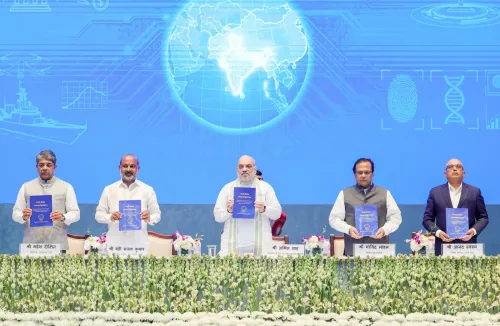
Union Home Minister Amit Shah inaugurated the NIA's two-day Anti-Terror Conference 2026 in New Delhi on 19 November, ordering a national security grid linking all police stations, an ecosystem-based offensive against terror, and the pursuit of every fugitive hiding abroad.
Key Takeaways
Union Home Minister Amit Shah inaugurated the two-day NIA Anti-Terror Conference 2026 in New Delhi on 19 November 2026 .
Directed agencies to build a national security grid and integrate every police station into the counter-terrorism framework.
Called for an 'uncompromising, ecosystem-based approach' targeting financing, radicalisation, and support networks — not just individual operatives.
Demanded that all terrorists, criminals and drug traffickers sheltering abroad be extradited and brought to justice in India.
Stressed stronger Centre-State coordination to make India's security architecture 'unbreachable.' The NIA was established under the NIA Act, 2008 following the 26/11 Mumbai attacks; its powers were further expanded by 2019 UAPA amendments .
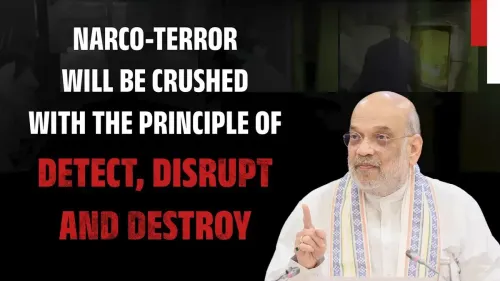
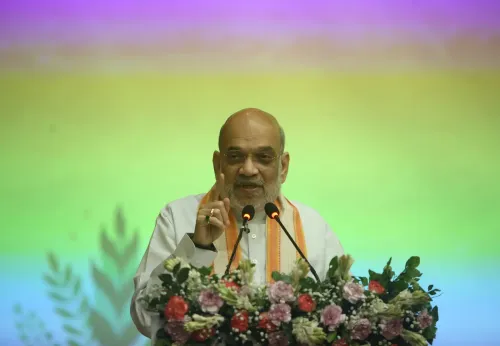
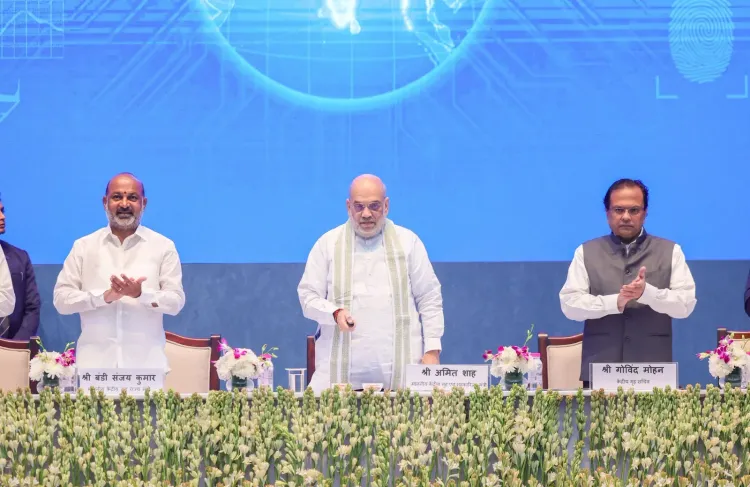
India's internal-security chief drew a hard line on Thursday: every terrorist, criminal, and drug trafficker sheltering abroad will be hunted down and brought back to face Indian law. Union Home Minister Amit Shah inaugurated the two-day Anti-Terror Conference 2026 hosted by the National Investigation Agency (NIA) in New Delhi on 19 November 2026, laying out a sweeping directive for the country's security architecture.
Shah's Four-Point Security Mandate
Speaking at the conference, Shah issued direct instructions to India's security agencies on four fronts: build a robust national security grid, pull every police station into the counter-terrorism framework, sharpen offensive operations to pre-empt threats before they materialise, and pursue fugitive terrorists and traffickers across international borders without let-up. The language was deliberately offensive, not defensive — 'pre-empt threats' rather than merely respond to them.
He called for an 'uncompromising, ecosystem-based approach' — a formulation that signals targeting not just individual operatives but their entire support infrastructure: financing channels, radicalisation pipelines, and cross-border logistics networks. Stronger Centre-State coordination was flagged as a structural necessity to make that architecture 'unbreachable.'
Why Every Police Station Matters
The directive to integrate every police station into the counter-terrorism framework is the most operationally ambitious element of the mandate. India has well over 17,000 police stations across its states and union territories. Linking each of them to a national counter-terror grid has been a long-standing ambition of the federal security establishment — one that projects like the National Intelligence Grid (NATGRID), initiated in 2009-10, were designed to advance. NATGRID was conceived to wire together databases across security agencies for real-time intelligence sharing; Thursday's conference suggests the drive to close the remaining gaps is now being pushed from the top.
NIA's Mandate Since 26/11
The NIA itself was born out of catastrophe. Created by the NIA Act, 2008 in the immediate aftermath of the 26/11 Mumbai attacks, it was India's answer to the intelligence and coordination failures that allowed a ten-man squad to hold the country's financial capital hostage for four days. Its mandate — federal-level investigation of terror cases without needing a state referral — was expanded further by 2019 amendments to the Unlawful Activities (Prevention) Act, which broadened provisions on terror financing and enabled individual designations of terrorists.
Hosting a two-day national conference brings state police forces, central agencies, and intelligence units into the same room — signalling that the NIA's role is not just investigative but coordinative.
The Fugitive Problem: Extradition as a Security Tool
Shah's pointed reference to suspects 'hiding abroad' elevates extradition and mutual legal assistance treaties from diplomatic formality to active security tools. India has in recent years leveraged Interpol Red Notices and bilateral pressure to secure the return of economic offenders; the Home Minister's framing extends the same urgency to terror accused and narco-traffickers. How quickly that intent translates into operational agreements — and with which countries — will be the real test.
An unbreachable security architecture is the stated goal. The Anti-Terror Conference 2026 has set the benchmark; now every agency at the table is on notice to deliver it.
Point of View
Expand federal investigative reach, and treat terrorism as a system to be dismantled rather than a series of incidents to be managed. The push to link every police station to a national grid is the most ambitious expression of that doctrine yet, turning local constabularies into nodes in a national early-warning network. The explicit mention of fugitives abroad signals that the Home Ministry intends to use diplomatic and legal tools — extradition, Interpol notices, mutual legal assistance — as frontline security instruments rather than afterthoughts. Whether the Centre can sustain the political will needed to drag recalcitrant states into tighter coordination will determine whether the 'unbreachable architecture' remains rhetoric or becomes operational reality.
NationPress
19 Nov 2026
Frequently Asked Questions
What is the NIA Anti-Terror Conference 2026?
It is a two-day national security conference hosted by the National Investigation Agency in New Delhi, inaugurated by Union Home Minister Amit Shah on 19 November 2026, bringing together central and state security agencies to sharpen India's counter-terrorism strategy.
What did Amit Shah announce at the Anti-Terror Conference 2026?
Shah directed agencies to build a national security grid, integrate every police station into the counter-terrorism framework, adopt an ecosystem-based approach against terror, and ensure all fugitive terrorists and traffickers hiding abroad are extradited to face Indian law.
What is the NIA and when was it set up?
The National Investigation Agency (NIA) is India's federal counter-terrorism investigation body, established under the NIA Act, 2008, in the wake of the 26/11 Mumbai attacks to enable centralised probe of terror cases across state boundaries.
What is NATGRID and how does it relate to police station integration?
NATGRID (National Intelligence Grid), initiated in 2009-10, is a project to link databases across Indian security agencies for real-time intelligence sharing. Shah's directive to integrate every police station into the counter-terror framework builds on this existing push for networked, bottom-up intelligence.
How does India pursue terrorists hiding abroad?
India uses Interpol Red Notices, bilateral extradition treaties, and Mutual Legal Assistance Treaties (MLATs) to seek the return of suspects sheltering in foreign countries. Shah's remarks at the conference signal a push to deploy these mechanisms more aggressively against terror accused and narco-traffickers.