Piyush Goyal urges Indian industry to compete globally at FICCI 99th AGM
Synopsis
Commerce Minister Piyush Goyal told industry leaders at FICCI's 99th AGM valedictory on November 19 to think globally, build on India's 12-year transformation under PM Modi, and create enterprises that can compete with the world's best.
Key Takeaways
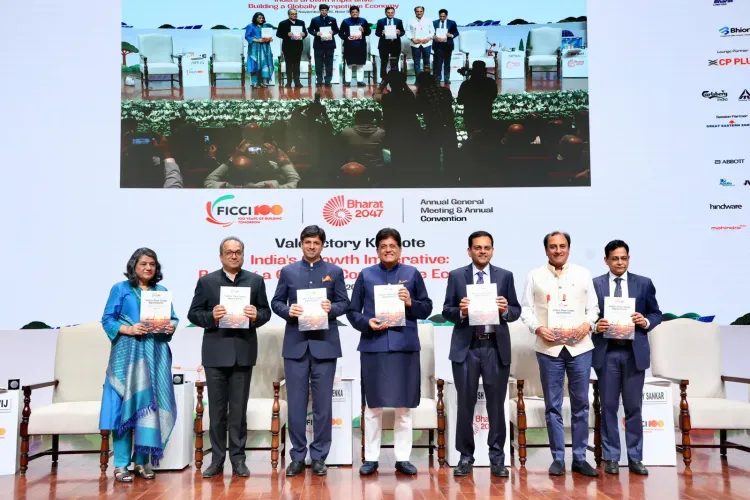
Union Commerce Minister Piyush Goyal spoke at the valedictory session of FICCI's 99th Annual General Meeting and Annual Convention on November 19, 2026 .
He issued a three-part call to industry: think beyond boundaries, build on India's momentum, and create globally competitive Indian enterprises.
Goyal credited 12 years of PM Narendra Modi's leadership for India's economic transformation to date.
FICCI , founded in 1927 , is India's apex business chamber; the 99th AGM is one edition before its landmark centenary.
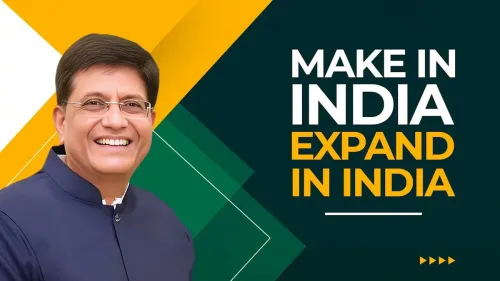
The remarks continue the post-2014 government push — anchored by Make in India (launched September 2014) — to scale domestic firms to global standards.
Follow-up trade policy or investment incentive announcements are expected in the next Union Budget or parliamentary session.
India's global ambitions got a sharp nudge on Thursday, November 19, 2026, when Union Commerce and Industry Minister Piyush Goyal took the stage at the valedictory session of FICCI's 99th Annual General Meeting and Annual Convention, delivering a crisp three-part challenge to Indian business: think beyond borders, build on the country's momentum, and create enterprises that can stand toe-to-toe with the world's best.
The minister's three-point call to Indian boardrooms
Goyal's message, shared in his own words on X, was deliberate in its simplicity — 'a simple request for our industry.' He asked Indian companies to 'think beyond boundaries,' 'build on India's momentum,' and 'create Indian enterprises that can compete with the best in the world.' The directness was the point. At a gathering of India's apex business chamber, there was no bureaucratic hedging — just an explicit expectation that domestic industry match the scale of the government's own ambitions.
The minister credited Prime Minister Narendra Modi's 12 years of leadership for the transformation that makes this next chapter possible, framing the government-industry relationship not as regulator and regulated, but as co-authors of an expanding story.
FICCI's 99th AGM as a milestone platform
FICCI — the Federation of Indian Chambers of Commerce and Industry, founded in 1927 — is India's oldest and largest apex business body. Its annual convention is one of the country's premier forums where policy signals and industry expectations converge. The 99th AGM marks one edition before its centenary, lending additional weight to calls for Indian firms to emerge as genuine global champions by the time the chamber hits 100.
Goyal's presence at the valedictory — the closing, summative session — signals the government's intent to have the last word on what the convention's agenda should translate into on the ground.
From Make in India to 'Compete with the best'
The philosophical lineage here runs straight back to the Make in India initiative, launched in September 2014, which set out to position India as a global manufacturing hub. Over a decade on, the conversation has matured from attracting investment to demanding global competitiveness from Indian-origin firms themselves — a subtle but meaningful shift in ambition.
Successive foreign trade policies, production-linked incentive schemes, and ease-of-doing-business reforms have all been building blocks toward this moment. The question Goyal is effectively posing to Indian industry: the runway has been built — when do you take off?
With the next Union Budget and parliamentary session on the horizon, the minister's remarks at FICCI's valedictory could well be the opening note of a larger policy conversation about what structural support Indian firms need to actually land on global podiums.
Point of View
The timing is symbolically loaded and positions the Modi government as wanting to own the narrative of India's industrial century. The framing of government and industry as co-authors, rather than regulator and regulated, is a deliberate softening that also carries implicit pressure: policy scaffolding has been erected, and now industry is expected to perform. Watch whether Budget 2027 translates this rhetoric into measurable incentive architecture for outward-facing Indian firms.
NationPress
19 Nov 2026
Frequently Asked Questions
What did Piyush Goyal say at FICCI's 99th AGM?
Commerce Minister Piyush Goyal addressed the valedictory session of FICCI's 99th AGM on November 19, 2026, urging Indian industry to think beyond boundaries, build on India's economic momentum, and create enterprises capable of competing with the world's best companies.
What is FICCI's 99th AGM?
The 99th Annual General Meeting and Annual Convention of FICCI — the Federation of Indian Chambers of Commerce and Industry, India's apex business body founded in 1927 — is one of India's premier industry-government forums, held in 2026 one year before FICCI's centenary.
What is Make in India and how does it relate to Goyal's speech?
Make in India is a government initiative launched in September 2014 to promote domestic manufacturing and global competitiveness. Goyal's remarks build on that legacy, pushing Indian firms to now actively compete — not just manufacture — on the global stage.
How long has PM Modi been in power according to Piyush Goyal's remarks?
Goyal credited 12 years of Prime Minister Narendra Modi's leadership — since May 2014 — for the economic transformation that he says makes the next, bigger chapter possible.
What policy announcements could follow Goyal's FICCI speech?
Analysts are watching the next Union Budget and parliamentary session for follow-up announcements on trade policy, production-linked incentives, or investment frameworks aimed at helping Indian companies scale to global standards.