Goyal Links Ram Setu to Viksit Bharat, Lists Decade of Gains
Synopsis
Commerce Minister Piyush Goyal uses the Ram Setu metaphor to present a ten-year Modi government scorecard — 50 crore out of poverty, 12 crore toilets, food security for 80 crore — as the foundation for India's Viksit Bharat 2047 ambition.
Key Takeaways
Union Commerce Minister Piyush Goyal invoked the Ram Setu myth on 19 November 2026 to frame India's development journey as a collective national effort.
Government claims cited include 50 crore people exiting extreme poverty and food security coverage for 80 crore people over the past decade.
The Swachh Bharat Mission is credited with constructing 12 crore rural household toilets since 2014.
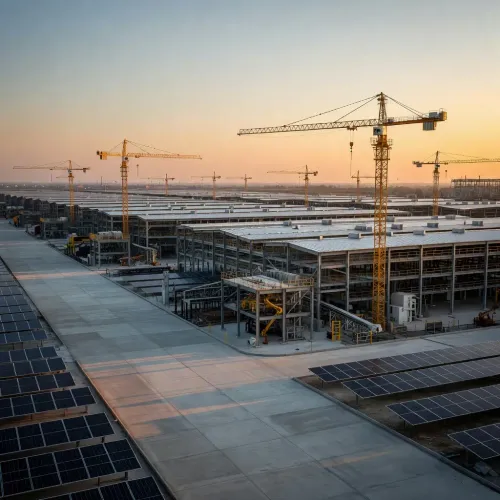
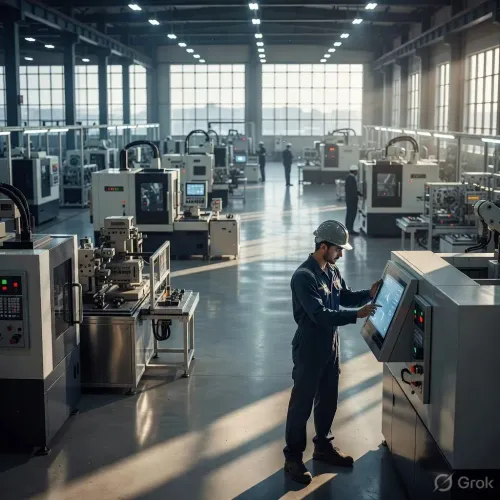
Make in India (launched September 2014) and Digital India (launched July 2015) are presented as twin engines of economic transformation.
All achievements are explicitly framed as building blocks toward the Viksit Bharat 2047 developed-nation vision.
Key figures in the post are government claims; the next NITI Aayog MPI update will offer an independent benchmark on the poverty numbers.
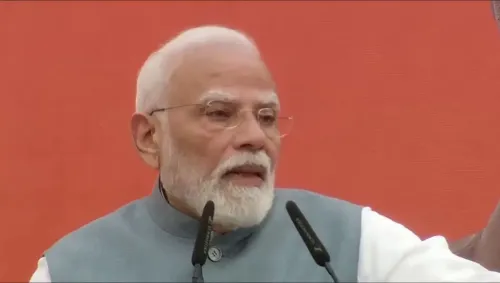
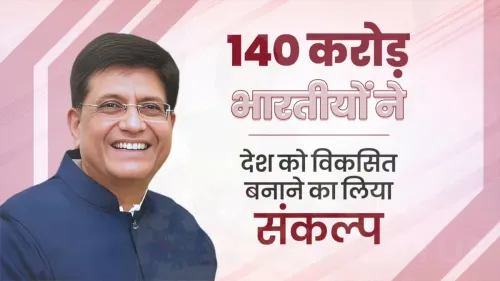
Every stone placed by a squirrel in the Ram Setu counted — and so does every Indian's contribution to a developed India. That is the analogy Union Commerce and Industry Minister Piyush Goyal reached for on Thursday, 19 November 2026, invoking the mythological bridge to frame the government's ten-year development record as a collective national project pointing toward Viksit Bharat 2047.
The Squirrel and the Bridge: Why the Ram Setu Metaphor Lands Now
The Ram Setu image — drawn from the Ramayana, where even a tiny squirrel's effort was honoured by Lord Ram — is not accidental. It is a deliberate rhetorical choice that official communications have used periodically to argue that large national goals are built from innumerable small acts: a farmer adopting a digital payment, a family using an LPG connection, a student logging into a government portal. Goyal's post deploys it to stitch together a list of flagship achievements under Prime Minister Narendra Modi into a single, emotionally resonant arc.
The Scoreboard Goyal Puts on the Table
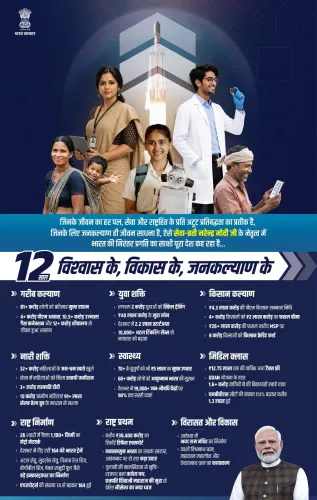
The minister cites a string of government claims for the decade since 2014: 50 crore people lifted out of extreme poverty; rural sanitation through 12 crore toilets built under the Swachh Bharat Mission; food security for 80 crore people under the expanded National Food Security framework; and the twin flagship programmes Make in India — the manufacturing promotion drive launched in September 2014 — and Digital India, the connectivity and e-governance push rolled out in July 2015. Affordable data and electricity, and a widening middle class with rising purchasing power, round out the list.
The figures are drawn from government sources. Independent verification of the exact methodology behind the poverty-exit and toilet-construction numbers remains a subject of ongoing statistical debate, and the next NITI Aayog Multidimensional Poverty Index update will be watched closely for official benchmarks.
Viksit Bharat 2047: The Destination Behind the Data
Each item on Goyal's list is framed as a building block toward Viksit Bharat — the government's formally adopted vision for India to achieve developed-nation status by the centenary of Independence in 2047. The framing is significant: rather than presenting these as discrete welfare achievements, the post casts them as infrastructure for ambition — a population freed from subsistence, connected to digital networks, and emboldened to 'aim big, think big and dream big', as Goyal puts it. It is a shift from a narrative of poverty alleviation to one of aspiration.
Point of View
Goyal is doing something strategically interesting: making a civilisational claim, not just a policy one. The unverified nature of some headline figures means the post will face scrutiny from opposition benches and independent economists, particularly ahead of the next NITI Aayog poverty index release. If those numbers hold up, they become powerful electoral capital; if they are contested, they become a liability.
NationPress
19 Nov 2026
Frequently Asked Questions
What is Viksit Bharat and what is its target year?
Viksit Bharat is the Indian government's official vision to transform India into a fully developed nation by 2047 , the centenary of Independence. It encompasses goals across economic growth, infrastructure, digital access, and social welfare.
What is the Ram Setu reference in Piyush Goyal's post about?
Goyal draws on the Ramayana episode where even a squirrel's small effort in building the bridge to Lanka was honoured, using it as a metaphor to argue that every Indian's contribution — however small — matters in building a developed India.
How many people did the government claim were lifted out of extreme poverty in the last decade?
The government's claim, as cited by Goyal, is that 50 crore people have come out of extreme poverty over the past decade. This figure is drawn from official government sources; independent methodology verification is pending the next NITI Aayog Multidimensional Poverty Index update.
What is Make in India and when was it launched?
Make in India is a flagship manufacturing promotion initiative launched by Prime Minister Narendra Modi in September 2014 , aimed at encouraging domestic and foreign investment in Indian manufacturing sectors.
How many rural toilets were built under the Swachh Bharat Mission?
Goyal's post cites 12 crore toilets built for rural households, a figure the government attributes to the Swachh Bharat Mission , which was launched in 2014 with the goal of achieving open-defecation-free villages across India.