Anurag Thakur chairs panel review on coal evacuation infra
Synopsis
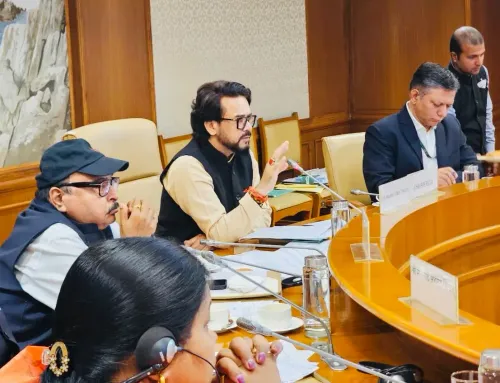
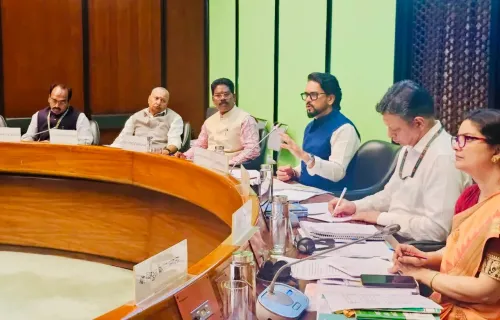
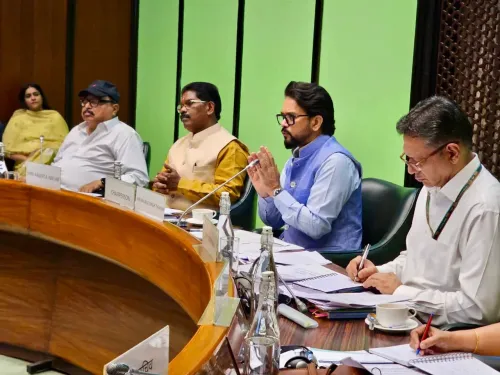
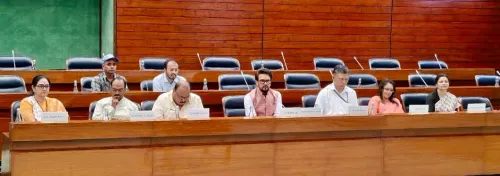
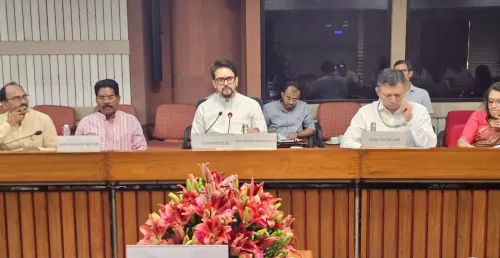
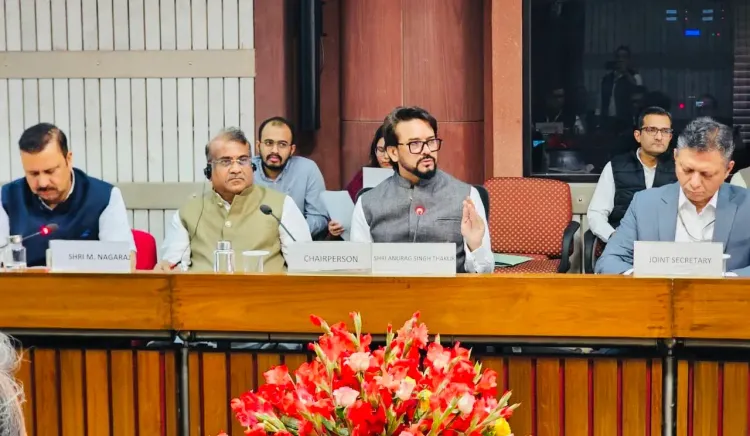
BJP MP Anurag Thakur chaired the Parliamentary Standing Committee on Coal, Mines and Steel on 19 November 2026, reviewing coal evacuation and transportation infrastructure. The Ministry of Coal briefed members on its Coal Logistics Plan, First Mile Connectivity programme, Rail-Sea-Rail corridors, and railway projects, with Coal India, SCCL and NLC India all presenting to the panel.
Key Takeaways
Anurag Thakur chaired the Standing Committee on Coal, Mines and Steel on 19 November 2026 .
The session focused on the 'Review of Infrastructure for Evacuation and Transportation of Coal.' The Ministry of Coal presented on its Coal Logistics Plan , First Mile Connectivity programme, railway projects, and Rail-Sea-Rail movement corridors.
All three coal-sector CPSEs — Coal India Limited , SCCL , and NLC India Limited — briefed the Committee.
The review is anchored in PM Modi 's Aatmanirbhar Bharat initiative, which targets reduced coal import dependence through boosted domestic production and logistics.
Committee recommendations following the review will be submitted to Parliament and may influence railway project timelines and logistics budgets.
India moves roughly one billion tonnes of coal a year — and getting that fuel from mine to power plant efficiently is one of the country's most stubborn logistical challenges. BJP MP Anurag Thakur chaired a meeting of the Parliamentary Standing Committee on Coal, Mines and Steel on Thursday, 19 November 2026, focused squarely on the infrastructure that makes or breaks that supply chain.
The session reviewed the 'Review of Infrastructure for Evacuation and Transportation of Coal,' with the Ministry of Coal briefing committee members on three interlocking pillars: its Coal Logistics Plan, the First Mile Connectivity programme, and active railway projects. The multimodal Rail-Sea-Rail movement corridor — which routes coal by rail to a port, ships it coastally, and re-loads onto rail at the destination — also came under detailed examination.
CPSEs on the table: CIL, SCCL and NLC face the Committee
All Central Public Sector Enterprises under the Ministry of Coal presented to the Committee. That means Coal India Limited (CIL) — the Maharatna giant that accounts for the lion's share of domestic output — was joined by Singareni Collieries Company Limited (SCCL), the major mining joint venture operating primarily in Telangana, and NLC India Limited, which spans both lignite mining and power generation. Having all three CPSEs in one room signals the Committee's intent to map the full ecosystem of coal movement, not just production figures.
First Mile Connectivity and the logistics bottleneck
The 'First Mile' — the stretch from pit-head to the nearest rail siding — has historically been the weakest link in coal supply. Trucks clogging mine-access roads, spillage, and time-loss before coal even reaches a railhead have long been documented as constraints on thermal power supply. The First Mile Connectivity programme, which seeks to replace truck-based evacuation with conveyor belts and direct silo-loading onto rakes, sits at the heart of these discussions.
Thakur framed the Committee's work within PM Narendra Modi's Aatmanirbhar Bharat vision — the self-reliance initiative launched in May 2020 that explicitly targeted a reduction in India's coal import bill by unlocking domestic production. The logic is straightforward: domestic coal is useless if it cannot reach a power plant at competitive cost and predictable speed.
Parliamentary oversight in a sector that powers the grid
Standing Committee reviews carry real institutional weight. While the Committee cannot direct ministry spending, its findings and recommendations go to Parliament and historically prompt course-corrections in project timelines, budget allocations, and inter-ministerial coordination — particularly between the Ministries of Coal and Railways, whose alignment is essential for dedicated coal corridors.
The broader pattern is one of successive governments recognising that India's coal output growth has repeatedly outrun the logistics infrastructure designed to carry it. Matching evacuation capacity to production targets is not a one-time fix; it requires sustained parliamentary attention and updated project tracking — precisely the work this Committee session was designed to advance.
With sanctioned railway projects and Rail-Sea-Rail corridors still at varying stages of execution, the Committee's forthcoming recommendations to Parliament will be the next critical marker of whether India's coal supply chain is finally catching up to its ambitions.
Point of View
The real test is whether parliamentary oversight translates into accelerated project execution — particularly on the railway-coal ministry coordination that has historically been the fault line. Thakur's chairing of this session also signals the BJP's intent to maintain legislative scrutiny over public-sector coal logistics as thermal power demand continues to rise.
NationPress
19 Nov 2026
Frequently Asked Questions
What did Anurag Thakur's Standing Committee meeting on coal discuss?
The Standing Committee on Coal, Mines and Steel, chaired by Anurag Thakur on 19 November 2026, reviewed infrastructure for the evacuation and transportation of coal, including the Coal Logistics Plan, First Mile Connectivity, railway projects, and Rail-Sea-Rail corridors.
What is First Mile Connectivity in coal mining?
First Mile Connectivity refers to infrastructure — such as conveyor belts and silo-loading systems — that links a coal mine's pit-head directly to the nearest railway siding, replacing slower and costlier truck-based evacuation.
What is the Coal Logistics Plan?
The Coal Logistics Plan is the Ministry of Coal's strategic framework to improve the speed, cost-efficiency, and reliability of coal movement from mines to power plants and industries through multimodal transport solutions.
Which CPSEs appeared before the Standing Committee on Coal?
Coal India Limited (CIL), Singareni Collieries Company Limited (SCCL), and NLC India Limited — all Central Public Sector Enterprises under the Ministry of Coal — briefed the Committee during the 19 November 2026 session.
How does Aatmanirbhar Bharat relate to coal logistics?
The Aatmanirbhar Bharat initiative, launched in May 2020, included measures to boost domestic coal production and reduce import dependence. Efficient logistics infrastructure is essential to realising that goal — cheap domestic coal loses its advantage if it cannot reach power plants reliably and at low cost.