Anurag Thakur Credits Modi's 12 Years for India's Economic Rise
Synopsis
BJP MP Anurag Thakur has credited Prime Minister Narendra Modi's twelve years in office with elevating India among the world's leading economies, while attributing the preceding UPA era to corruption and policy instability. The post underscores BJP's sharpening governance narrative as the NDA crosses its twelve-year milestone.
Key Takeaways
BJP MP Anurag Thakur posted on June 23, 2026 , marking 12 years of PM Narendra Modi 's leadership.
He claimed India has achieved 'all-round development' and joined the world's leading economies under the NDA government.
The post contrasted current governance with the UPA era (2004–2014) , citing corruption and policy instability as key drags on the economy then.
Thakur highlighted good governance, transparency, and development as the current administration's defining priorities.
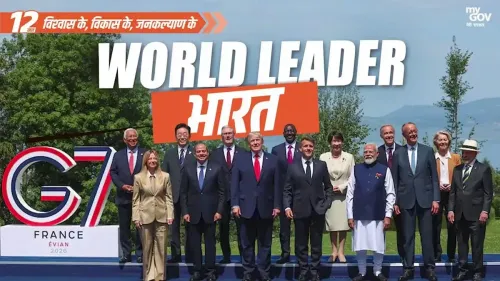
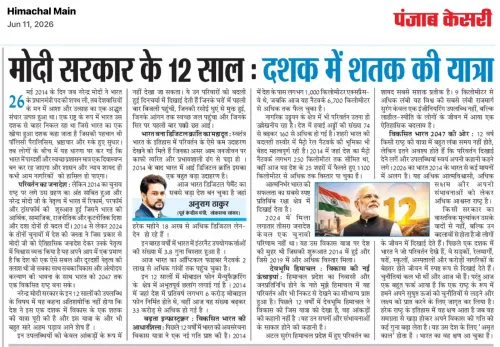
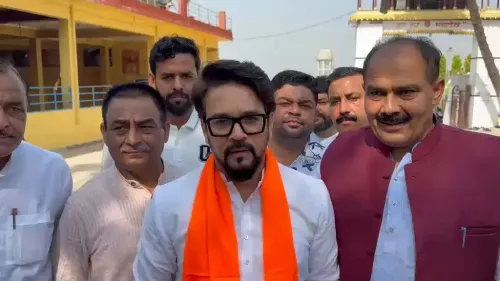
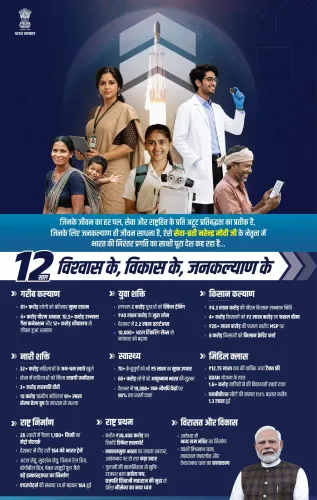
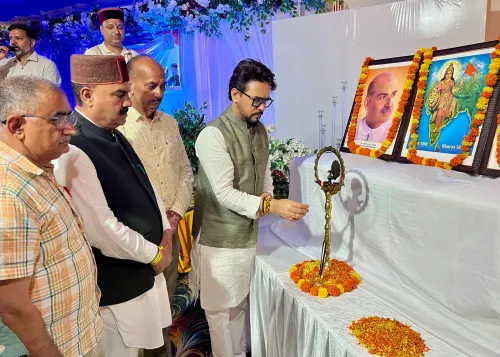
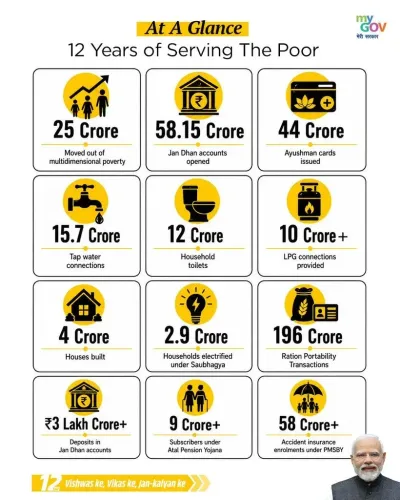
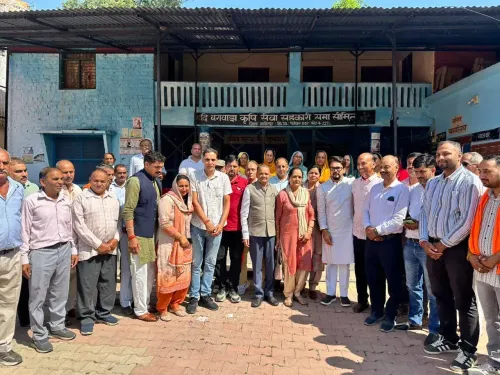
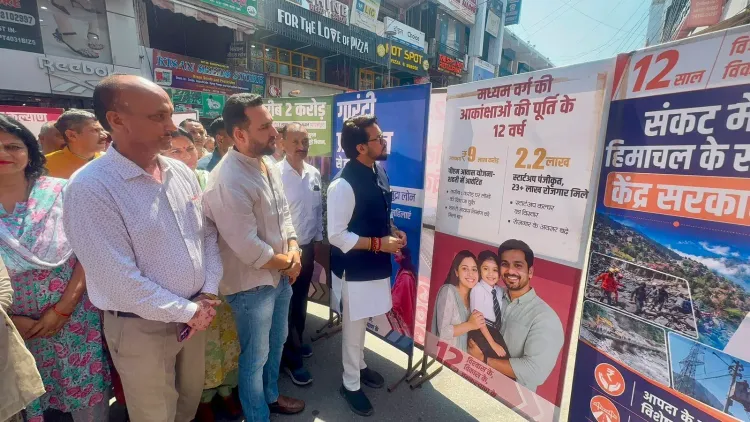
The post was accompanied by four images , indicating a structured BJP communication push around the governance milestone.
Upcoming Economic Survey and GDP data releases will offer independent benchmarks to assess the political claims made.
BJP MP Anurag Thakur on Tuesday, June 23, 2026, credited Prime Minister Narendra Modi's twelve years in office with transforming India into one of the world's leading economies, while sharply contrasting the current government's record with what he described as corruption and policy instability under the preceding UPA administration.
Context
In a post on X, the Hamirpur MP wrote — 'विगत 12 वर्षों में आदरणीय प्रधानमंत्री श्री नरेन्द्र मोदी जी के नेतृत्व में भारत चहुमुखी विकास कर विश्व की अग्रणी अर्थव्यवस्थाओं में शामिल हुआ है' — ('In the past 12 years, under the leadership of respected Prime Minister Shri Narendra Modi, India has achieved all-round development and joined the ranks of the world's leading economies'). Thakur further stated that India's international standing has grown continuously during this period.
The post also asserted that during the United Progressive Alliance (UPA) government's tenure, the country's economy was adversely affected by corruption and policy instability, whereas the present government has prioritised good governance, transparency, and development. The remarks arrive as India's economic trajectory remains a central theme in domestic political discourse.
Policy Backdrop
The BJP-led National Democratic Alliance (NDA) came to power in May 2014, replacing the Congress-led UPA coalition that had governed India since 2004. Since then, successive NDA administrations have introduced a series of regulatory and infrastructure reforms, and India has participated more assertively in multilateral economic forums.
The UPA era, particularly its second term from 2009 to 2014, was marked by high-profile corruption controversies and a period of slowing growth that critics labelled 'policy paralysis.' The BJP has consistently invoked this contrast as a benchmark for its own governance record. Thakur, as former Union Minister for Information and Broadcasting and Youth Affairs and Sports, has been a prominent voice in articulating this narrative.
Stakeholders and Impact
The political framing carries significance for Indian citizens and global investors alike, as perceptions of governance stability directly influence foreign direct investment decisions and sovereign credit assessments. Thakur's post, accompanied by four images, signals an intensified BJP communication effort around the twelve-year governance milestone.
Opposition parties, particularly the Indian National Congress, have historically disputed such comparisons, arguing that foundational economic reforms and social programmes from the UPA period laid the groundwork for subsequent growth. The debate over attribution of India's economic gains remains a live political contest ahead of future electoral cycles.
What's Next
Analysts and policymakers will watch the upcoming release of Economic Survey data and GDP figures from the Ministry of Statistics and Programme Implementation for independent benchmarks against which such political claims can be assessed. As the NDA government crosses the twelve-year mark, governance comparisons between the two eras are expected to intensify in parliamentary debates and campaign messaging. The framing of India's economic identity — as a rising global power shaped by post-2014 reforms — is likely to remain a cornerstone of BJP's political communication through the next election cycle.
Point of View
Deployed with renewed force as the NDA crosses a symbolic twelve-year threshold. By anchoring the message to India's global economic standing, the party attempts to translate abstract macroeconomic gains into a digestible electoral argument. The invocation of UPA-era corruption is equally deliberate — it keeps the Congress on the defensive and reinforces a governance-competence contrast that BJP has used effectively since 2014. As India's economy faces both global headwinds and domestic structural challenges, the sharpness of this framing will be tested by independent data in the months ahead.
NationPress
23 Jun 2026
Frequently Asked Questions
What did Anurag Thakur say about India's economy under PM Modi?
Anurag Thakur stated that in the past 12 years under PM Narendra Modi, India has achieved all-round development and joined the world's leading economies, with its international standing rising continuously.
How did Anurag Thakur describe the UPA government's economic record?
Thakur said that during the UPA government's tenure, India's economy was adversely affected by corruption and policy instability, contrasting it with the current government's focus on good governance and transparency.
Who is Anurag Thakur and what is his political background?
Anurag Thakur is a BJP Lok Sabha MP from Hamirpur, Himachal Pradesh, and a former Union Minister who held the portfolios of Information and Broadcasting and Youth Affairs and Sports.
When did the BJP-led NDA government first come to power?
The BJP-led NDA government came to power in May 2014 after general elections, replacing the Congress-led UPA coalition that had governed India since 2004.
What economic data will help verify claims about India's growth under Modi?
Upcoming releases of the Economic Survey and GDP figures from the Ministry of Statistics and Programme Implementation will provide independent benchmarks to assess governance and growth claims from both political sides.