Anurag Thakur Highlights India's Digital Leap on Digital India Day

Synopsis
On Digital India's eleventh anniversary, BJP MP Anurag Thakur highlighted India's 1.03 billion internet connections, its dominant share of global real-time digital payments, and the country's push into AI and semiconductors — calling it a shift from analogue to digital dreaming.
Key Takeaways
BJP MP Anurag Thakur posted on 1 July 2026 , the eleventh anniversary of the Digital India programme.
India has reached 1.03 billion internet connections , according to figures cited in the post.
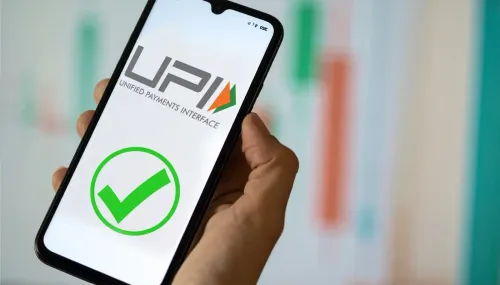
India accounts for 'almost half of the world's real-time digital payments,' driven primarily by UPI .
Thakur flagged India's expanding role in artificial intelligence and semiconductors as the next frontier.
The India Semiconductor Mission , approved in December 2021 , and the IndiaAI Mission form the policy backbone for these ambitions.
The post frames Digital India as the foundation for an 'inclusive, innovation-driven future' — shifting the national imagination from analogue to digital.
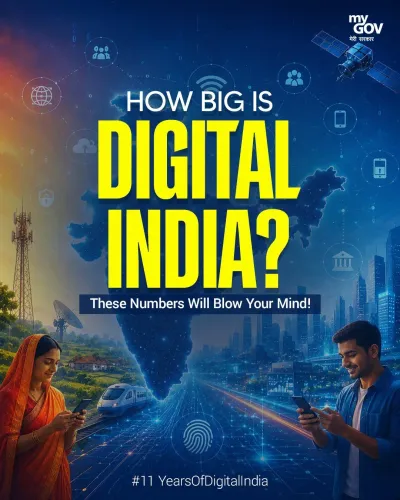
BJP MP Anurag Thakur on Wednesday, 1 July 2026 — the eleventh anniversary of the Digital India programme — took to X to underscore the country's transformation into a digital powerhouse, citing 1.03 billion internet connections and India's outsized role in global real-time digital payments.
Context
Thakur's post marks the occasion of Digital India Day, observed annually on 1 July to commemorate the programme's launch in 2015 by Prime Minister Narendra Modi. The former Union Minister of Information and Broadcasting wrote: 'India now dreams digital, not analogue' — a phrase that encapsulates the shift from paper-based governance and cash-dominated commerce to networked, platform-driven public services.
He highlighted that India now accounts for 'almost half of the world's real-time digital payments,' a figure that reflects the extraordinary scale achieved by the Unified Payments Interface (UPI) since its rollout in August 2016 by the National Payments Corporation of India (NPCI). UPI has since expanded to cross-border corridors across multiple countries.
Policy Backdrop
The Digital India programme, launched on 1 July 2015, was conceived to treat digital infrastructure as a public utility — much like roads or electricity — with three core pillars: digital infrastructure creation, delivery of services digitally, and universal digital literacy. Over the decade that followed, it underpinned the rollout of Aadhaar-linked direct benefit transfers, the CoWIN vaccination platform, and the broader India Stack of open digital public infrastructure.
Thakur also pointed to Indian ambitions in artificial intelligence and semiconductors. The government approved the India Semiconductor Mission in December 2021, offering production-linked incentives to attract chip fabrication and design investment. A National Strategy for Artificial Intelligence — branded #AIforAll — was released as early as June 2018, and the subsequent IndiaAI Mission has sought to scale computing capacity and AI application across sectors.
Stakeholders and Impact
The beneficiaries of this decade-long digital push span a wide spectrum: Indian citizens in rural and semi-urban areas who gained access to banking and government services through mobile internet; fintech companies that built businesses on top of UPI and open-banking rails; and semiconductor and AI startups that are now positioning India as a design and innovation hub rather than merely a consumer of imported chips.
Thakur's framing — 'creating opportunities, strengthening the economy and improving lives' — echoes the government's consistent argument that digital public infrastructure is a vehicle for economic inclusion, not just technological prestige. The 1.03 billion internet connections figure, if sustained, would place India among the largest connected populations on earth, with significant implications for e-commerce, edtech, healthtech and digital governance.
What's Next
Attention will now turn to the next phase of the IndiaAI Mission, including budget allocations for sovereign computing infrastructure and AI skilling, as well as progress updates on approved semiconductor fabrication units under the India Semiconductor Mission. The government is expected to use upcoming economic surveys and the Union Budget to set fresh targets for digital connectivity and domestic chip production.
As India's digital economy matures, the policy challenge shifts from access — getting people online — to quality, security, and value creation: ensuring that the 1.03 billion connections translate into sustained productivity gains and that frontier-technology investments in AI and semiconductors build durable industrial capabilities rather than assembly-only dependency.
Point of View
Measurable digital transformation that resonates with both urban middle-class voters and rural first-time internet users. By invoking 1.03 billion connections and global payments dominance in the same breath as AI and semiconductors, he signals that the party intends to contest the 'technology and growth' narrative heading into the next electoral cycle. The pivot from UPI's financial-inclusion story to frontier technologies also reflects a broader government effort to reposition India not just as a digital consumer but as a producer of advanced technology. Whether semiconductor fabrication timelines and IndiaAI compute targets are met will determine how durable that narrative proves to be.
NationPress
1 Jul 2026
Frequently Asked Questions
When was Digital India launched and what is it?
Digital India was launched on 1 July 2015 by Prime Minister Narendra Modi as a flagship programme to build digital infrastructure, deliver government services online, and promote digital literacy across the country.
How many internet connections does India have in 2026?
According to figures cited by BJP MP Anurag Thakur in his post on 1 July 2026 , India has nearly 1.03 billion internet connections , though these figures have not been independently verified by NationPress.
Why does India account for so much of global real-time digital payments?
India's dominance in real-time digital payments is largely driven by UPI (Unified Payments Interface) , launched in August 2016 by the National Payments Corporation of India , which enables instant, low-cost inter-bank transfers and has been adopted at enormous scale across merchants and consumers.
What is the India Semiconductor Mission?
The India Semiconductor Mission is a central government scheme approved in December 2021 that offers production-linked incentives to attract investment in chip fabrication, packaging, and design, aiming to reduce India's dependence on imported semiconductors.
What did Anurag Thakur say about Digital India on its anniversary?
Anurag Thakur said Digital India has 'laid the foundation for an inclusive, innovation-driven future' and declared that 'India now dreams digital, not analogue,' pointing to 1.03 billion internet connections and India's near-half share of global real-time digital payments as evidence.