Assam CM Himanta flags 20% EV penetration in new vehicle sales
Synopsis
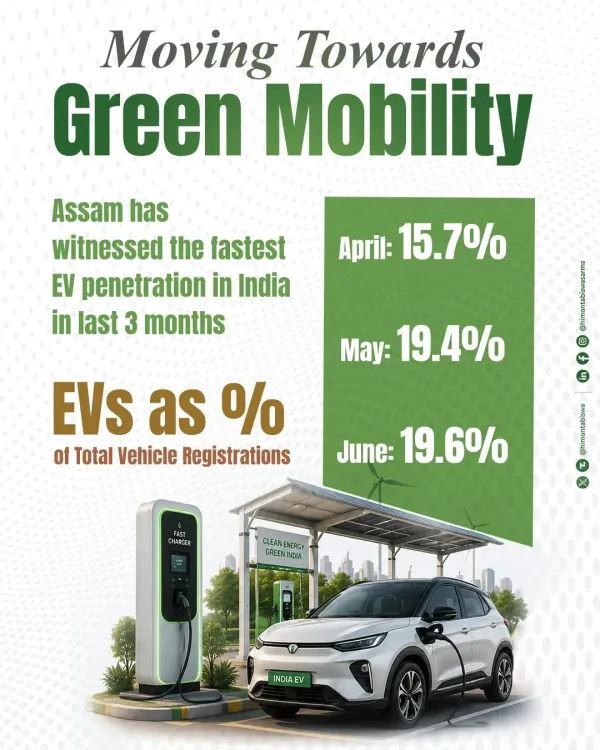
Assam Chief Minister Himanta Biswa Sarma announced on 8 July 2026 that the state has achieved close to 20 per cent EV penetration in new vehicle registrations over three months, crediting improved charging infrastructure, affordable tariffs and supportive state policies for the surge in green mobility uptake.
Key Takeaways
Assam recorded close to 20% EV penetration in new vehicle registrations over the past three months , according to CM Himanta Biswa Sarma.
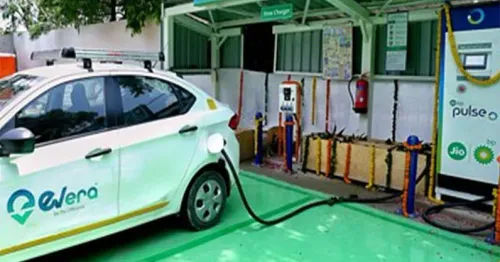
CM Sarma cited improved charging infrastructure , affordable tariffs , reliable power supply and supportive policies as the drivers of the uptake.
India's national FAME-II scheme (notified 2019 ) provides the central policy foundation, with states adding complementary road-tax and tariff incentives.
The reported penetration level, if sustained, would position Assam among the higher-performing Indian states in EV adoption relative to total new registrations.
The development aligns with India's commitment under the Paris Agreement to derive 50 per cent of cumulative electric power capacity from non-fossil sources by 2030 .
Revised Assam EV policy targets and integration with updated central schemes in the 2026-27 state budget are the key milestones to watch.
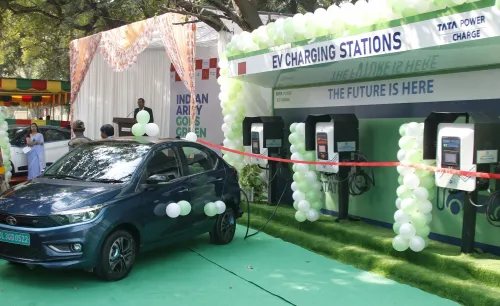
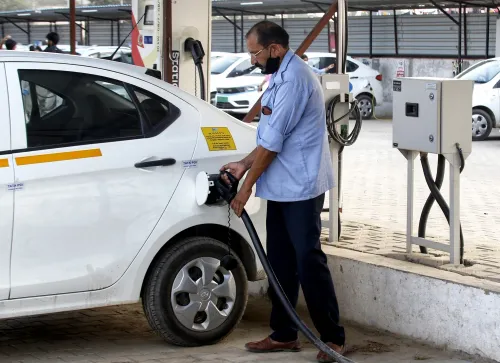
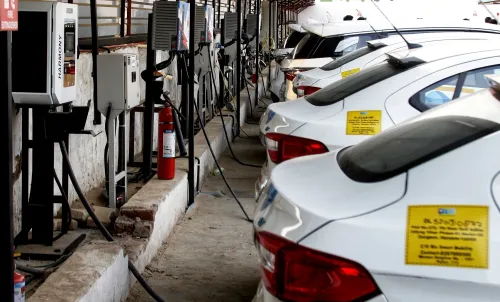
Assam Chief Minister Himanta Biswa Sarma on Wednesday, 8 July 2026, highlighted that the state has recorded close to 20 per cent electric vehicle (EV) penetration in new vehicle registrations over the past three months, citing improved charging infrastructure, affordable tariffs, reliable power supply and supportive policies as the key drivers of this shift.
Context
In his post on X, CM Sarma stated that Assam has achieved nearly 20% EV penetration in new vehicle registrations over the preceding three months, describing it as a reflection of the state's 'strong push towards green mobility.' The figure, if sustained, would place Assam among the higher-performing Indian states on EV adoption relative to total new registrations.
The Chief Minister attributed the uptake to a combination of factors: expanded charging infrastructure, tariff structures that make EV charging affordable for consumers, a reliable electricity grid, and state-level policy incentives designed to lower the cost of ownership for buyers.
Policy Backdrop
India's EV push has been anchored at the national level by the FAME India (Faster Adoption and Manufacturing of Hybrid and Electric Vehicles) scheme, first launched in 2015 and significantly expanded under FAME-II, notified in 2019. The second phase directed a larger outlay towards electric two-wheelers, three-wheelers and public transport, while also funding public charging infrastructure across the country.
State governments have layered complementary measures on top of the central scheme since 2021, including road-tax exemptions, concessional electricity tariffs for EV charging, and targets for charging-station density. Assam's reported penetration numbers suggest its own stack of incentives and infrastructure investments is beginning to show measurable results in the market.
India's broader motivation for accelerating EV adoption includes reducing dependence on crude oil imports and meeting its climate commitments under the Paris Agreement, under which the country has pledged to achieve 50 per cent of cumulative electric power capacity from non-fossil sources by 2030.
Stakeholders and Impact
EV buyers in Assam stand to benefit directly from the policy environment the Chief Minister described — lower charging costs, a denser charging network and purchase incentives collectively reduce both the upfront and running costs of electric vehicles. For charging infrastructure developers, rising penetration signals a commercially viable market, potentially attracting further private investment in the state.
The green-mobility push also carries implications for Assam's urban air quality, fuel-import bills at the state level and the long-term trajectory of its transport-sector carbon emissions. A sustained 20 per cent share in new registrations would represent a structural shift rather than a one-quarter anomaly.
What's Next
Attention will now turn to whether Assam formalises or raises its EV policy targets — possibly through the 2026-27 state budget or a revised EV policy document — and how the state plans to integrate with any updated central schemes that may follow. Analysts and industry stakeholders will watch whether the three-month penetration figure is maintained or improves as the charging network expands further across the state's districts.
If the trend holds, Assam could emerge as a benchmark for other northeastern states looking to replicate a replicable model of state-driven EV adoption within the framework of national clean-energy goals.
Frequently Asked Questions
What is the EV penetration rate in Assam in 2026?
Assam Chief Minister Himanta Biswa Sarma stated on 8 July 2026 that the state has recorded close to 20 per cent EV penetration in new vehicle registrations over the preceding three months.
What policies is Assam using to promote electric vehicles?
According to CM Sarma, Assam's EV push is driven by improved charging infrastructure, affordable electricity tariffs for EV charging, a reliable power supply and supportive state-level policies, all complementing the central government's FAME India scheme.
What is the FAME India scheme and how does it relate to Assam?
FAME India (Faster Adoption and Manufacturing of Hybrid and Electric Vehicles) is a central government scheme launched in 2015 and expanded under FAME-II in 2019 to promote EV adoption through subsidies and charging infrastructure. Assam's state-level measures build on this national framework.
How does Assam's EV adoption compare with other Indian states?
A sustained 20 per cent share in new vehicle registrations would place Assam among the higher-performing Indian states on EV penetration, though direct comparisons require consistent data across states.
What are India's EV goals under the Paris Agreement?
India has committed to achieving 50 per cent of its cumulative electric power capacity from non-fossil fuel sources by 2030 under the Paris Agreement, with EV adoption forming a key part of the country's transport-sector decarbonisation strategy.