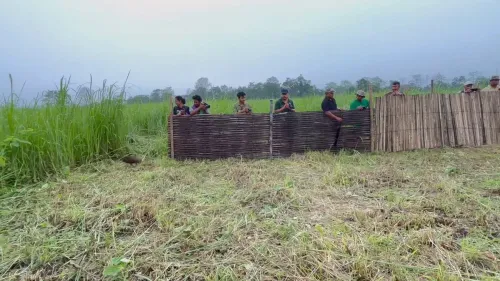
CM Assam Office Highlights 3 Conservation Moves at Manas
Synopsis
The Chief Minister's Office of Assam spotlighted three conservation initiatives at Manas Tiger Reserve on June 9, 2026, including a pygmy hog release and grassland restoration, reinforcing the state's commitment to protecting the UNESCO World Heritage Site.
Key Takeaways
The Chief Minister's Office of Assam announced three conservation initiatives at Manas Tiger Reserve on June 9, 2026 .
Initiatives include a pygmy hog release and a grassland restoration effort inside the reserve.
Manas Tiger Reserve is a UNESCO World Heritage Site and part of India's Project Tiger network since 1973 .
The Pygmy Hog Conservation Programme has been conducting captive-breeding and reintroductions at Manas since the late 2000s.
Grassland restoration supports prey species, benefiting tiger populations and reducing human-wildlife conflict for local communities.
Monitoring of released pygmy hogs could inform similar conservation efforts across other Assam reserves.
The Chief Minister's Office of Assam on Tuesday, June 9, 2026, drew attention to three conservation initiatives under way at Manas Tiger Reserve, including a pygmy hog release programme and a grassland restoration effort, signalling continued state-level focus on one of India's most storied wildlife sanctuaries.
Context
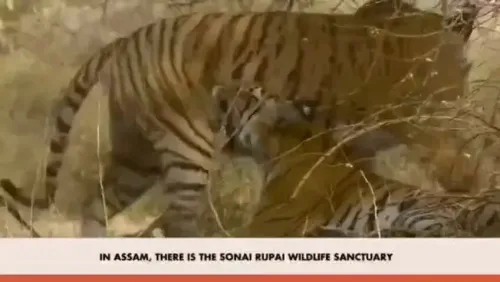
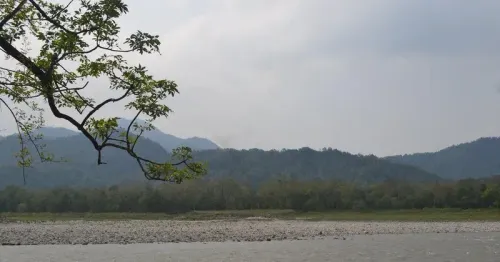
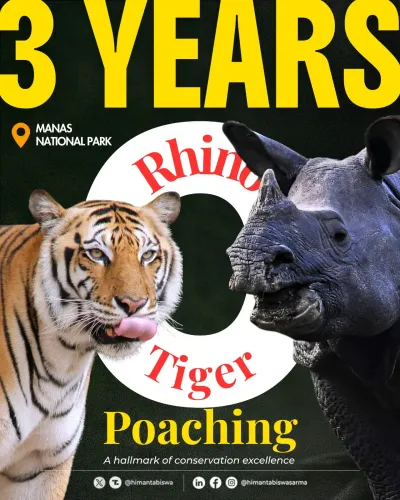
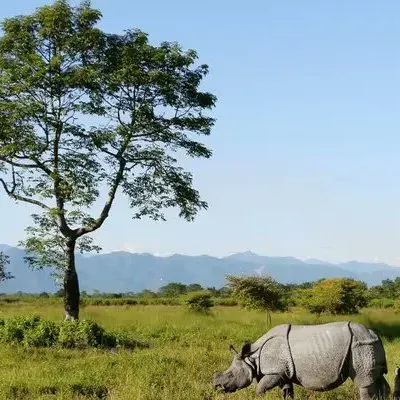
Manas Tiger Reserve, located in western Assam along the foothills of the Bhutan Himalayas, is among India's most ecologically significant protected areas. Declared a tiger reserve under Project Tiger in 1973 and awarded UNESCO World Heritage status in 1985, Manas shelters Bengal tigers, one-horned rhinoceroses, and the critically endangered pygmy hog. The reserve has had a remarkable recovery story after years of insurgency and poaching that once placed it on UNESCO's danger list.
The three initiatives highlighted by the CMO include a pygmy hog release and a grassland restoration effort, alongside a third conservation measure. The announcement underscores the Assam government's alignment with national and international biodiversity commitments centred on this UNESCO site.
Policy Backdrop
The Pygmy Hog Conservation Programme is a long-running captive-breeding and reintroduction effort for the world's smallest and rarest wild pig, a species once thought extinct. Reintroductions into Manas have been ongoing since the late 2000s, making each fresh release a milestone in one of South Asia's most closely watched species-recovery efforts.
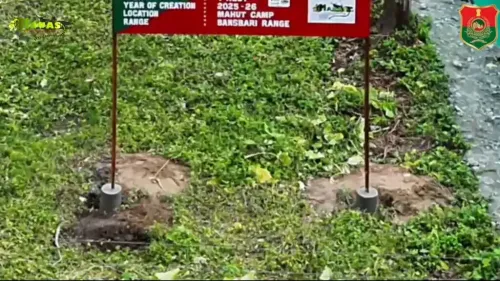
Project Tiger, India's flagship tiger conservation scheme administered by the National Tiger Conservation Authority (NTCA), provides the overarching policy and funding framework within which Manas operates. Grassland restoration is a critical component of this framework, as healthy grasslands support prey species that sustain tiger populations and benefit a range of other wildlife.
Stakeholders and Impact
Local communities living on the fringes of Manas are both stakeholders and potential beneficiaries of these initiatives. Restored grasslands can reduce human-wildlife conflict by keeping animals within the reserve boundary, while eco-tourism growth tied to a healthier reserve ecosystem can generate livelihoods.
Conservation NGOs and international bodies such as UNESCO and the IUCN monitor Manas closely as a benchmark for recovery in conflict-affected reserves. Successful pygmy hog reintroductions also carry significance beyond Assam, informing similar programmes for critically endangered species across South Asia.
What's Next
Wildlife managers and researchers will track survival and breeding rates of the newly released pygmy hogs to assess the viability of the population. Population monitoring data, if positive, could support the replication of grassland restoration techniques in other Assam reserves such as Kaziranga and Orang.
The Assam government's continued public communication around Manas conservation efforts suggests these initiatives will remain a visible part of the state's environmental governance narrative, with further updates expected as the programmes progress through 2026.
Point of View
Particularly for reserves with UNESCO status and international visibility. Combining species reintroduction with habitat restoration signals a more integrated approach than anti-poaching alone, aligning with NTCA's evolving guidelines for tiger reserve management. The pygmy hog programme, one of South Asia's longest-running captive-breeding efforts, lends scientific credibility to what might otherwise read as routine official communication. If monitoring data from the releases is made public, it would meaningfully raise the standard of accountability in India's wildlife conservation discourse.
NationPress
24 Oct 2026
Frequently Asked Questions
What are the three conservation initiatives at Manas Tiger Reserve in 2026?
The Chief Minister's Office of Assam highlighted three initiatives including a pygmy hog release and a grassland restoration effort at Manas Tiger Reserve. The exact details of the third initiative were not specified in the official announcement.
What is the Pygmy Hog Conservation Programme in Assam?
The Pygmy Hog Conservation Programme is a long-running captive-breeding and reintroduction effort for the critically endangered pygmy hog, the world's smallest wild pig. Releases into Manas Tiger Reserve have been ongoing since the late 2000s.
Why is Manas Tiger Reserve important for conservation?
Manas Tiger Reserve is a UNESCO World Heritage Site and one of India's original Project Tiger reserves, declared in 1973. It is home to Bengal tigers, one-horned rhinoceroses, and the critically endangered pygmy hog, making it one of South Asia's most biodiverse protected areas.
What is grassland restoration and why does it matter at Manas?
Grassland restoration involves rehabilitating degraded open habitats within the reserve to support prey species such as deer and wild buffalo. Healthy grasslands are essential for sustaining tiger populations and can reduce human-wildlife conflict at the reserve's edges.
Is Manas Tiger Reserve still on the UNESCO danger list?
No. Manas Tiger Reserve was placed on UNESCO's danger list due to insurgency and poaching but was subsequently removed after significant recovery efforts by the Assam government and conservation organisations.