Abhishek Banerjee: Exam paper leak bill no substitute for accountability
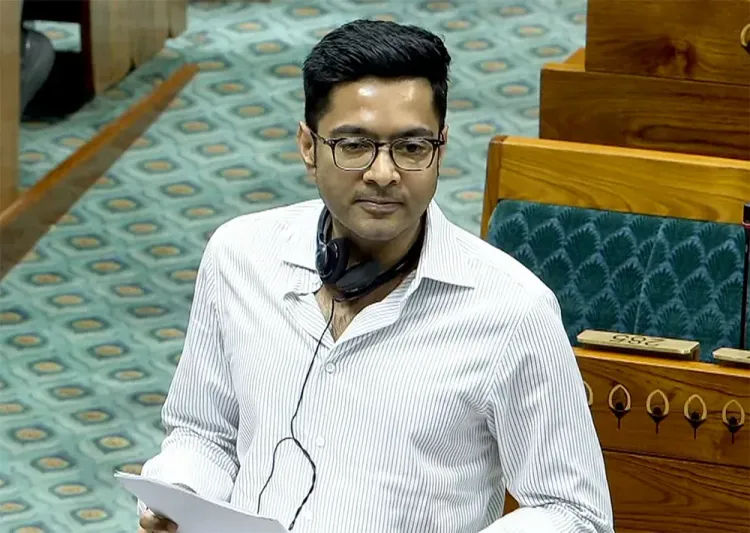
Synopsis
TMC's Abhishek Banerjee backed the exam paper leak amendment bill in Lok Sabha — then used the occasion to deliver one of Parliament's sharpest indictments of the NDA government's examination record, calling the legislation an admission of 12 years of failure rather than a fix.
Key Takeaways
TMC MP Abhishek Banerjee spoke in Lok Sabha on 28 July during debate on the Public Examinations (Prevention of Unfair Means) Amendment Bill, 2026 .
His party supports the bill, but Banerjee argued that 'support cannot be a substitute for accountability.' He called the bill an admission that the BJP-led NDA government failed to protect examinations, students, and merit over 12 years .
Banerjee cited the NEET-UG paper leak and alleged that student protesters were met with lathi charges, pellets, and tear gas instead of dialogue.
He warned that the next generation's verdict on the government would be a single word: 'failed.'
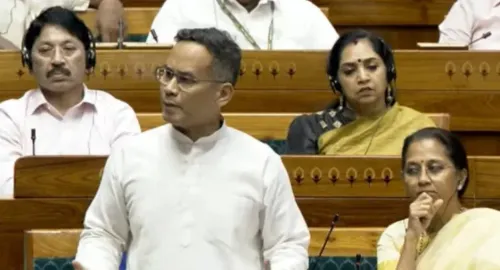
Trinamool Congress (TMC) MP Abhishek Banerjee on Tuesday, 28 July launched a sharp critique of the Centre in the Lok Sabha during debate on the Public Examinations (Prevention of Unfair Means) Amendment Bill, 2026, even as his party extended support to the legislation. Banerjee argued that backing the bill must not be mistaken for absolving the government of its failures on examination integrity.
What Banerjee Said in Parliament
Speaking on the floor of the House, Banerjee framed the amendment as an admission of systemic failure rather than a solution. 'Support for this bill cannot be a substitute for accountability. A stronger law is necessary, yes, but by itself is not sufficient. If examinations continue to be compromised by systematic failures, no amendment, however stringent, will restore the faith that millions of students have lost,' he said.
He directly indicted the ruling Bharatiya Janata Party (BJP)-led National Democratic Alliance (NDA) government, saying it 'failed to protect examinations, it failed to protect the students, it failed to protect the merits.' He added that increasing punishment cannot erase what he described as '12 years of incompetence.'
Governance by Headlines, Not Outcomes
Banerjee drew a pointed contrast between legislative optics and administrative delivery. 'This government has mastered one art. Whenever governance fails, they change the law. Whenever administration collapses, they increase punishment. Whenever institutions fail, they announce another committee. But governance is not done by headlines. Outcomes measure governance,' he said.
He also mocked the government's stated technological capabilities, saying: 'You say you can monitor satellites. The government says it can track missiles. The government says it can defend cyberspace, yet confidential examination papers seem to travel faster than it can detect.'
NEET-UG Paper Leak and Student Protests
The TMC MP invoked the NEET-UG paper leak controversy and the student demonstrations it triggered across the country. He alleged that instead of engaging with protesting students — medical and engineering aspirants who, in his words, 'believed in merit' — the government responded with 'barricades, police lathi charge, pellets, guns, tear gas.'
Banerjee questioned why student dissent was treated as a law-and-order problem rather than a legitimate democratic expression. 'Every student is an enemy. Every question is anti-national. When students ask for justice, why does the government first inflict brutality or resort to force instead of dialogue?' he asked.
The Verdict Banerjee Delivered
Closing his address, Banerjee offered a stark assessment. 'The report card this generation is preparing for the incumbent and the Indian government will have only one word on the top: failed. Failed to protect the examination. Failed to protect merit. Failed to protect trust. Failed to protect dignity and honour,' he said.
The debate reflects deepening parliamentary scrutiny of examination administration in India, with the NEET-UG controversy having already triggered nationwide protests and a Supreme Court hearing. Whether the amended law translates into structural reform — or remains a legislative response to political pressure — will depend on implementation mechanisms that are yet to be detailed.
Point of View
Then weaponise it. By voting with the government while condemning its record, TMC insulates itself from being labelled obstructionist while landing every punch available on the NEET-UG debacle. The more substantive question his speech raises — whether higher penalties alone can fix structurally compromised examination systems — remains unanswered by both sides. India has amended examination laws before; the leaks continued. Until the debate shifts from punishment to process integrity, Parliament risks repeating the cycle Banerjee himself described.
NationPress
27 Oct 2026
Frequently Asked Questions
What is the Public Examinations (Prevention of Unfair Means) Amendment Bill, 2026?
It is a legislative amendment debated in the Lok Sabha on 28 July 2026 that seeks to strengthen penalties and provisions against paper leaks and unfair means in public examinations. The Trinamool Congress supported the bill while also raising accountability concerns.
Why did Abhishek Banerjee criticise the Centre even though TMC supports the bill?
Banerjee argued that legislative support cannot substitute for governmental accountability. He contended that the bill is an admission of the NDA government's failure to protect examination integrity rather than a genuine solution.
What did Banerjee say about the NEET-UG paper leak?
He referred to nationwide student protests over the NEET-UG paper leak and alleged that the government responded with police force — including lathi charges, pellets, and tear gas — rather than dialogue with aggrieved students.
What was Banerjee's core argument against the government's approach to governance?
He argued that the government habitually changes laws when governance fails and increases punishments when administration collapses, but does not address root causes. He said outcomes, not legislative headlines, are the true measure of governance.
Who is Abhishek Banerjee?
Abhishek Banerjee is a Member of Parliament from the All India Trinamool Congress (TMC) and a prominent leader of the party. He represents the Diamond Harbour constituency in West Bengal.