Bhojshala opens to Hindus unrestricted: ASI issues new order after HC ruling
Synopsis
The ASI's 16 May 2026 order granting Hindus unrestricted access to Bhojshala is not just an administrative update — it dismantles a 23-year-old arrangement that had divided the site between two communities. With the Madhya Pradesh High Court legally recognising Bhojshala as a Saraswati temple backed by ASI's own archaeological evidence, a decades-long dispute has reached a decisive turning point.
Key Takeaways
The ASI issued an order on 16 May 2026 granting Hindus unrestricted access to the Bhojshala complex in Dhar, Madhya Pradesh .
The order implements a Madhya Pradesh High Court ruling dated 15 May 2026 that legally recognised Bhojshala as a temple of Goddess Vagdevi (Saraswati) .
The court quashed an ASI directive of 7 April 2003 that had restricted Hindu worship while permitting Muslim prayers at the site.
Specific visiting hours and permissible activities will be fixed by the Superintending Archaeologist in consultation with the district administration .
Bhojshala remains a protected monument under the Ancient Monuments and Archaeological Sites and Remains Act, 1958 .
Historical and architectural evidence linked to Raja Bhoj of the Parmar Dynasty and ASI's own research underpinned the court's findings.
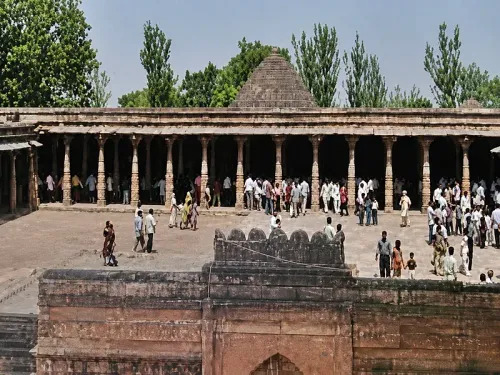
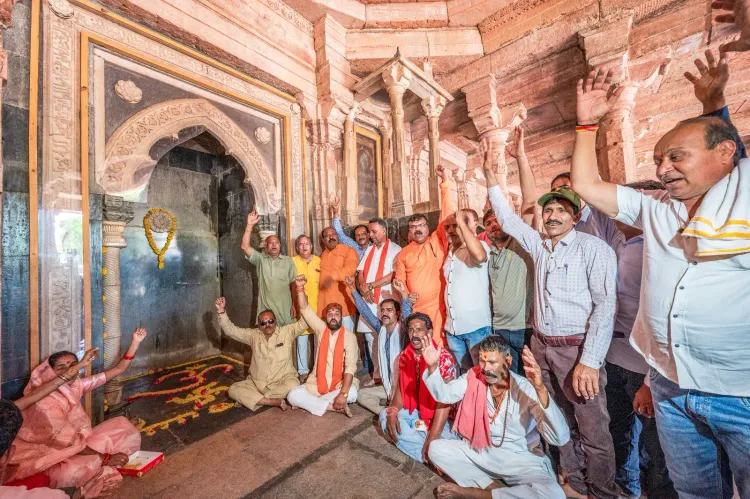
The Archaeological Survey of India (ASI) on 16 May 2026 issued a comprehensive order granting the Hindu community unrestricted access to the Bhojshala complex in Dhar district, Madhya Pradesh, for worship of Goddess Saraswati and observance of ancient Sanskrit learning traditions. The order directly implements a landmark ruling by the Indore bench of the Madhya Pradesh High Court passed on 15 May 2026.
What the ASI Order Mandates
The 16 May 2026 ASI order introduces immediate changes to the administrative and operational framework governing the protected site. Under the new guidelines, Hindus may freely access the Bhojshala complex to practise traditional forms of learning and worship associated with Goddess Vagdevi, another name for Goddess Saraswati.
Since Bhojshala remains a protected monument under the Ancient Monuments and Archaeological Sites and Remains Act, 1958, specific visiting hours will be determined by the Superintending Archaeologist in consultation with the local district administration. Permissible activities for worship and learning will also be jointly defined by these authorities to ensure conservation of the monument. Crucially, this latest order supersedes all previous orders issued in relation to the site.
The High Court Ruling That Triggered the Order
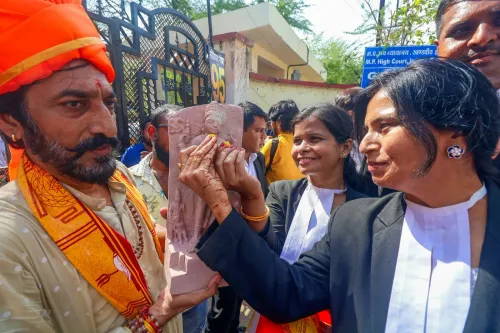
The Madhya Pradesh High Court's Indore bench ruled on 15 May 2026 that Bhojshala is legally a temple dedicated to Goddess Vagdevi (Saraswati). The court's findings drew on historical literature and architectural evidence linked to the reign of Raja Bhoj of the Parmar Dynasty, establishing Bhojshala's character as an ancient centre of Sanskrit grammar, language, and literature. The court noted that these findings are strongly supported by ASI's own scientific research.
The 2003 Order That Has Been Quashed
The High Court simultaneously quashed an ASI directive dated 7 April 2003, issued by the then Director General of the Archaeological Survey of India. That order had restricted Hindu worship rights within the complex while permitting prayers by the Muslim community. The overturning of the 2003 directive marks a fundamental shift in the legal and administrative status of the site, which had been a source of prolonged communal and legal dispute.
Historical and Archaeological Context
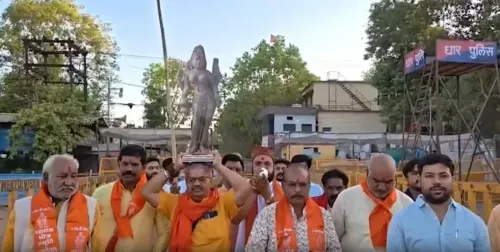
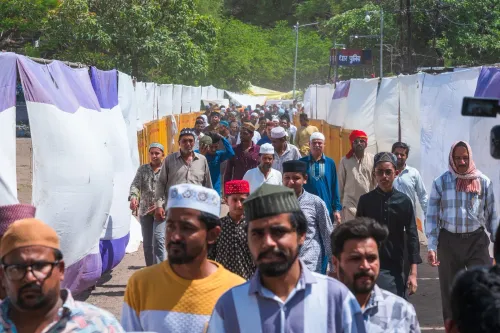
Bhojshala has long been recognised by historians as a centre of Sanskrit scholarship established during the rule of Raja Bhoj, the celebrated 11th-century Parmar Dynasty king of Dhar. ASI surveys and excavations have consistently documented inscriptions, sculptures, and architectural features consistent with a temple complex dedicated to the goddess of learning. The site had been the subject of competing religious claims for decades, with Hindus asserting its identity as a Saraswati temple and a section of the Muslim community using a portion of the premises for Friday prayers under the now-quashed 2003 arrangement.
What Happens Next
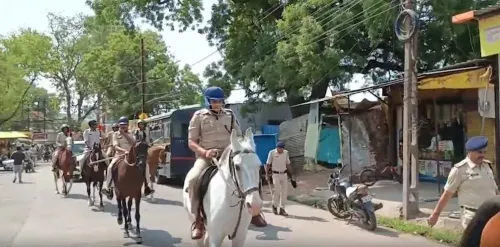
The Superintending Archaeologist and district authorities are expected to notify specific timings and permissible activities in the coming days. Conservation protocols will remain in force, and the monument's protected status under the 1958 Act will continue to govern physical access. The development is expected to be closely watched by religious and legal observers across the country, given the broader national discourse on heritage sites with overlapping religious claims.
Point of View
Not a legal determination of the site's character — and the High Court has drawn that distinction sharply. The broader implication is that ASI's scientific findings, long used selectively in heritage disputes, are now being treated as legally determinative. How the district administration operationalises access — particularly around conservation constraints and the now-displaced Friday prayer arrangement — will test whether this ruling translates into durable resolution or renewed friction on the ground.
NationPress
3 Oct 2026
Frequently Asked Questions
What is the Bhojshala complex in Dhar?
Bhojshala is a protected monument in Dhar district, Madhya Pradesh, historically identified as a centre of Sanskrit learning established during the reign of Raja Bhoj of the 11th-century Parmar Dynasty. It has long been claimed by Hindus as a temple of Goddess Saraswati (Vagdevi), and the Madhya Pradesh High Court legally recognised it as such in its 15 May 2026 ruling.
What did the ASI order of 16 May 2026 say?
The ASI order granted Hindus unrestricted access to Bhojshala for worship of Goddess Saraswati and observance of Sanskrit learning traditions. It supersedes all previous ASI orders on the site, with specific timings and permissible activities to be determined by the Superintending Archaeologist and district administration.
What was the 2003 ASI order that was quashed?
The 2003 directive, issued by the then Director General of ASI on 7 April 2003, had restricted Hindu worship rights within Bhojshala while permitting the Muslim community to offer prayers at the site. The Madhya Pradesh High Court quashed it in its 15 May 2026 ruling.
Why did the High Court rule in favour of recognising Bhojshala as a Saraswati temple?
The court relied on historical literature, architectural evidence connected to Raja Bhoj of the Parmar Dynasty, and extensive scientific research by ASI itself, all of which established Bhojshala's identity as an ancient Sanskrit learning centre and temple dedicated to Goddess Vagdevi. The court found these findings legally sufficient to override the administrative arrangement created by the 2003 order.
Will Bhojshala remain a protected monument after this order?
Yes. Bhojshala continues to be a protected monument under the Ancient Monuments and Archaeological Sites and Remains Act, 1958. The ASI order specifies that visiting hours and permissible activities will be set by the Superintending Archaeologist in consultation with local authorities to ensure conservation of the site.