Bihar CM Orders ₹22,000 Cr Rural Schemes, Doubles Project Count
Synopsis
Bihar CM Nitish Kumar has directed inclusion of ₹22,000 crore in rural development and employment schemes, while ordering the count of sanctioned projects to be doubled from 1.5 lakh to 3 lakh, in a wide-scale administrative push for rural coverage.
Key Takeaways
₹22,000 crore worth of welfare and employment schemes directed to be added to Bihar's rural development framework.
The number of approved schemes is to be doubled from 1.5 lakh to 3 lakh .
The directive focuses specifically on holistic rural development and employment generation .
CM Nitish Kumar issued the instruction; the Chief Minister's Office of Bihar confirmed it on 5 November 2026 .
Panchayati raj institutions and rural households are the primary intended beneficiaries.
District administrations will now be tasked with processing approvals and tracking fund utilisation.
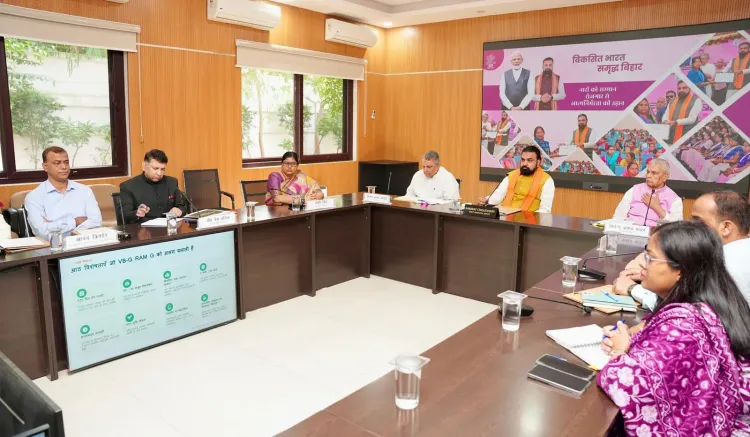
A single directive from the top has set a new scale for rural development in Bihar. Chief Minister Nitish Kumar has instructed officials to fold ₹22,000 crore worth of welfare and employment schemes into the state's rural development framework — and to simultaneously double the number of approved projects from 1.5 lakh to 3 lakh, according to a post by the Chief Minister's Office of Bihar on 5 November 2026.
What the directive covers
The CMO's post states that the Chief Minister has directed that various schemes worth ₹22,000 crore be included specifically for samgra vikas evam rojgar srijan (holistic development and employment generation) in rural areas. The instruction to scale the scheme count — from the currently sanctioned 1.5 lakh to 3 lakh — signals an administrative push to widen ground-level coverage across Bihar's vast network of panchayats and rural blocks.
Bihar's pattern of scaling rural welfare
Nitish Kumar, who has led Bihar through multiple terms, has consistently anchored his governance pitch on rural infrastructure and livelihoods. The state has a well-established pattern of periodically reviewing scheme coverage and issuing top-down directives to district administrations to scale up approvals and fund utilisation. The jump from 1.5 lakh to 3 lakh approved schemes is consistent with that playbook — a 100 per cent increase in the pipeline of sanctioned projects is designed to push welfare delivery into blocks and gram panchayats that may have remained underserved in earlier cycles.
Panchayati raj institutions and rural households stand as the primary beneficiaries. For panchayats, a larger scheme count typically means more local infrastructure contracts, wage employment, and service delivery mandates flowing through their books. For rural households, it translates — in theory — to greater access to housing, sanitation, road connectivity, and livelihood support programmes.
What district administrations must now deliver
A directive at the CM level is the starting gun, not the finish line. The real test will come in the months ahead as district administrations are expected to process, approve, and begin fund utilisation against the expanded scheme pipeline. Progress reports on actual approvals and spending will determine whether the ₹22,000 crore commitment translates into on-ground employment and infrastructure — or remains a headline figure awaiting execution.
Bihar's rural economy, with one of the highest labour out-migration rates in India, has long needed schemes that generate employment close to home. If the expanded directive moves from paper to pavement, it could meaningfully shift the dynamic for workers who currently leave for cities every season.
Point of View
Not sanction numbers. For Nitish Kumar, anchoring rural development messaging in a large rupee figure and a dramatic project-count jump is also classic political signalling — it reminds rural constituencies, panchayat leaders, and party workers that the government's attention remains trained on the village economy. The ₹22,000 crore frame, if backed by timely fund release, could make a genuine dent in Bihar's chronic rural unemployment; if it stalls in bureaucratic processing, it joins a long line of ambitious Bihar targets that outpaced delivery.
NationPress
5 Nov 2026
Frequently Asked Questions
What has Bihar CM Nitish Kumar directed regarding rural schemes?
CM Nitish Kumar has directed that schemes worth ₹22,000 crore be included for rural development and employment generation, and that the number of sanctioned schemes be doubled from 1.5 lakh to 3 lakh.
What is the total value of schemes announced for Bihar's rural areas?
The Chief Minister's Office announced schemes worth ₹22,000 crore aimed at holistic rural development and employment creation in Bihar.
How many rural schemes will Bihar now have after this directive?
Bihar's approved rural scheme count is set to rise from the current 1.5 lakh to 3 lakh, as per CM Nitish Kumar's directive.
Who benefits from Bihar's expanded rural scheme push?
Rural households and panchayati raj institutions are the primary beneficiaries, with the schemes targeting employment generation and infrastructure development at the village level.
When did Bihar CM issue the rural development directive?
The Chief Minister's Office of Bihar posted the directive on 5 November 2026, confirming CM Nitish Kumar's instructions to expand rural welfare coverage.