Bihar CM Office Reviews Higher Education Initiatives
Synopsis
The Chief Minister's Office of Bihar on 26 June 2026 disclosed that a review meeting assessed new higher education initiatives and issued directions on quality, governance, and institutional strengthening across the state's colleges and universities.
Key Takeaways
The Chief Minister's Office of Bihar disclosed a review meeting on 26 June 2026 focused on higher education initiatives.
Directions were issued to ensure quality of education, good governance, and institutional strengthening .
The review is consistent with Bihar's long-standing policy of executive-level oversight of university and college administration.
The Bihar Student Credit Card Scheme (2016) remains a flagship access-focused policy underpinning the state's higher education strategy.
Follow-up action from the Bihar education department — including possible audits or budget announcements — is expected in coming weeks.
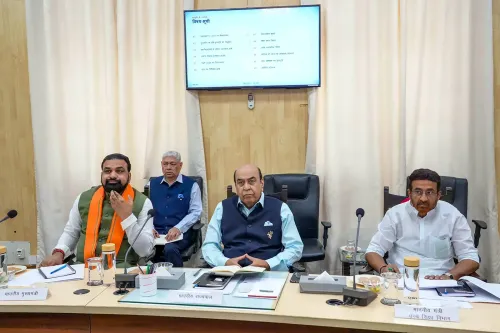
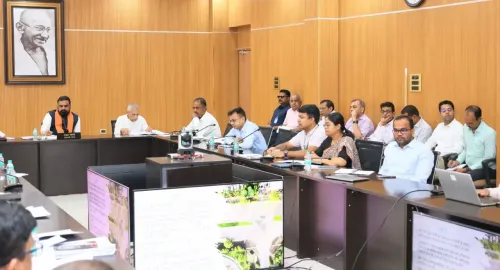
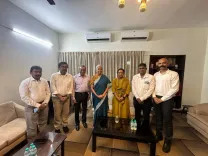
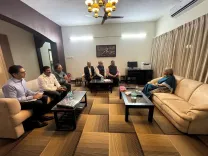
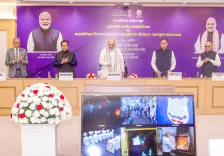
The Chief Minister's Office of Bihar on Friday, 26 June 2026, shared details of a high-level review meeting focused on new initiatives in the higher education sector, directing key measures to strengthen quality, governance, and institutional capacity across the state.
The official post, a reply attributed to the Chief Minister's Office, stated that during the meeting, 'उच्च शिक्षा के क्षेत्र में संचालित विभिन्न नई पहलों की समीक्षा की गई' ('various new initiatives being implemented in the field of higher education were reviewed'), and that important directions were issued to ensure 'quality of education, good governance, and institutional strengthening.'
Context
Bihar, under Chief Minister Nitish Kumar, has maintained a sustained focus on reforming its higher education ecosystem. The state has historically grappled with challenges around university accreditation, administrative capacity, and learning outcomes. Periodic review meetings at the Chief Minister's level are part of a broader governance mechanism to keep institutional performance under active oversight.
The 26 June meeting appears to continue this tradition of executive-level scrutiny, with the Chief Minister's Office signalling that multiple ongoing initiatives were placed under the lens simultaneously.
Policy Backdrop
Bihar's higher education reform drive gained significant momentum with the launch of the Bihar Student Credit Card Scheme in 2016, which extended institutional credit of up to Rs 4 lakh to students from low-income families to pursue college and university education. The scheme was designed to address both access and retention in higher education.
Beyond financial access, the state has worked on strengthening the administrative and academic frameworks of its universities, including efforts around faculty recruitment, infrastructure upgrades, and compliance with national accreditation norms. The directions issued in this latest review — covering quality, governance, and institutional robustness — align with that longer policy arc.
Stakeholders and Impact
The primary beneficiaries of any outcome from this review are university and college students across Bihar, particularly those enrolled in state-funded institutions. Improved governance and institutional strengthening directly affect the quality of degrees, campus facilities, and administrative responsiveness that students experience.
Higher education institutions themselves — including Bihar's central universities, state universities, and affiliated colleges — stand to be affected by any follow-up directives that emerge from the review. Faculty bodies and administrative staff will be key actors in implementing whatever instructions are formalised by the Bihar education department.
What's Next
Attention will now turn to whether the Bihar education department issues formal circulars, institutional audit mandates, or budget-linked announcements in the weeks following this review. Such follow-through has historically been the measure of how substantive executive-level reviews translate into ground-level change.
Observers of Bihar's education policy will also watch for any announcements tied to national frameworks such as the National Education Policy (NEP) 2020, whose implementation at the state level remains a work in progress across most Indian states.
Point of View
Who has governed Bihar for most of the past two decades, periodic high-profile reviews serve a dual purpose: demonstrating executive attention and creating a paper trail of accountability for institutions. The emphasis on 'sushasan' (good governance) is particularly notable, as it echoes the very political brand Kumar has built his career on. Whether this review translates into measurable institutional change will depend on the follow-through from the education department, which has historically been the weak link in Bihar's reform chain.
NationPress
26 Jun 2026
Frequently Asked Questions
What was reviewed in Bihar CM's higher education meeting on 26 June 2026?
The Chief Minister's Office of Bihar stated that various new initiatives being implemented in the field of higher education were reviewed, with directions issued on quality, good governance, and institutional strengthening.
What is the Bihar Student Credit Card Scheme?
The Bihar Student Credit Card Scheme, launched in 2016 , provides students from low-income families with credit of up to Rs 4 lakh to pursue higher education at colleges and universities.
Who is the Chief Minister of Bihar?
Nitish Kumar is the Chief Minister of Bihar and has held the position for most of the period since 2005 , making him one of India's longest-serving state chief ministers.
How does Bihar plan to improve higher education quality?
Bihar has pursued a combination of financial access schemes, administrative reviews, faculty recruitment drives, and alignment with national accreditation norms to improve higher education quality in the state.
What should we watch for after Bihar's higher education review?
Follow-up orders from the Bihar education department on institutional audits, accreditation compliance, and any budget announcements linked to the reviewed initiatives are the key developments to track.