BJP's Bengal victory decoded: The strategies that broke Mamata's fortress
Synopsis
BJP's Bengal win wasn't built on rallies alone — it was engineered through 70,671 booth committees, 1,200 football teams, 2 crore Bharosa Card registrations, and 9,500 diaspora campaigners. Analysts say this multi-layered machine, combining data targeting with cultural outreach, is what finally cracked Mamata Banerjee's long-dominant fortress.
Key Takeaways
BJP won West Bengal , breaching what analysts long called Mamata Banerjee's political fortress, according to observers.
The Narendra Cup football tournament engaged nearly 18,000 players across 1,200 men's teams and 253 women's teams , targeting the 18–25 age group .
Booth committees were formed across 70,671 booths with over 8.7 lakh workers deployed as the campaign's organisational backbone.
210 focus constituencies were identified through data analysis of the 2019, 2024 Lok Sabha and 2021 Assembly elections.
The "Yuva Bharosa Card" and "Matrishakti Bharosa Card" schemes recorded over 2 crore registrations targeting youth and women.
PM Modi addressed 19 rallies ; HM Amit Shah conducted around 40 events covering all 294 constituencies .
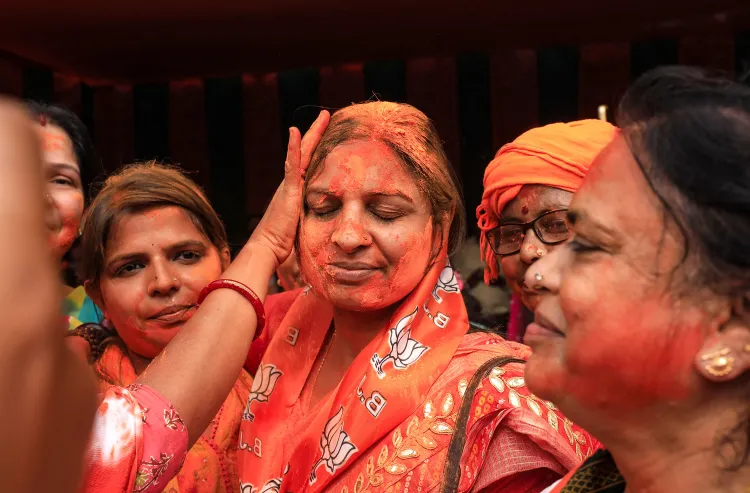
The Bharatiya Janata Party (BJP) has pulled off one of its most consequential electoral victories in recent memory, breaching what analysts long considered the impenetrable political fortress of Mamata Banerjee in West Bengal. Political experts and observers are attributing the win to a deeply structured, multi-layered campaign that combined grassroots mobilisation, cultural outreach, organisational discipline, and precision-driven narrative-building at unprecedented scale.
Youth and Sports Outreach
One of the most widely cited innovations was the "Narendra Cup" football tournament initiative, which reportedly saw participation from around 1,200 men's teams involving nearly 18,000 players, alongside 253 women's teams. Experts say this initiative successfully connected the party with the critical 18–25 age group — a demographic historically difficult for BJP to penetrate in Bengal.
Complementing this, the 150-year celebration of "Vande Mataram" was transformed into a large-scale cultural mobilisation effort. Over one lakh participants were engaged through padyatras, collective singing, tricolour distribution, and lamp-lighting ceremonies, reinforcing an emotional and nationalist appeal among Bengal's culturally conscious electorate.
Organisational Backbone and Booth-Level Strategy
The "Parivartan Yatra" — nine separate journeys covering 217 Assembly constituencies — involved more than 7 lakh participants across 560 events, helping consolidate voter sentiment ahead of polling day. Analysts describe this as a critical trust-building exercise that gave the campaign a visible, on-the-ground presence across the state.
Equally important was the booth-level infrastructure. Under the Booth Empowerment Campaign, committees were formed across 70,671 booths, resulting in the deployment of over 8.7 lakh workers. Political experts describe this as the "silent organisational backbone" that ensured voter connect, turnout management, and last-mile persuasion — especially in rural and semi-urban pockets where TMC had historically dominated.
Data-Driven Micro-Targeting
The campaign also relied heavily on electoral data analytics. Based on analysis of the 2019 and 2024 Lok Sabha elections and the 2021 Assembly polls, 210 "focus constituencies" were identified, complemented by a granular "focus booth" strategy. Analysts say this reflects a decisive shift toward micro-targeting, where campaign resources were concentrated with precision rather than spread thinly across the state.
Mass outreach initiatives such as the "Yuva Bharosa Card" and "Matrishakti Bharosa Card" recorded over 2 crore registrations, enabling the party to directly engage women and youth with targeted assurances — a segment-specific approach that observers say blunted Mamata Banerjee's traditional advantage with women voters.
Issue-Based Campaign and Accountability Narrative
The party's aggressive issue-based campaign played a significant role in shaping voter perception. A state-level chargesheet released by Union Home Minister Amit Shah, along with constituency-level chargesheets in 220 seats, brought alleged governance failures and corruption to public attention. Analysts say this effectively turned the election into a referendum on accountability under the Trinamool Congress (TMC) government.
Cultural and religious outreach further deepened grassroots connect. On occasions of Ram Navami, Hanuman Jayanti, and Poila Baisakh, party workers reached out at over 6,250 locations, interacting with more than 2 lakh individuals from religious and spiritual organisations. Experts argue such efforts subtly reinforced identity-based consolidation without overt polarisation.
Leadership Scale and Narrative Construction
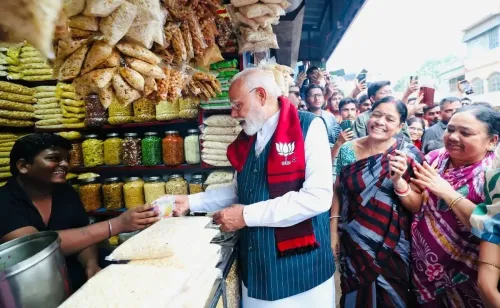
Prime Minister Narendra Modi addressed 19 rallies and held multiple roadshows, with his symbolic cultural gestures generating massive digital traction. Home Minister Amit Shah conducted around 40 events and extensive organisational meetings covering all 294 constituencies. Union Ministers, Chief Ministers from BJP-ruled states, and figures like Suvendu Adhikari and Mithun Chakraborty collectively contributed to hundreds of campaign events.
The massive rally at Brigade Parade Ground in Kolkata, attended by an estimated 7.5 lakh people, is being described as a psychological turning point. Meanwhile, the "Chup Chaap Kamal Chhaap" strategy focused on silent voter mobilisation through ward and booth-level networks, converting latent support into actual votes, particularly in urban pockets.
Nearly 9,500 Bengali migrants from 21 states returned to campaign, adding both manpower and emotional resonance. Slogans like "Banchte Chai, BJP Tai", "Paltano Dorkar, Chai BJP Sarkar", and "Bhay (FEAR) OUT, Bharosa (TRUST) IN" created an emotionally resonant framework that positioned the party as an alternative rooted in hope, change, and security, according to analysts. With the dust settling on this landmark result, the BJP's Bengal playbook is already being studied as a potential template for future electoral campaigns in opposition-held states.
Point of View
And an invisible one of booth committees, data targeting, and diaspora mobilisation. The invisible campaign likely mattered more. What's worth scrutinising, however, is whether the accountability narrative — chargesheets, governance failures — reflected genuine public anger or was amplified through organisational reach. Mamata Banerjee's TMC held Bengal through welfare and identity politics for over a decade; that this model has now been outmanoeuvred suggests voters were ready for change. The real test for BJP is governance delivery, not campaign architecture.
NationPress
7 Oct 2026
Frequently Asked Questions
How did BJP win West Bengal against Mamata Banerjee?
According to political analysts, BJP's West Bengal victory was the result of a multi-layered campaign combining booth-level organisation across 70,671 booths, data-driven targeting of 210 focus constituencies, cultural outreach, and a strong accountability narrative against the TMC government. The party also deployed over 8.7 lakh ground workers and ran targeted schemes for youth and women.
What was the Narendra Cup and how did it help BJP in Bengal?
The Narendra Cup was a football tournament initiative that reportedly engaged around 1,200 men's teams with nearly 18,000 players and 253 women's teams across West Bengal. Experts say it helped BJP connect with the 18–25 age group — a demographic historically difficult for the party to reach in the state.
What was the Parivartan Yatra in West Bengal?
The Parivartan Yatra comprised nine separate journeys covering 217 Assembly constituencies, involving more than 7 lakh participants across 560 events. Analysts describe it as a trust-building exercise that gave BJP a visible on-the-ground presence across the state ahead of polling.
How did BJP use data and micro-targeting in the Bengal election?
BJP analysed electoral data from the 2019 and 2024 Lok Sabha elections and the 2021 Assembly polls to identify 210 focus constituencies and deploy a granular focus-booth strategy. Analysts say this precision targeting concentrated campaign resources where they would have maximum impact rather than spreading them thinly.
Who led BJP's campaign in West Bengal?
Prime Minister Narendra Modi addressed 19 rallies and held multiple roadshows, while Home Minister Amit Shah conducted around 40 events covering all 294 constituencies. State leaders Suvendu Adhikari and Mithun Chakraborty, along with Union Ministers and Chief Ministers from BJP-ruled states, collectively contributed to hundreds of campaign events.