Cauvery water row: SC allows Tamil Nadu to move CWMA, next hearing Aug 31
Synopsis
The Supreme Court has stepped into the Cauvery standoff again, permitting Tamil Nadu to press its case before the CWMA even as it flags a deficit of over 22 tmcft against its entitled share. With Karnataka sitting on ~78 tmcft in its reservoirs and heavy inflows reported, Tamil Nadu argues the shortfall is a matter of political will, not hydrology.
Key Takeaways
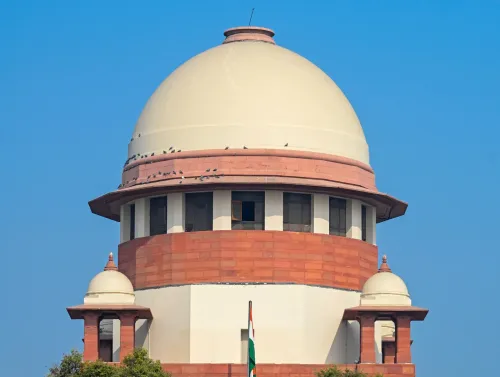
The Supreme Court on 24 August allowed Tamil Nadu to approach the CWMA over Karnataka's alleged failure to release its proportionate Cauvery water share.
The next Supreme Court hearing is scheduled for 31 August , when updated water release figures are to be submitted.
Tamil Nadu is entitled to 26.954 tmcft under the sharing formula; the CWMA-directed release of 3,500 cusecs for 15 days amounts to only about 4.536 tmcft .
Karnataka's four major Cauvery basin reservoirs held a combined 77.537 tmcft as of 3 August , with utilisable storage of 67.517 tmcft .
The CWRC had directed Karnataka to maintain 3,500 cusecs flow at Biligundlu from 29 July to 12 August ; Tamil Nadu alleges the actual releases fell far short.
The Supreme Court on Monday, 24 August permitted Tamil Nadu to place its grievance before the Cauvery Water Management Authority (CWMA), after the state alleged that Karnataka was withholding its proportionate share of Cauvery water. The apex court has posted the matter for the next hearing on 31 August, directing both parties to present an updated status of water releases on that date.
What Tamil Nadu Sought
Tamil Nadu had moved the Supreme Court seeking directions to Karnataka to release 26.954 tmcft of Cauvery water, contending that the neighbouring state had failed to comply with orders issued by both the Cauvery Water Regulation Committee (CWRC) and the CWMA. Senior advocate C.S. Vaidyanathan, appearing for Tamil Nadu, submitted before a bench of Justices Vikram Nath and Sandeep Mehta that while the water directed to be released by the CWMA had been received as of Monday morning, the authority had not directed Karnataka to make up the deficit in the proportionate quantity.
'We have to receive a proportionate quantity of water, that is unfortunately not happening,' Vaidyanathan submitted before the bench.
Karnataka's Reservoir Levels Cited
Vaidyanathan drew the court's attention to the fact that Karnataka held approximately 78 tmcft of water across its Cauvery basin reservoirs, arguing that the state had adequate storage to release Tamil Nadu's share. Tamil Nadu had earlier placed on record that Karnataka's four major Cauvery basin reservoirs together held 77.537 tmcft as of 3 August — with the KRS reservoir at 23.078 tmcft, Kabini at 18.610 tmcft, Harangi at 7.827 tmcft, and Hemavathi at 28.022 tmcft, with total utilisable storage of 67.517 tmcft.
Background: CWRC and CWMA Directions
The dispute traces back to the 139th meeting of the CWRC held on 28 July, when the committee reviewed hydrological and meteorological conditions in the Cauvery basin and directed Karnataka to ensure a flow of 3,500 cusecs at Biligundlu for 15 days, from 29 July to 12 August. Karnataka was also instructed to regulate releases from the KRS and Kabini reservoirs to maintain the stipulated flow. The CWMA endorsed this recommendation at its 54th emergency meeting on 30 July.
However, Tamil Nadu alleged that the actual quantity received at Biligundlu fell far short of its rightful share. The state argued that the CWMA-directed release — 3,500 cusecs for 15 days — amounted to only about 4.536 tmcft, which it described as grossly inadequate against the 26.954 tmcft it was entitled to under the prescribed sharing formula. Tamil Nadu also pointed to heavy rainfall in the catchment areas of the KRS and Kabini reservoirs, which had significantly improved inflows, further strengthening its case that Karnataka had the capacity to release more water.
What Happens Next
With the CWMA scheduled to meet on Monday and Tuesday, Tamil Nadu has indicated it will raise its grievance directly before the authority. The Supreme Court will take up the matter again on 31 August, when an updated status report on water releases is expected to be placed before the bench. The outcome of the CWMA deliberations this week is likely to shape the course of the next hearing.
Point of View
But this iteration carries a sharper edge: Tamil Nadu is not just asking for water — it is asking the Supreme Court to hold a regulatory authority accountable for its own orders. The gap between the CWMA-directed 4.536 tmcft and Tamil Nadu's claimed entitlement of 26.954 tmcft is too wide to be explained by hydrology alone, especially with Karnataka's reservoirs near comfortable levels. The real question the 31 August hearing must answer is whether the CWMA has the institutional teeth to enforce compliance, or whether the apex court will once again have to step in as the de facto water regulator for the Cauvery basin.
NationPress
24 Aug 2026
Frequently Asked Questions
What did the Supreme Court decide in the Cauvery water case on 24 August?
The Supreme Court permitted Tamil Nadu to approach the CWMA with its grievance that Karnataka was not releasing its proportionate share of Cauvery water. The court posted the matter for the next hearing on 31 August, asking both parties to present an updated status of water releases.
How much Cauvery water is Tamil Nadu demanding from Karnataka?
Tamil Nadu has sought directions for Karnataka to release 26.954 tmcft of Cauvery water, arguing this is its rightful share under the prescribed sharing formula. It contends the CWMA-directed release of 3,500 cusecs for 15 days amounts to only about 4.536 tmcft, which it calls grossly inadequate.
What are the current water levels in Karnataka's Cauvery reservoirs?
As of 3 August, Karnataka's four major Cauvery basin reservoirs held a combined 77.537 tmcft, with utilisable storage of 67.517 tmcft. The KRS reservoir held 23.078 tmcft, Kabini 18.610 tmcft, Harangi 7.827 tmcft, and Hemavathi 28.022 tmcft.
What did the CWRC and CWMA direct Karnataka to do?
The CWRC, at its 139th meeting on 28 July, directed Karnataka to ensure a flow of 3,500 cusecs at Biligundlu for 15 days (29 July to 12 August) and to regulate releases from the KRS and Kabini reservoirs. The CWMA endorsed this at its 54th emergency meeting on 30 July. Tamil Nadu alleges Karnataka did not comply adequately.
Who is representing Tamil Nadu before the Supreme Court in the Cauvery case?
Senior advocate C.S. Vaidyanathan is representing Tamil Nadu before the bench of Justices Vikram Nath and Sandeep Mehta. He submitted that while some water had been received, the CWMA had not directed Karnataka to make up the deficit in the proportionate quantity.