CBI opposes bail of ex-judge Giribala Singh in Twisha Sharma death case
Synopsis
A former district judge facing allegations in the death of a young woman in Bhopal has been told by the CBI that releasing her on bail risks witness tampering and evidence destruction — a remarkable moment in a case that drew Supreme Court intervention and prompted a CBI takeover within days of the incident becoming public.
Key Takeaways
The CBI has opposed bail for former district judge Giribala Singh in the Twisha Sharma death case before the Madhya Pradesh High Court on 26 September 2026 .
Twisha Sharma was found hanging at her matrimonial home in Bhopal's Katara Hills on the night of 12 May 2026 and was declared dead at AIIMS Bhopal .
The Supreme Court took suo motu cognisance on 25 May ; the CBI arrested Singh on 28 May after the High Court cancelled her anticipatory bail.
A charge sheet was filed on 17 August under Sections 85, 108 and 3(5) of the BNS ; further investigation into dowry-related aspects is ongoing.
The CBI alleged Singh refused to provide voice samples voluntarily; a court order dated 14 July was required to obtain the remaining samples.
Co-accused Samarth Singh (Twisha's husband) had allegedly absconded during the initial Bhopal Police investigation.
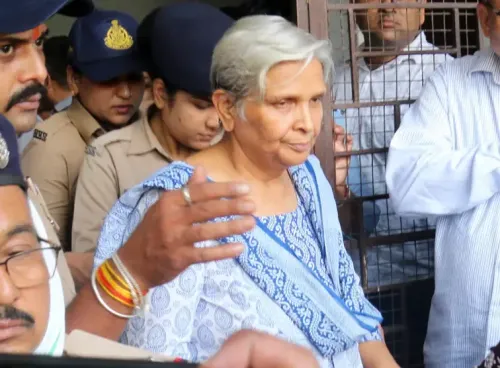
The Central Bureau of Investigation (CBI) has strongly opposed the bail plea of former district judge Giribala Singh in the Twisha Sharma death case, informing the Madhya Pradesh High Court at Jabalpur on 26 September 2026 that substantial evidence on record points to her alleged complicity in the crime and that her release could jeopardise the ongoing probe.
CBI's Core Argument Against Bail
In its written reply filed before the High Court, the agency stated: 'There is ample evidence on record against the accused/petitioner showing the complicity of the accused in the crime.' The CBI further submitted that 'there is every likelihood that if the accused/petitioner is released on bail, [she] may influence the witnesses and tamper with the evidences.'
The agency urged the court to reject Singh's petition filed under Section 483 of the Bharatiya Nagarik Suraksha Sanhita (BNSS), adding that investigation into several important aspects of the case was still continuing.
What Happened to Twisha Sharma
Twisha Sharma was found hanging at her matrimonial home in Bhopal's Katara Hills area on the night of 12 May 2026. She was rushed to AIIMS Bhopal, where doctors declared her dead.
According to the CBI, Twisha had married Samarth Singh on 9 December 2025. After the family allegedly discovered her pregnancy on 17 April, a dispute erupted between her and her matrimonial family, following which she left for Noida. The agency alleged that her husband and mother-in-law levelled allegations regarding her character, reflected in WhatsApp chats examined during the investigation.
Twisha reportedly returned to Bhopal on 30 April and underwent an abortion. She subsequently asked her mother to take her back to her maternal home, allegedly citing continuous harassment and cruelty. On 12 May, she reportedly called her mother to inform her of abusive behaviour by her husband — hours before she was found dead.
FIR, Supreme Court Intervention and CBI Takeover
An FIR was registered at Katara Hills police station on 15 May against Giribala Singh and Samarth Singh under Sections 80(2), 85 and 3(5) of the Bharatiya Nyaya Sanhita (BNS) and Sections 3 and 4 of the Dowry Prohibition Act. The Madhya Pradesh government subsequently sought transfer of the probe to the CBI.
The Supreme Court took suo motu cognisance of the matter on 25 May, after which the CBI registered its own case and took over the investigation the same day. Giribala Singh was arrested on 28 May after the High Court cancelled her anticipatory bail.
Non-Cooperation Allegations and Charge Sheet
The CBI alleged that Singh did not fully cooperate in providing her voice samples. Agency officials and experts from the Central Forensic Science Laboratory (CFSL) visited Central Jail, Bhopal, on 9 and 10 July to record her voice samples. Singh allegedly refused to provide the remaining specimen on the second day, prompting the CBI to approach the trial court. Her remaining voice samples were obtained only after a court order dated 14 July. Both accused, the agency alleged, also failed to cooperate during the reconstruction of the crime scene.
The CBI filed a charge sheet against Giribala Singh and Samarth Singh on 17 August under Sections 85, 108 and 3(5) of the BNS. It noted that further investigation into dowry death, dowry-related allegations, and other aspects was continuing.
Financial Trail and Absconding Co-Accused
The agency also told the High Court that the deceased's financial details had been examined and alleged that money was transferred to Twisha's account by the accused on multiple occasions, with a substantial portion later allegedly used for the accused's own expenses through her account. The CBI further claimed that co-accused Samarth Singh had absconded during the initial investigation by Bhopal Police. The case is currently at the stage of framing of charges, according to the CBI's submission.
The Madhya Pradesh High Court is yet to rule on the bail petition; the case's outcome is being closely watched given Giribala Singh's former judicial standing.
Point of View
A state police force was allegedly inadequate, and the Supreme Court had to intervene suo motu. The CBI's opposition to bail on grounds of witness tampering carries unusual weight here precisely because the accused had judicial standing and familiarity with the system. What remains underexamined is the timeline of the state government's response: the gap between the death on 12 May and the FIR on 15 May deserves scrutiny. The case also raises broader questions about the protection available to young women facing harassment within matrimonial homes — a pattern the courts repeatedly encounter but rarely resolve systemically.
NationPress
26 Sept 2026
Frequently Asked Questions
Who is Giribala Singh and why was she arrested in the Twisha Sharma case?
Giribala Singh is a former district judge and the mother-in-law of Twisha Sharma's husband Samarth Singh. She was arrested on 28 May 2026 after the Madhya Pradesh High Court cancelled her anticipatory bail, following allegations of cruelty, harassment, and complicity in Twisha's death, which was registered under provisions of the Bharatiya Nyaya Sanhita and the Dowry Prohibition Act.
What happened to Twisha Sharma?
Twisha Sharma was found hanging at her matrimonial home in Bhopal's Katara Hills on the night of 12 May 2026 and was declared dead at AIIMS Bhopal. The CBI has alleged that she faced continuous harassment and cruelty from her husband and mother-in-law, and that she had called her mother hours before her death to report abusive behaviour.
Why did the Supreme Court intervene in the Twisha Sharma case?
The Supreme Court took suo motu cognisance of the case on 25 May 2026, after which the CBI registered its own case and took over the investigation from Bhopal Police the same day. The intervention came amid concerns about the gravity of the allegations and the involvement of a former judicial officer.
What charges have been filed against Giribala Singh and Samarth Singh?
The CBI filed a charge sheet on 17 August 2026 against both Giribala Singh and Samarth Singh under Sections 85, 108, and 3(5) of the Bharatiya Nyaya Sanhita. The original FIR also included Sections 80(2) and charges under Sections 3 and 4 of the Dowry Prohibition Act. Investigation into dowry death and related aspects is still ongoing.
What is the current status of the Twisha Sharma death case?
As of 26 September 2026, the case is at the stage of framing of charges. The Madhya Pradesh High Court is hearing Giribala Singh's bail plea, which the CBI has opposed. Further investigation into dowry death and financial transactions is continuing, and the court's decision on bail is awaited.