Twisha Sharma case: MP High Court tells ex-judge Giribala to drop dowry claim from bail plea
Synopsis
In a significant procedural shift in the Twisha Sharma suicide case, the Madhya Pradesh High Court has directed retired district judge Giribala Singh's lawyers to strip dowry harassment references from her bail plea — because the CBI itself found no evidence to support that charge, replacing it with abetment of suicide instead. The family may now push for reinvestigation at the 8 October hearing.
Key Takeaways
The Madhya Pradesh High Court on 30 September 2026 directed retired judge Giribala Singh to amend her bail plea by removing dowry harassment references.
The CBI found no evidence to support dowry harassment allegations and dropped the dowry death charge (Section 80(2) BNS) against Singh.
Singh is now charged under Section 108 BNS (abetment of suicide) for allegedly taunting and harassing Twisha Sharma .
Twisha Sharma , 33 , was found dead at her matrimonial home in Bhopal on 12 May .
Singh remains in judicial custody after her anticipatory bail was quashed by the High Court on 27 May .
The next hearing is scheduled for 8 October ; the family may seek reinvestigation on the dropped dowry charge.
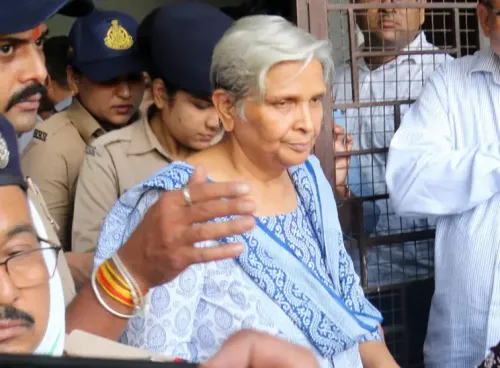
The Madhya Pradesh High Court on Wednesday, 30 September 2026, directed the lawyers of retired district judge Giribala Singh to remove all references to dowry harassment from her regular bail application in the Twisha Sharma suicide case, after the Central Bureau of Investigation (CBI) told the court it found no evidence to substantiate the dowry harassment allegation against her. Singh, currently in judicial custody, was not granted bail, and the matter has been listed for further hearing on 8 October.
What the Court Directed
The direction was issued during the hearing of Singh's regular bail application before Justice Ajay Kumar Nirankari. The CBI apprised the court of its investigation findings and the charges contained in its chargesheet. Since the chargesheet had dropped the dowry death charge and replaced it with abetment of suicide under Section 108 of the Bharatiya Nyaya Sanhita (BNS), the court found the existing bail plea — originally filed under the dowry death provision of Section 80(2) of the BNS — no longer aligned with the charges. Singh's counsel acknowledged the change in the nature of the case, prompting the High Court to direct an amendment to the application.
CBI's Chargesheet: What Changed and What Remained
The CBI's chargesheet marks a significant shift in the legal framing of the case. While the agency dropped the dowry death charge against Singh, it has alleged in the chargesheet that she abetted Twisha Sharma's suicide by taunting and harassing her — invoking Section 108 BNS in its place. The distinction matters: dowry death carries a mandatory minimum sentence and a heavier evidentiary burden, while abetment of suicide under Section 108 BNS requires proof of instigation or intentional facilitation. Critics argue the charge revision could affect the overall severity of the case's legal outcome for the accused.
Background: Twisha Sharma's Death and the Arrest of Giribala Singh
Twisha Sharma, 33, was found dead at her matrimonial home in Bhopal on 12 May. Her family alleged harassment by her husband and in-laws, leading to a CBI investigation into the circumstances of her death. Singh was initially granted anticipatory bail by a Bhopal trial court on 15 May, but the State and Twisha's parents challenged the order before the High Court, which quashed the anticipatory bail on 27 May. Singh has since remained in custody, with the Bhopal court extending her judicial custody on multiple occasions.
Singh's Defence and Family's Opposition
In her bail plea, Singh has denied all allegations, claiming that Twisha was suffering from depression and asserting that the dowry-related allegations were false. The deceased's father has opposed Singh's regular bail application. According to reports, the family's advocate Anurag Pandey confirmed that the family may seek reinvestigation on the specific point of the dropped dowry charge at the next hearing on 8 October.
What Happens Next
Singh's lawyers are required to file an amended bail application removing the dowry harassment references before the 8 October hearing. The High Court will then consider the revised plea on its merits. Twisha's family's potential move to seek reinvestigation on the dowry aspect could add another layer of legal complexity to a case that has already seen multiple shifts in charge framing since May.
Point of View
While the latter allows greater judicial discretion at sentencing. What the court's direction also quietly signals is that investigative findings do not always align with the narrative that drives initial arrests, raising the question of how rigorously dowry death charges are evaluated before being levied. Twisha's family's reported intent to seek reinvestigation suggests the legal battle is far from resolved and may yet produce further charge revisions. For a case involving a sitting judicial officer's in-laws, the institutional scrutiny will remain intense.
NationPress
30 Sept 2026
Frequently Asked Questions
Why did the MP High Court ask Giribala Singh's lawyers to remove dowry references from her bail plea?
The Madhya Pradesh High Court directed the amendment because the CBI, in its chargesheet, found no evidence to establish dowry harassment against Singh and dropped the dowry death charge. Since the bail application had originally been filed under the dowry death provision, it no longer matched the revised charges.
What charge is Giribala Singh now facing in the Twisha Sharma case?
Singh is now charged under Section 108 of the Bharatiya Nyaya Sanhita (BNS) for abetment of suicide. The CBI has alleged she abetted Twisha Sharma's suicide by taunting and harassing her, replacing the earlier dowry death charge under Section 80(2) BNS.
Who was Twisha Sharma and how did she die?
Twisha Sharma was a 33-year-old woman who was found dead at her matrimonial home in Bhopal on 12 May. Her family alleged harassment by her husband and in-laws, leading to a CBI investigation that culminated in a chargesheet naming Giribala Singh, a retired district judge and her mother-in-law.
Is Giribala Singh currently in jail, and when was her anticipatory bail cancelled?
Yes, Singh is currently in judicial custody. She was initially granted anticipatory bail by a Bhopal trial court on 15 May, but the High Court quashed that order on 27 May after the State and Twisha's parents challenged it. She has remained in custody since, with judicial custody extended on multiple occasions.
What is the next step in the Twisha Sharma case?
The High Court will hear the amended bail application on 8 October 2026. Twisha's family, through their advocate Anurag Pandey, may also seek reinvestigation into the dropped dowry harassment charge at the same hearing.