Chhattisgarh CMO: 7.28 LMT Fertilizer Distributed to Farmers
Synopsis
The Chief Minister's Office of Chhattisgarh announced on 7 July 2026 that 7.28 lakh metric tonnes of fertilizer has been distributed to state farmers, with 5.88 LMT in reserve — 1.08 LMT more than the previous year — under its 'Sushasan Sarkar' good governance agenda.
Key Takeaways
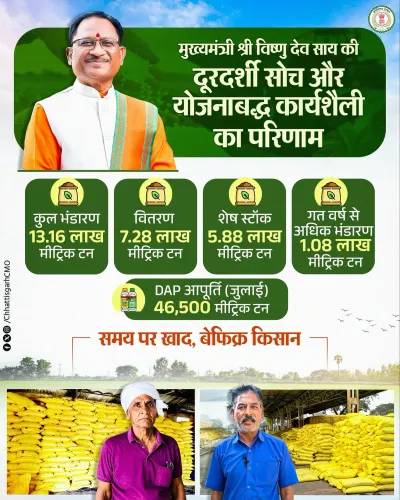
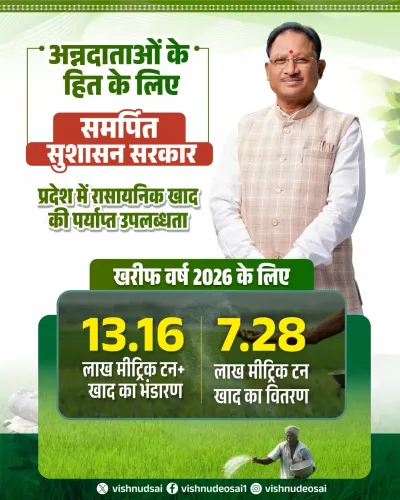
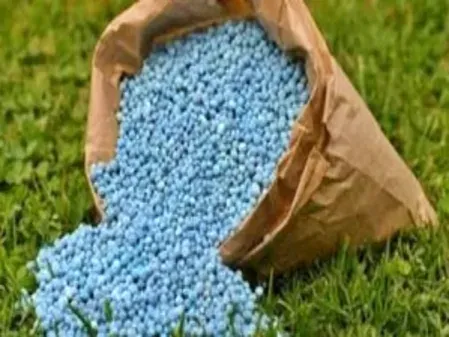
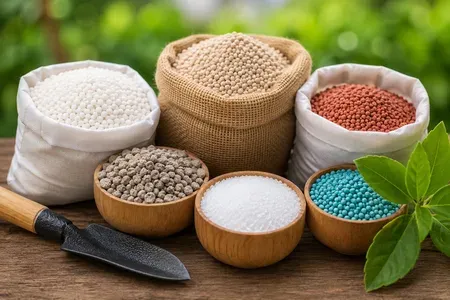
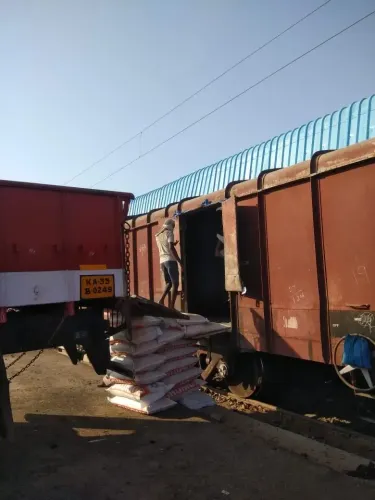
7.28 lakh metric tonnes of fertilizer has been distributed to farmers across Chhattisgarh as of 7 July 2026 .
An additional 5.88 lakh metric tonnes of fertilizer is safely held in reserve storage.
Fertilizer storage is 1.08 lakh metric tonnes higher than the same period last year, indicating improved administrative preparedness.
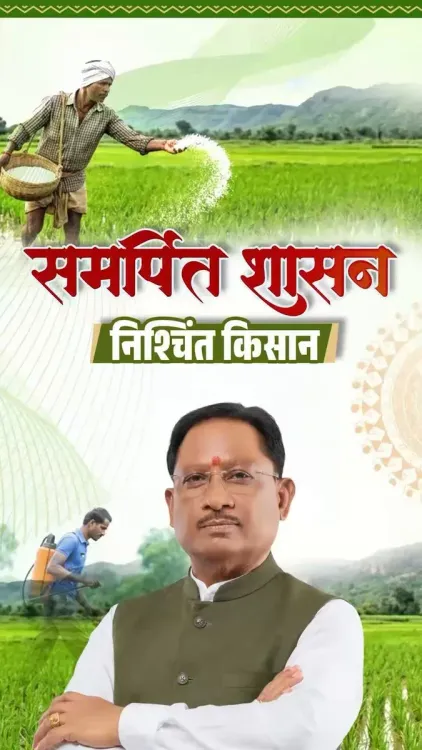
The announcement is framed under the state government's 'Sushasan Sarkar' (Good Governance Government) branding.
The timing aligns with the Kharif sowing season , when fertilizer demand across the state is at its peak.
India's national Nutrient Based Subsidy scheme provides the policy framework within which the state manages fertilizer pricing and distribution.
The Chief Minister's Office of Chhattisgarh announced on Tuesday, 7 July 2026 that the state government has distributed 7.28 lakh metric tonnes (LMT) of fertilizer to farmers across the state, with an additional 5.88 LMT safely stored in reserve — framing the achievement as a hallmark of its 'Sushasan Sarkar' (good governance) agenda.
Context
The official post, shared in Hindi, states: 'Kisanon ki madad aur kheti-kisani mein sahuliyat, yahi hai Sushasan Sarkar ki prathamikta' — 'Helping farmers and easing agricultural work is the priority of the Good Governance Government.' The announcement highlights that fertilizer distribution and buffer stocking are being actively managed ahead of the Kharif sowing season, when demand for inputs peaks across Chhattisgarh's predominantly agrarian districts.
Crucially, the state notes that fertilizer storage this year is 1.08 lakh metric tonnes higher than the corresponding period last year — a year-on-year increase the government is presenting as evidence of improved administrative preparedness.
Policy Backdrop
Chhattisgarh is a central Indian state whose economy is heavily dependent on paddy cultivation and allied farming activities. State governments in this region routinely publish fertilizer stock and distribution data ahead of sowing seasons to signal readiness and prevent panic buying or black-market diversion of subsidised inputs.
At the national level, India's Nutrient Based Subsidy (NBS) scheme, introduced in 2010, regulates fertilizer pricing and encourages balanced nutrient application. State governments operate within this framework, coordinating with central agencies to ensure adequate supply chains reach the last mile. Maintaining buffer stocks is a standard mitigation strategy against logistics disruptions or import-side fluctuations that can otherwise leave farmers without inputs at critical planting windows.
Stakeholders and Impact
The primary beneficiaries are Chhattisgarh's farming communities, who depend on timely and affordable fertilizer access to sustain crop yields. Adequate stocking reduces the risk of shortages during peak demand, which can otherwise force farmers to either delay sowing or purchase inputs at inflated prices from informal channels.
The announcement also carries political weight: the 'Sushasan Sarkar' branding used in the post and the hashtag #Sushasansarkar signals the ruling dispensation's intent to position agricultural input management as a governance achievement — a recurring communication pattern for state governments seeking to demonstrate delivery to rural constituencies ahead of any future electoral cycle.
What's Next
Attention will now turn to Kharif season fertilizer offtake reports, which will reveal whether the distributed and stored quantities translate into actual on-farm utilisation. Any supplementary budget allocations for agricultural inputs in the coming fiscal cycle will also be closely watched as an indicator of the state's longer-term commitment to farm-input security.
If the current buffer holds through peak sowing demand, it could set a new administrative benchmark for fertilizer preparedness in Chhattisgarh — and potentially influence how neighbouring states approach input stocking communications in future seasons.
Point of View
Making the improvement legible to a general audience. This fits a broader pattern across central Indian states where agricultural input management has become a key metric of political accountability. Whether the numbers translate into on-ground availability and affordable access for small and marginal farmers will be the real test of the 'Sushasan Sarkar' claim.
NationPress
7 Jul 2026
Frequently Asked Questions
How much fertilizer has Chhattisgarh distributed to farmers in 2026?
The Chief Minister's Office of Chhattisgarh stated on 7 July 2026 that 7.28 lakh metric tonnes of fertilizer has been distributed to farmers across the state.
How much fertilizer stock is in reserve in Chhattisgarh?
According to the CMO's announcement, 5.88 lakh metric tonnes of fertilizer is safely stored in reserve, available to meet ongoing and future demand.
How does Chhattisgarh's 2026 fertilizer stock compare to last year?
The state government says fertilizer storage in 2026 is 1.08 lakh metric tonnes higher than the corresponding period in the previous year.
What is the 'Sushasan Sarkar' initiative in Chhattisgarh?
'Sushasan Sarkar' translates to 'Good Governance Government' and is the branding used by the Chhattisgarh government to communicate its administrative priorities, including farmer welfare and agricultural input management.
Why is fertilizer stocking important before the Kharif season in Chhattisgarh?
The Kharif sowing season is the period of peak fertilizer demand for crops like paddy. Adequate buffer stocks prevent shortages, black-market diversion, and price spikes that can otherwise harm farmers at a critical planting window.