China's manufacturing model faces global resistance, economist warns
Synopsis
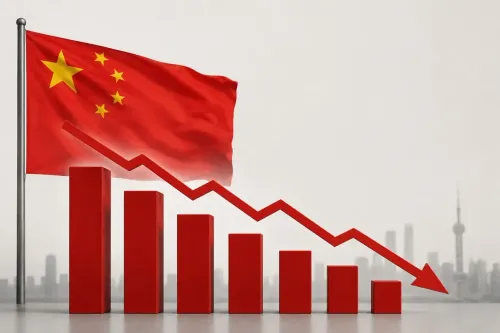
China's model of being the world's factory is cracking under the weight of its own success. Economist Keyu Jin argues in Time that the era of exporting Chinese-made goods is giving way to a new phase — exporting the know-how to make them. From BYD's local factories in Brazil and Hungary to integrated battery supply chains in Indonesia, the shift is already under way, even as US tariffs and European industrial concerns signal that the old model has run out of political runway.
Key Takeaways
Chinese economist Keyu Jin , writing in Time , argues China's export-driven manufacturing model is no longer 'politically tenable' globally.
The United States has imposed heavy tariffs and export controls; multinationals have adopted 'China plus one' supply chain strategies.
Even developing nations are questioning the model, asking where domestic development fits when Chinese goods dominate their markets.
BYD is shifting from car exports to local manufacturing in Brazil and is building a passenger-car factory paired with an R&D centre in Hungary .
In Indonesia , Chinese investment is reportedly funding an integrated battery industry from nickel processing to recycling.
The emerging model focuses on exporting industrial knowledge and capability , not just finished products.
China's export-driven economic model — the engine that transformed the country into the world's factory — is no longer 'politically tenable,' according to an analysis by Chinese economist Keyu Jin published on the Time news website. The article argues that China's manufacturing dominance has eroded industrial bases in other countries, cost jobs, and slowed growth globally, triggering mounting resistance across the United States, Europe, and the developing world.
Global Resistance to China's Export Model
The United States has responded with hefty tariffs and sweeping export controls on Chinese goods, while multinational corporations have accelerated 'China plus one' strategies — diversifying supply chains away from sole dependence on Chinese manufacturing. The European Union, meanwhile, has voiced growing alarm over the erosion of its own industrial base.
Even developing nations, which have historically welcomed Chinese investment and drawn lessons from China's development trajectory, are raising pointed questions. As Jin writes: 'Where, in this model, is our development?' — capturing the frustration of economies that see Chinese goods flooding their markets while local industry stagnates.
The Technology Transfer Paradox
The article surfaces a striking reversal of fortunes. For years, Western multinationals complained that accessing China's vast consumer market required handing over proprietary technology. Now, critics argue, China finds itself on the receiving end of similar demands — pressed to share its own industrial expertise with partner countries rather than simply selling them finished products.
This shift, Jin contends, reflects a deeper structural change in how the world perceives Chinese economic engagement. Most countries, the article argues, do not simply want to import Chinese electric vehicles, batteries, solar panels, machinery, or robots — they want the capability to manufacture them domestically, with workers acquiring new skills and local suppliers moving up the value chain.
A New Model of Chinese Globalisation
The article identifies an emerging alternative: a model built not on exporting the products of China's industrial ecosystem, but on exporting the knowledge embedded within it. Early examples, it notes, are already visible on the ground.
In Brazil, electric vehicle maker BYD is transitioning from importing cars to manufacturing them locally, developing domestic supplier networks in the process. In Hungary, BYD is pairing its first European passenger-car factory with a research and development centre designed to collaborate with Hungarian universities and companies.
In Indonesia, Chinese investment is reportedly helping construct an integrated battery industry spanning nickel processing, battery production, and recycling — a full-stack industrial transfer rather than a single export transaction.
What This Means for Global Trade
These early cases, the article suggests, point toward a fundamentally different relationship between China and the rest of the world — one anchored less in exporting what China produces and more in exporting the capacity to produce it. Whether this pivot is sufficient to defuse the protectionist backlash China faces remains an open question. With trade tensions showing no signs of abating and the 'China plus one' trend accelerating, the pressure on Beijing to rethink its global economic posture is intensifying.
How far and how fast this new model spreads may well define the contours of global manufacturing and trade for the decade ahead.
Point of View
Not just diplomatic. When developing economies start asking 'where is our development?' in response to Chinese investment, it signals that the old model of exporting finished goods has hit a political ceiling even in China's most receptive markets. The pivot to exporting capability, exemplified by BYD's local factories and Indonesia's battery ecosystem, is strategically logical, but it also carries risk: it requires China to give away the industrial knowledge that has been its core competitive advantage. Whether Beijing can manage that transfer selectively enough to remain indispensable — while being open enough to defuse the backlash — is arguably the central challenge of Chinese economic statecraft this decade.
NationPress
25 Oct 2026
Frequently Asked Questions
Why is China's manufacturing model facing global resistance?
China's model of mass-producing and exporting goods has hurt industries in other countries, contributed to job losses, and slowed local growth — making it, as economist Keyu Jin argues in Time, no longer 'politically tenable.' The US has responded with tariffs and export controls, Europe worries about deindustrialisation, and developing nations are questioning whether Chinese investment actually builds their own industrial capacity.
What is the 'China plus one' strategy mentioned in the article?
'China plus one' refers to a supply chain diversification approach adopted by multinational companies, whereby they maintain some operations in China but add manufacturing bases in other countries — such as India, Vietnam, or Mexico — to reduce dependence on a single source. It has accelerated in response to US-China trade tensions and pandemic-era supply disruptions.
What new model of Chinese globalisation is emerging?
According to the Time article by Keyu Jin, China is beginning to shift from simply exporting products to exporting the industrial knowledge and capability to make them. Examples include BYD building local car factories in Brazil and Hungary, and Chinese investment funding integrated battery supply chains in Indonesia.
How is BYD changing its approach in international markets?
BYD is moving beyond exporting finished electric vehicles to establishing local manufacturing plants. In Brazil it is building cars domestically and developing local suppliers, while in Hungary it is opening its first European passenger-car factory alongside an R&D centre linked to local universities and companies.
What does this mean for developing countries receiving Chinese investment?
Developing nations are increasingly demanding that Chinese investment transfer skills, technology, and supplier development — not just deliver finished goods or single-sector factories. The article cites Indonesia's integrated battery industry, from nickel processing to recycling, as an early model of the kind of full-stack industrial partnership these countries are seeking.